Kingdom Agents: The Difference Between Gifts, Functions and Vocations (Part 1)

When I say ‘vocation’, what immediately comes to mind?

The 9-5 grind, the hustle and bustle, doing anything and everything to make ends meet?

If so, you’re not alone. After all, the world loves to condition us to view work as a ‘got to’, not a ‘get to’.

Yet, as I was reminded over the weekend, our marketplace vocation goes far beyond immediacy, intellect, and [our sense of] importance. Even though the nature of our jobs may require these elements, the aim of our jobs…the aim of our calling…is to serve as a royal priesthood, as Kingdom agents functioning in personal commission.

The question is: What does this look like and how does this happen?

tenor

For starters, it’s imperative we understand the difference not only between call and vocation but gifts and function.

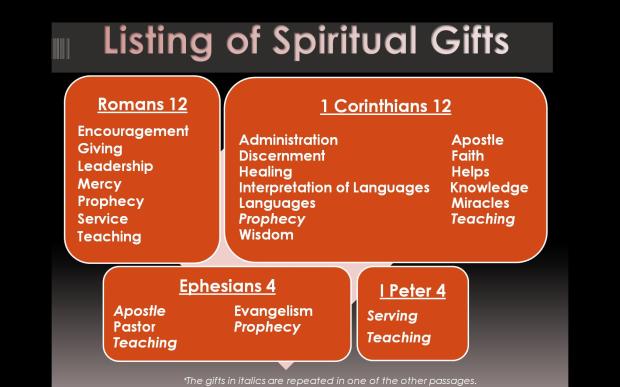
To do this, let’s recap the spiritual gifts as outlined in the New Testament:

*Jesus gifts (Ephesians 4:1-3) – These are part of our vocation and include ascension and equipping gifts as well as the fivefold spiritual gifts (i.e. apostle, pastor, teacher, evangelist, prophet).

Note: While all are wired to shape influence, not all are wired to employ these gifts in the church/in these specific occupations. More on this in a sec.

*Spirit’s gifts (1 Corinthians 12) – These belong to the Spirit and are gifts in a gathering. Some examples include administration, discernment, wisdom, healing, and miracles.

* Community gifts (Romans 4:4, 12:4-8) – These help us function in a local body. Some examples including leadership, encouragement, service, and mercy.
list-of-spiritual-gifts

Due to word count, I’ll link these passages rather than copy/paste; however, after you read them, consider their Greek roots:

1. Romans 12:4-5 – The word for function is the Greek word ‘praxis’ meaning “practice function” and signifies continual activity.

2. Romans 12:6-8 – The word for gifts is the Greek word ‘charismata’ meaning “grace function” and signifies communal activity. In the workplace, we can know these functions as influencing functions.

In both these cases, it’s important to note the origin of gifts point to corporate functions created for unity, not individual skills and talents.

3. Ephesians 4:1-3 – The word for vocation is the Greek word ‘klesis’ meaning “calling function” and signifies the work in which a person is employed. This not only references our occupation but our acceptance of it as a divine call to a particular pathway/course of action.

In this case, it’s critical we know how vocation and calling work together. As Martin Luther once said, “Every person is capable of having a vocation”; however, our universal calling is to be a royal priesthood.

Accordingly, we can break this down as follows:

Our universal calling: Priest (1 Peter 2:9)
Our gifts and functions: Romans 12:4-8
Our vocation: Romans 12 filtered through Ephesians 4


I like how Timothy Williams, author of The Spiritual Gifts, captures the vocational aspect of our spiritual gifts: While we know there are 5 ascension gifts and 7 community gifts,  it’s important to note “each ascension gift has a corresponding functional gift.” For instance, a certain accountant may not be called to serve as a prophet in a ministry setting (i.e. a liturgically designed ascension gift); however, he can still employ prophetic insight through encouragement and counsel in financial arenas (i.e. a vocationally designed ascension gift with specific communal functions). Of course, there may be times the accountant imparts guidance for church staff in critical situations. But the bottom line is: The man of God is at peace serving the body as a financial advisor with a prophetic anointing as opposed to a prophet with financial skills. 

Before I continue, I want to share a couple quick points on ‘vocation’ and how we’re to perceive it in light of our identity:

1. Gifts and vocations are NOT meant to soothe your ego or confirm your identity. If you base ‘who you are’ by ‘what you’ve been given’, you’ll reinforce territorialism in place of influence. Don’t do it!

2. Gifts and vocations are meant to enhance a sense of intimacy. If you base ‘what you’ve been given’ by ‘who you are’, you’ll reinforce a radical dependence on God and radical equality in how you view authority and hierarchy.

3. If we see ourselves as ‘Kingdom agents’, then we’ll a) desire to use our vocation to emphasize the work cultures that already point to Jesus (i.e. redeem our work environment) and b) seek to give clients and colleagues a taste of God by ‘calling forth their destinies’ (i.e. restore people).

4. If we don’t see ourselves as ‘Kingdom agents’, not only will we risk compartmentalizing our sacred and secular lives, but we will also miss opportunities to help people discern spiritual things with their natural minds.

5. Remember we’re all co-equal in value, diverse in function. Therefore, let’s engage our vocation as a holy partnership in influencing people to discover the fruit of their work/organization and in speaking restoration to people without agenda.

Looking ahead to ‘part 2’, I want to revisit William’s quote to help bridge the gap between Ephesians 4 and Romans 12.

‘Cause truth is: If we’re to better understand the relationship between gift and function within our vocation, we’ll need to apply additional grids and principles.

*Cough, Jethro. Cough, perichoresis. Cough*

Additionally, we’ll also need to add ‘elders’ and ‘deacons’ to the pastoral cluster so we can match 7 gifts with 7 functions. But I’m getting ahead of myself.

For now, I hope you were able to glean something out of this introduction. If you have any thoughts or questions, please don’t hesitate to leave a comment or contact me at your convenience.

Until then, God speed on your week. May His sweet presence be fresh wind in your sails as you press into His goodness.

You got this!

Selah.

Cover photo creds: Fast Company; body graphic creds: Msinop; content written by Cameron & Steve Fry; audio voiced by Steve Fry at the 2020 Commission U Leadership Retreat on February 29, 2020

Say the Words: The Bridge Between Forgiveness and Identity

Okay, so I know I promised a ‘part 2’ in my last post; however, I figured a) I’d delay for some storytime and b) You guys wouldn’t mind a change of pace. Accordingly, I’ll retarget the aforementioned sequel to next weekend. 

So yesterday, I’m eating lunch with some colleagues when suddenly an open question becomes an answer to my silence. An opportunity to share now a moment to care…just without the words.

Deep down, my subconscious begins to skew…

I thought they said life wasn’t supposed to a spectator sport? I should be in the game, not the sidelines! Why did I accept this invitation anyway?

Granted, I’m embarrassed having assumed the question was for me when it was for someone else. Still, I’m desperate to quench this oral craving. Time to take the plunge and jump in, I think to myself.

And so I do. Five minutes in…the first unforced tangent, I carpe diem the crap out of it. Like an open book, I’m elated knowing where I’m going, where I’m stopping, and where I’m headed in this midday manuscript.

What could go wrong’, I wonder. ‘I just need to wrap up my say and head back to the bleachers. Get in, get out, and go home happy.’

And for a while I’m right. After a relay question to stitch the rabbit trail, I‘m not only out, but home happy – the start of 18 hours of muted conscious.

That is until this morning’s 5:30 am wake-up call – a muffled ‘Beautiful Day’ ringtone softened by the tune of leftfield conviction.

You totally hijacked that conversation,” I hear.

Sensing that familiar twilight echo, I quickly realize God is talking to me.

When you go to work today, make sure you apologize to the person you cut off.”

*Sigh* “Okay, God. I get it. You got it. Like my most popular Slack, ‘Will do’.”

Hours later, I’m back in the office, a couple convos into a steady rhythm when my time comes to apologize. Without hesitation, I pivot off a talk of the times to the words of the time.

About yesterday. I know you probably thought nothing of it. Certainly didn’t mean anything by it. But I just gotta say…I totally hijacked that conversation yesterday. It would have been better for me to listen than chime in out of fear of not being heard. Will you forgive me?

Like butter to burnt toast, I smell the melting – this friend of mine, a fairly recent acquaintance, touched by such sensitivity.

Wow, you’re a man of God, aren’t you,” she says.

Uhhh…yes. Yes, I am a man of God. This is true. Can’t argue…” I stagger.

At this point, I’m reeling like a teenage pop-fan in 2012, stunned by this one direction¹. In no way did I expect the dialogue to end up here of all places.

Yet, as I reflect back, maybe I shouldn’t have been so surprised.

‘Cause truth is: Whether we’re owning a misgiving or repenting for a fault, asking for forgiveness always helps us rediscover who we are. Sure, we may feel like a horse being led to water, eager to rid ourselves the yoke of apology. But as I learned this morning, there’s not only grace behind an “I’m sorry”, but identity calibration as well.

As for the apology, some would say I had nothing to apologize about. But for me, I’m glad I had something to own. For when we own something, it only proves we’ve accepted what’s been given in the first place. And while this could look a number of different ways, I submit at the core of it all is a gentle, gracious reminder that we are loved in and through weakness. Even when we’re not perfect, there’s at least room to be perfected – the space in between the sweet spot of our identity.

Selah.

Later this spring, I’ll discuss this forgiveness/identity dichotomy in greater detail. For now, here are some verses we can revisit for next time…

And you, child, will be called the prophet of the Most High;
for you will go before the Lord to prepare his ways, to give knowledge of salvation to his people in the forgiveness of their sins, because of the tender mercy of our God, whereby the sunrise shall visit us from on high.~ Luke 1:76-78 (ESV)

Therefore I tell you, her sins, which are many, are forgiven—for she loved much. But he who is forgiven little, loves little.”  – Luke 7:47 (ESV)

Anyone whom you forgive, I also forgive. Indeed, what I have forgiven, if I have forgiven anything, has been for your sake in the presence of Christ…” 
~ 2 Corinthians 2:10 (ESV)

I am writing to you, little children, because your sins are forgiven for his name’s sake.”  – 1 John 2:12 (ESV)

‘Til then, you got this, people of God…

giphy

Footnotes

  1. Youth pastor joke from my LEGACYouth days (see linked text)…
Photo cover creds: Healthy Beginnings


The Trail We Blaze: 4 Convictions for 2020 (Part 1)

They say life’s a highway…

… like a road you travel on where one day’s here and the next day gone.

But for me, I side with the converse…

…that the highway of life is life-inducing…where one day’s here and the next undone.

At least, that’s the thought as I drive this prairie paradise, my road, my view covered in white. The bleak mid-winter suddenly a meek lid-printer inking this retreat from reality. If only the weather could be as cold as the past three months, maybe then I wouldn’t need an escape to nowhere to tell me what’s up.

But I supposed this is why I’m writing this. Because somehow, someway…I needed to get away to look that direction. Hopefully next time, I can be less spontaneous and more strategic. For now, I want to share four convictions (over two posts) from the past three days that will hopefully change the narrative for me and you in 2020.


On your mark, get set, let’s go…

  1. Rethink ‘More’

If I’ve done anything right in 2020, revisiting ‘The Prayer of Jabez’ (both the verse and Bruce Wilkinson’s book) tops the list. In case you need the refresher…

Oh, that You would bless me indeed, and enlarge my territory, that Your hand would be with me, and that You would keep me from evil, that I may not cause pain.” ~ 1 Chronicles 4:10

Upon first glance, it’s easy to assume ‘enlarge my territory’ is the patented phrase of this passage; granted, for many, these three words can be the critical takeaway at a given point. However, it’s crucial we see a different three-word set as more significant overall.

‘Cause truth is: While asking God to enlarge the territory of our influence has its place, it’s the Immanuel essence of ‘God with us’ – in Jabez’s case, the ‘be with me’ – that’s the core blessing.

Consider this: Jabez could have easily paused after ‘enlarge my territory’ and ended with ‘that I may not cause pain’. But he didn’t. Why? Because he knew the bedrock of what he was asking, specifically that the ‘enlarge my territory’ was dependent on what came next, ‘that Your hand would be with me’. Accordingly, I submit the ‘bless me’ is the ‘be with me’ more than the ‘enlarge my territory’.

Now, before you all get your briefs twisted, understand I’m not trying to smite the Prosperity Gospel though I vehemently disagree with it. If anything, I just want to caution us as vocationals to examine what is driving our requests to God. For many a new year starts and we’re off the races urging God to give us more leadership, more opportunities, and more favor. As if our concept of ‘more’ is perpetually rooted in ‘me’.

But what if I told you we can submit these supplications (Philippians 4:6-7) in a way our intentionality flows from humility, not the other way around?

Would not our initial approach to God’s sovereignty be based in what we’re continually receiving as opposed to what we hope to employ?

Bottom line: While God is certainly for us, this is already established by the fact He is with us. As such, when we ask God for the tent pegs to expand (Isaiah 54:2), remember the point of what you’re asking is “for your sake, so that as grace extends to more and more people it may increase thanksgiving, to the glory of God.” (2 Corinthians 4:15)

giphy

  1. Burn for Longing

We all know time is precious…that every thought, every word, every action has a beginning and an end. Yet, while we know for everything there is a season (Ecclesiastes 3:1-8), we also know for anything we may not have a reason. And if you’re like me, this can be an intimidating prospect.

Sure, we can tell ourselves there’s a time for every purpose under heaven, but let’s be real: How often do we think that ‘time’ is never near…or fear His hand is idle when we need it?

Whatever the case, it’s fair to say…

  1. Anxiety is everywhere with many bogged down by worry, doubt, and uncertainty.
  2. The core of such angst is not only a misuse of trust but a lust for control1.
  3. Such lust often elevates contingency plans above courageous risks.
  4. Consequentially, more people would rather have a reason for everything than a season for anything.

Think of this way: Whenever we yield to anxiety, we’re essentially wanting something right the wrong way. For instance, we may desire what is good, what is true, what is healthy…yet at the end of the day, what’s fuels the desire is a fear of lacking, not a burn for longing. If that’s the case, should it really surprise us when we catch ourselves preempting the possibility of failure for false contentment and security? Or are we so numb by way of self-preservation, we no longer see our ego cheating us from the fill we crave?

If only people knew the pursuit of promise starts with still and ends with will, maybe then we’d be more motivated by longing than lacking.

For now, let’s consider this scriptural rundown of what it means to long and go from there…

“For he satisfies the longing soul, and the hungry soul he fills with good things.” ~ Psalm 107:9 (ESV)

“For the creation waits with eager longing for the revealing of the sons of God.” ~ Romans 8:19 (ESV)

I’m homesick—longing for your salvation; I’m waiting for your word of hope. My eyes grow heavy watching for some sign of your promise; how long must I wait for your comfort? There’s smoke in my eyes—they burn and water, but I keep a steady gaze on the instructions you post. How long do I have to put up with all this? How long till you haul my tormentors into court? The arrogant godless try to throw me off track, ignorant as they are of God and his ways. Everything you command is a sure thing, but they harass me with lies. Help! They’ve ­­­pushed and pushed—they never let up— but I haven’t relaxed my grip on your counsel. In your great love revive me so I can alertly obey your every word.  ~ Psalm 119:81-88 (MSG)

I don’t know about you but give me a burn for longing over a fear of lacking any day! As the Psalmist declares, even when we’re tormented and humiliated, we can yearn to know God…to see His glory permeate the darkness and decay around us. Given God has granted us grace and an abundance of life, take heart: Not only do we have His mind to abide in greater fullness, but also His heart to long for more longing.

giphy-1

Selah.

Stay tuned next time when I’ll unveil ‘part 2’ to this conviction series (by Valentine’s Day *fingers crossed*).

‘Til then, be blessed and be a blessing.

You got this!

~ Cameron

Footnotes

  1. Evidence of contract thinking (more on this in a future post)
Cover photo creds: Subham Dash; loop time-lapse footage by Cameron Fry


The Right [of] Way: A Farewell to TDOT

It’s a cold day [at TPAC] as I take this final skyline glance.

Vacancies once held now seven years of vibrancies starring back at me. Crazy how a city can reflect what you already know – the fact life is a highway built on and by dust…the cold yet beautiful reality that life is a vapor because it was spoken into by such.

Still, the question remains…

 How can one possibly capture a septennial’s worth of growth? Or put into words a spiritual journey equivalent to a Sahara crossing with one camel and a military canteen?

Whatever the answer, I won’t shy from letting words fly given this post is ultimately a testimony to God’s sovereignty. As such, I encourage you: Don’t read this as a summary of one man’s odyssey, but a synthesis of God’s faithfulness to transform.

Prologue aside, let’s dive in…

giphy.gif

When I started with TDOT Finance in April 2012, life was a bull market. From Lyssah to LEGACYouth to graduate school, everything seemed fresh and exciting. For the first time in years, I was enjoying all aspects of life – a stark contrast to the brutal four years preceding.

Yet, by fall 2013, many of these facets began to settle. While most things ministry and marriage-wise were flourishing, the same couldn’t be said about work. After a “promotion” from Budget to Payables, I struggled not only adjusting to the position but having to be in it at all. Unlike the two generations of Fry’s before me, I couldn’t support my family through pastoral ministry alone. Consequently, I often clocked in already feeling like a failure…like I didn’t belong.

And so, I vilified the culture, my 7-3:30 reality a necessary evil disguised as a reincarnated Matrix.

EmbellishedDefiantBlacknorwegianelkhound-size_restricted.gif

mega-city-the-matrix-a2af1128-dbf1-46f9-b3ed-ce426693222-resize-750

On the surface, I was pressing on, but deep down, I was defeated, a prisoner of my own narrative. To be free was to be out, but I had no escape plan. Just a spray of mental splinters reminding me I had nothing to offer.

For years, I believed the lie my value couldn’t be realized at TDOT. While I was able to return to Budget by summer 2014, by then, the early stages of depression had settled in. Driven by lingering guilt from past seasons, it was clear the fight to tame my despair was not being helped at work. If anything, the lack of voice and professional development only compounded the problem. Perhaps had I not compartmentalized my ‘loved by God’ identity, these voids wouldn’t have hindered the way they did.

Either way, by January 2015, my disdain for the work culture had finally trickled into disdain for certain people. No longer could I emotionally separate the two. Like a house divided, my joy was one-sided with each day an elevator countdown and a prayer against hopelessness. Long gone were the days I could thrive; I just wanted to survive.

And yet, life was fantastic behind the scenes. For starters, all things family and LEGACYouth continued to bloom – the best years coinciding with the worse years at TDOT. I was coming off a solid two year run at MTSU where I received my Master’s in Education: Instruction and Curriculum. And to cap it off, after hitting three years in youth ministry, I was had started working towards my licensure with Messenger Fellowship.

However, the major plot turn came during spring 2015 when I started to sense God’s call to create a written resource for vocationals¹. At first, I questioned if this word was from God given the timing made no sense. Not only did I feel disqualified, but emotionally unprepared to tackle such a task. Who was I to say ‘yes’ in light of where my heart was at?

But looking back, perhaps I shouldn’t have been so surprised considering…

  1. Even in our darkest hours, God is faithful to stir in ‘content’ despite our discontent.

  2. It’s often in the places we’re snake-bitten where God wants to deliver healing and entrust authority.

At any rate, after months of underground writing, His Girl Fryday published during summer 2015 to a humble following of 25 followers with biweekly posts and a podcast launch a few years after. But for TDOT, the key takeaway was the big picture – the fact God would use a special project to erode my heart of stone and transform it back into a heart of flesh. After all, it’s hard to stay mad at the marketplace when marketplace people represent your target audience. I guess that’s why they say, ‘God is without a sense of humor’.

Flash-forward to January 2019 and my heart is three years softer towards all things TDOT. Granted, there were some tough days; however, the inner maturation was now at a point I could daily choose joy, declare gratitude, and receive rest. Having learned a new rhythm of releasing, rarely did I carry anxiety into a new day. By God’s strength and power, I was being renewed regularly and refreshed in the mundane.

By early February, a new assignment had emerged, this time a Bible study open to all TDOT employees. As the Lord assured me, the inner man was ready to lead a charge that hadn’t been attempted in over two decades. A drive I would have laughed at four years prior, now a Spirit-led operation to plant a community of God’s presence. Using a mix of His Girl Fryday and Messenger Fellowship/Commission U content, I began to translate church-speak discipleship into digestible vocational dialogue. Though attendance rarely hit double-digits, the study would ignite a few more throughout the James K. Polk building. At last, the final chapter of my seven-year TDOT journey was complete.

By now, I bet you’re wondering…

source

And to that, I’d reply: The point is the story itself and the source it comes from. The way I see it, God permitted my TDOT landing so I could learn how to abide in a place I didn’t fit and love within a culture I didn’t understand. Along the way, I discovered how much more Jesus I needed…how I couldn’t possibly love and lead without His daily presence manifesting as sustaining power. I also tasted the bitter dregs of indifference, resentment, and what it’s like to project insecurity onto those mirroring your own struggle. If only I received correction without assuming gracelessness, no question, much grief during my time at TDOT could have been spared.

Still, when I look back on my TDOT tenure, what I’ll ultimately remember are the seven wonderful years I had to grow in my professionalism. Could have I been sent to more trainings, webinars, and conferences? Yes. Was it difficult being a travel specialist getting to send people all over the country without being able to join them? Absolutely.

Yet, at day’s end, all this is moot.

For many are the miles, but few are the meters to loving your neighbor. Much is the work, but much more are the people who work it.

Therefore, whether we’re CPA’s or ASA’s2, remember what matters is faith, hope, and love channeled through attitude, integrity, and legacy. The road may not always be easy, but as long as we stay the course, the freedom and ripening we crave will come.

As for now, I relish this moment to say, ‘thank you’ and ‘goodbye’ not only to my TDOT family, but every breakthrough, confrontation, and endeavor that has occurred the past seven years. What started as a single man looking for occupational and financial stability has ended with a family of five finding spiritual and vocational stability in the places that matter most.

One line ends, another begins. No question, I’m on a higher precipice thanks to what I learned here.

‘Til next time, here’s to the next and the undeniable truth that the best is yet to come…

Selah.

Footnotes

  1. Particularly those in ministry and marketplace simultaneously
  2. Admin support assistants
Graphic creds: Skyscrapercenter, Alchetron

Woke Faith: A SOAP Study on Acts 17:15-34

When I say ‘Acts’, what immediately comes to mind?

Early church? Paul’s conversion? Pentecost? Speaking in tongues?

Perhaps you’re like me in thinking ‘Holy Spirit’, ‘encounter’ or some variation. To be fair, all these are great answers; however, they also occur during the first half of Acts. And as vocationals, I believe it’s important we examine Paul’s ministry in the latter half to understand modern-day application as Kingdom influencers in the marketplace.

That said, after discussing the Capernaum centurion in our last SOAP study, let’s fast-forward to Acts 17 where we find a provoked Paul stirring in Athens.

Scripture: Acts 17:15-34

Observations:

Relative to prior pitstops, the setup to Paul’s Areopagus address is fascinating. After mixed receptions in Thessalonica and Berea, Paul lands in Athens, a densely paganized hub drenched in idolatry (v. 16). Weary from travel, it’s fair to say Paul could have withdrawn or charged the scene in an abuse of confidence; however, as v. 17 states, Paul not only turned the other cheek, but reasoned in the synagogue with the Jews, city officials, and…[wait for it]…marketplace leadersevery day with those who happened to be there“.

This tells me three things off the bat:

  1.  Paul knew his audience, intentionally seeking it out realizing where the influence was coming from.
  2.  Paul was persistent, persuasive, and patient in his dealings with people from the get-go. As we’ll later see, how else could Epicurean and Stoic philosophers go from “What does this babbler wish to say?” to “May we know what this new teaching is that you are presenting?” in one verse?
  3. Paul understood the seeds of truth he needed to sow, but also the soil he needed to cultivate for those seeds to take root.

Continuing on through v. 28

Some of the Epicurean and Stoic philosophers also conversed with him. And some said, “What does this babbler wish to say?” Others said, “He seems to be a preacher of foreign divinities”—because he was preaching Jesus and the resurrection. 19 And they took him and brought him to the Areopagus, saying, “May we know what this new teaching is that you are presenting? 20 For you bring some strange things to our ears. We wish to know therefore what these things mean.” 21 Now all the Athenians and the foreigners who lived there would spend their time in nothing except telling or hearing something new.

So Paul, standing in the midst of the Areopagus, said: “Men of Athens, I perceive that in every way you are very religious. 23 For as I passed along and observed the objects of your worship, I found also an altar with this inscription: ‘To the unknown god.’ What therefore you worship as unknown, this I proclaim to you. 24 The God who made the world and everything in it, being Lord of heaven and earth, does not live in temples made by man,25 nor is he served by human hands, as though he needed anything, since he himself gives to all mankind life and breath and everything. 26 And he made from one man every nation of mankind to live on all the face of the earth, having determined allotted periods and the boundaries of their dwelling place, 27 that they should seek God, and perhaps feel their way toward him and find him. Yet he is actually not far from each one of us, 28 for “‘In him we live and move and have our being’ as even some of your own poets have said,‘For we are indeed his offspring.’”

From here a couple more points stand out…

1. Paul, knowing his audience, not only adapted his language in preaching the Gospel but included secular references in verifying the Scriptures. Note how in v. 28 he cites Epimenides of Crete and Aratus’s poem “Phainomena” to prove the invalidity of temples gods.

I love how Cameron McAllister, a speaker with RZIM, captures this as “cultural apologetics”…

2. Paul, up until now, has not introduced the concept of repentance. This is because he was more concerned about connecting God’s love to creation than freedom from sin – which they lacked context for anyway.

3. Like today’s world, 1st century Athens valued diversity, connectedness, and were open-minded towards many philosophies (v. 21). This is likely why Paul prioritized a) singularity and relationship when explaining God’s absolute nature and b) centralization metaphors/analogies that made sense to them. In other words, Paul knew to capture the sovereignty of God, he had to first emphasize what they inherently knew about Him whether they recognized it or not.

CTA-Makes-Sense

4. As we find in v. 32-34, Paul saw few people converted in Athens on behalf of his presence; however, the lasting influence of his ministry is evident in that today the text of his speeches is still engraved on a bronze plaque at the ascent to the Areopagus.

Applications:

As Paul portrays, relating to the Athens of life is one of the most significant choices we can make as marketplace leaders. Like some of our working environments, Athens was a junkyard of idols, a toxic wasteland where intellect trumped truth. But amidst the funk, there were still people, blind as they were, who were open enough to listen – to give an open space as the Message translates. Thus, it could be said the greatest weakness of the Athenians was also their greatest strength given their misplaced devotion ultimately gave Paul the opportunity to testify.

As for us, there’s something to behold about this moment, especially as it pertains to our vocational environments. For one thing, I believe there are more people with receptible bandwidths in our midst than we think. Like Paul among the Athenians, we are often surrounded by colleagues, co-workers, and supervisors – many of them with a story, a set of ears, and a desire to be heard. Why then do we assume these people wouldn’t want to hear what we have to say? Is it because we’re afraid our vulnerability will not be received? Because we fear the truth will fall on deaf ears? Or are we so insecure, we evade judgment before it’s even cast? Not to downplay the discouragement Christian workers face operating in worldly systems of enterprise. I get how tough it can be when twenty seconds of insane courage become twenty minutes of painful rejection. I’m just sayin’ like Paul, we don’t have to resent the lost for being lost or the hurt for being hurt. Rather, we can sit down, invite them into our confident zones¹, and peacefully present the good news by which we live our lives.

Furthermore, I believe the power in our testimony is enhanced when we choose to speak the language of those we’re witnessing to. Remember everyone has skills and abilities, but very few know where they come from. As such, it’s imperative we acknowledge and affirm the areas God is manifesting through, whether or not they’re immediately recognized. After all, we’re all created by a master Creator with breath to take in the evidence of His presence. Hence, why it makes sense to incorporate the simple things we share in common into the unique ways we capture God’s love.

Selah.

Prayer:

“Lord, we thank you for being our source and our rock. We thank you for going before us to make a way when none seem possible. Day in and day out, you are our sovereign sustenance. What can we do but declare gratitude and victory in your name? But Lord, we also realize as vocationals, as marketplace leaders, as Kingdom influencers…we are not immune to daily alignment. Every day we’re exposed to idolatry, deception…worldly systems of tolerance and reciprocity disguised as love and compassion. We confess there’s much to be frustrated and angry about; however, we also confess your will in us, your Holy Spirit burning within, we have everything we need to counter culture with goodness, godliness, and the love you’re constantly perfecting inside our deep (Psalm 42:7). Give us the strength and discernment, Lord, to use your words in a language those around us can understand. Help us not be closed off to the raw giftings you’ve planted inside those who are far from you. If anything, help us know how to steward those divinely sown seeds so one day those carrying them will know without a day who they come from and why they are there. We choose you and accept the paths you’re establishing even now as we speak. May this all be so in your precious name. Amen.”

Footnotes

  1. As opposed to comfort zones