Messiah’s Misfits: Why The Name Says It All

So recently I’m reading 1 Corinthians 4 when suddenly it hits me…

…of all the chapters in all of Paul’s letters, arguably the greatest content on vocational perseverance can be found in v. 9-13 when Paul discusses the nature of true apostleship.

 Let’s check it out…

For I think that God has exhibited us apostles as last of all, like men sentenced to death, because we have become a spectacle to the world, to angels, and to men. We are fools for Christ’s sake, but you are wise in Christ. We are weak, but you are strong. You are held in honor, but we in disrepute. To the present hour we hunger and thirst, we are poorly dressed and buffeted and homeless, and we labor, working with our own hands. When reviled, we bless; when persecuted, we endure; when slandered, we entreat. We have become, and are still, like the scum of the world, the refuse of all things.” (ESV)

It seems to me that God has put us who bear his Message on stage in a theater in which no one wants to buy a ticket. We’re something everyone stands around and stares at, like an accident in the street. We’re the Messiah’s misfits. You might be sure of yourselves, but we live in the midst of frailties and uncertainties. You might be well-thought-of by others, but we’re mostly kicked around. Much of the time we don’t have enough to eat, we wear patched and threadbare clothes, we get doors slammed in our faces, and we pick up odd jobs anywhere we can to eke out a living. When they call us names, we say, “God bless you.” When they spread rumors about us, we put in a good word for them. We’re treated like garbage, potato peelings from the culture’s kitchen. And it’s not getting any better.” (MSG)

For, I think, God has exhibited us apostles at the end of the line, like men sentenced to death [and paraded as prisoners in a procession], because we have become a spectacle to the world [a show in the world’s amphitheater], both to angels and to men. We are [regarded as] fools for Christ, but you are so wise in Christ; we are weak, but you are strong; you are highly esteemed, but we are dishonored. To this present hour we are both hungry and thirsty; we are continually poorly dressed, and we are roughly treated, and wander homeless. We work [for our living], working hard with our own hands. When we are reviled and verbally abused, we bless. When we are persecuted, we take it patiently and endure. When we are slandered, we try to be conciliatory and answer softly. We have become like the scum of the world, the dregs of all things, even until now.” (AMP)

Now, before we dive in, we must understand the broader context.

First, what is the nature of true apostleship? Going back to 4:1, we find the answer: Those who minister Gospel hope as servants/stewards/ambassadors of Christ no matter the cost. The Amplified breaks it down further describing these servants as those who are certain in adoration more than they are uncertain in anything else. Essentially, apostleship goes beyond the office of apostle and involves anyone who is willing to be salt, light, and life in places where there is none. If you are being a faithful steward of God’s call on your life, you’re engaging your apostolic anointing! Whether or not you have a mobile ministry is moot compared to God’s faithfulness being reflected in what you say and do as you draw people to Christ (Colossians 3:17).

Second, how do we abide in the nature of true apostleship? Verses 7-8 give us a hint when paraphrased: We have not only been given everything for goodness and godliness (2 Peter 1:3), but every reason to trust the Lord as our portion (Psalm 73:26)¹. Accordingly, as we reference God in reverence², to live as Christ (Philippians 1:21) becomes the foundation to our perseverance and influence regardless of setting and trial. After all, “there are different kinds of [work], but in all of them and in everyone it is the same God at work (1 Corinthians 12:6).

Finally, we arrive at v. 9 where Paul employs some serious poetic license. Messiah’s misfits (MSG), prisoners of spectacle (AMP, ESV), an accident in the street everyone stands around and stares at…these are all powerful metaphors and similes reminding us there is no earthly honor in apostleship. If, by chance, we are pursuing any glory apart from what is rightfully God’s, our endurance will not stand, but if our satisfaction is rooted in being complete with Christ (Colossians 2:10), if our contentment is secure to His sufficiency, only then will we be victorious as dregs. It’s a paradox to the flesh, but one necessary for our dependence. When we are thirsty, we’ll see the need as being filled as opposed to satisfying a lack. When we are persecuted, we’ll know God is with us as one who relates as opposed to withdrawn as one who can’t. And when we’re struggling to make ends meet, we’ll rest in the mysteries of what God has and hasn’t revealed since our reliance is not contingent on self.

For some of us, it’s hard to accept what doesn’t make sense. It’s like we’re okay being misfits to sin, but not to the minds/culture tolerating it. I know for me, I’d rather be criticized for what I do wrong than be judged for what I do right. At least, with the former I can apply the correction and move on! However, I also know whenever I crave my work to be affirmed and my love to be reciprocated, I can declare God’s grace as sufficient, the fact I can joyfully boast in His power made perfect in my frailty (2 Corinthians 12:9-11). And suddenly those ‘weak as I eke‘ moments fade in something infinitely more…

…the sweet reality that I need JESUS! What a beautiful place to be!

-Jprj2

Bottom line: If you’re a vocational leader, dare to see the identity of what you do through the lens of apostleship, through the lens of being a servant taking light into dark places. And if hard times come, don’t be surprised; rather view them as a sign you’re doing things right³. When you bless others in the face of voids and discouragement, remember the same Christ you ask to bless others is the same Christ who will honor your obedience. If you don’t fit in, remember you were never called to in the first place. Stand out, take what comes, and know the power of you standing through adversity will assuredly have a positive ripple-effect on those around you even if you don’t see it right away.

Selah.

Footnotes

  1. Note how strength in this verse has Hebrew roots to ‘rock’
  2. This form of dependence opens up the Romans 5:1-5 road (more on this in a future post)
  3. Assuming the hard times aren’t consequences of sin, shortcuts, etc.
Cover photo creds: Medium

Resurrected Community: A SOAP Study on John 13

ScriptureJohn 13:1-9

Now before the Feast of the Passover, when Jesus knew that his hour had come to depart out of this world to the Father, having loved his own who were in the world, he loved them to the end. During supper, when the devil had already put it into the heart of Judas Iscariot, Simon’s son, to betray him, Jesus, knowing that the Father had given all things into his hands, and that he had come from God and was going back to God, rose from supper. He laid aside his outer garments, and taking a towel, tied it around his waist. Then he poured water into a basin and began to wash the disciples’ feet and to wipe them with the towel that was wrapped around him. He came to Simon Peter, who said to him, “Lord, do you wash my feet?” Jesus answered him, “What I am doing you do not understand now, but afterward you will understand.” Peter said to him, “You shall never wash my feet.” Jesus answered him, “If I do not wash you, you have no share with me.”Simon Peter said to him, “Lord, not my feet only but also my hands and my head!

Observation:

While much attention in this passage is given to the washing of feet, it’s interesting to note the towel’s contextual significance in the moment and beyond. With His hour rapidly approaching, Jesus knew now was the time to prepare His disciples for life post-resurrection; however, He also knew ‘now’ was not yet the time to commission them for evangelism. Accordingly, Jesus, through the towel, opted to preview the next ~40 days, a stretch during which He wouldn’t evangelize, but strengthen His community as a future colony of heaven (i.e. Kingdom community)12.

Having said that, before we can dive further into “towel theology” (i.e. the towel as a communal template to daily rising with Christ), we must first talk about what Christ sought to model through it.

Consider this: The resurrection of Jesus Christ is the most powerful event that this planet has ever witnessed. Yet, as for who actually ‘saw’ the resurrection? Nobody but a couple of awe-struck Roman soldiers who in a matter of hours would go from literally trembling in fear to lying about what they had seen. One would think the lives of these guards would instantaneously change à la Paul’s conversion, but truth is the power of the resurrection didn’t change them at all.

Of course, none of this was a surprise to God given He knew what the soldiers denied would be what many believed as they experienced His transformational love working through human hearts3; still, the takeaway here is while Christ’s resurrection was certainly a powerful moment in history, it wasn’t the greatest demonstration of divine power. Rather, as we’ll soon see, the cross,  paved the way for the greatest force of divine power – sustainable agape love.

walter-rane

Application:

The application is simple: To be raised with Christ is to build His community as Jesus did after His resurrection.

“If then you have been buried with him in baptism, in which you were also raised with him through faith in the powerful working of God, who raised him from the dead, walk in newness of life and seek the things that are above, where Christ is, seated at the right hand of God.” ~ Colossians 2:12, Colossians 3:1, Romans 6:4 (Blended ESV)

Again, we may think the key to being on mission with God is effective evangelism, but when we consider how Paul and early church perceived being raised with Christ, we find the critical priority to be the community of Jesus serving one another in love with evangelism as the overflow. For when a genuine Christ community exists that’s all the Holy Spirit needs to impact the cultural community it exists in.

Therefore, we must be careful we don’t abuse evangelism as a promotional means to add to ‘our’ number, but rather allow the Spirit to awaken eyes to see the love we have for one another. This, I suggest, was the center of Paul’s approach to mission – we don’t build a colony of heaven through forced rhythms of effort, but instead build Christ’s community through unforced rhythms of service laden with love, kindness, and compassion. Doing this, as Paul saw it, was the way a local church could reflect heaven on earth and the way the Spirit could spread this light into new places.

As for the body of Christ, the recipe for cultural transformation is straightforward: To build communities of agape love and to let the Spirit establish them as colonies of heaven. For as we know, in this life we are plagued by worldly structures bent on dominating, manipulating, and controlling through destructive systems of independence yielding cultures of anxiety, fear, hatred, and pride. However, by living confidently in the assurance of our guaranteed future (Jeremiah 29:11, Romans 4:16, Hebrews 11:1), we can be free to accept a Kingdom, ‘crucified and raised in Christ’ structure as the framework by which we love and serve – a structure that proclaims the good news in this way: We are free because we’re helpless, free because we’re confident, free because we’re crucified in Christ, and free because we’ve been raised with Christ, the foundation to being a Jesus community4. Once we accept our helplessness, then we can better depend on the Holy Spirit, rest in our future completion, and serve in present love.

Paul describes this endgame in Galatians 5:13 and 6:2:

For you were called to freedom, brothers. Only do not use your freedom as an opportunity for the flesh, but through love serve one another.” ~ Galatians 5:13

If you bear one another’s burdens, if you love by serving each other, you’ll stay in the Spirit and remain in alignment with Christ and so fulfill the law of Christ.” ~ Galatians 6:2 (paraphrased)

With Christ’s resurrection in mind, the core of being a community of Christ is experiencing the law of Christ as loving one another by serving one another…

…which brings us to why Jesus took the towel in John 13. 

While many are quick to emphasize Jesus’ humility and modeling of submissive service, what’s often missed is how the washing of His disciples’ feet clinched the founding of His community. Backtrack to v. 3 and we find our first sign of evidence: Jesus knew the Father had given all things into His hands and that He had come from God and was going back to God. This is the real reason why Jesus took the towel5 – to not only achieve a timely metaphor, but to unveil a central commandment (i.e. ‘love one another’) that would soon become the cornerstone of Christianity.

basin-towel1

Remember up until their feet were washed, the disciples were followers, but not a following of disciple-makers. When Peter didn’t want Jesus to wash His feet, Jesus said, ‘If I do not wash you, you have no part with me‘. Why? Because love through serving was the foundation Jesus was laying. In other words, Jesus knew convicting Peter to helplessness would open him up to radical dependence. We see this instantly when Peter replies, ‘Lord, not my feet only but also my hands and my head‘. Yet, even at the utter of this imperative, little did Peter realize this act of total dependence would result in radical freedom, a newness of life where he could experience life as a new human serving and loving.

As Peter discovered, the implications of this reality, specifically how we do church, is huge. In a world screaming ‘make your life count’, it’s worth noting the early church would not have understood such dogma. To them, one didn’t try to make a difference, but rather let their love through service be the difference. As such, having embraced their identity as a resurrection community – a community who loves and serves in the moment – their operation as the new humanity would ultimately revolutionize arguably the world’s greatest superpower in history.

Bottom line: What Jesus did in John 13 went far beyond washing a few stinky feet.

Rather by exchanging outer garment for towel…

  1. He revealed what resurrection community would soon look like – a ‘walk in the Spirit’, ‘serve your spouse, forgive your brother, love your enemy’ way of living far contrary to the ‘life, liberty, and the pursuit of happiness’ lifestyle we know today.
  2. He connected repentance to not only being transformed by the renewal of our minds (Romans 12:2), but also celebrating our helplessness, dependence, and freedom to be a John 13:35 community so, “by this all people will know that [we are His] disciples, [by our] love for one another.”
  3. He redefined church as a body of believers becoming the colony of heaven on earth by living in the Spirit (i.e. daily dying and rising with Christ).

Selah.

Prayer:

Footnotes

  1. As would soon emerge through the Holy Spirit
  2. Not to suggest we don’t prioritize evangelism; after all, the Holy Spirit’s coming was so we could be empowered to be Christ’s witnesses.
  3. Remember after Christ’s resurrection, Jesus not only prepared a community the Holy Spirit would eventually come upon in Acts 2, but also a unified body transformed by Christ’s love as a testament to God’s existence.
  4. Inspired by Messenger Fellowship’s ‘Being the Community of Jesus’ module.
  5. Side note: I love how this moment captures Christ’s baptism and brings it full circle (more on this in a future post).
Photo creds: Highland Park United Methodist Church
*Content inspired by Messenger Fellowship’s ordination course*


Chosen to Succeed: A Homily for Vocational Ministers

Shared at The Gate Community on 11/18/18

Many times in this sanctuary we have acknowledged pastoral leaders, ministerial entrepreneurs, and trailblazing missionaries, recognizing their call to churches, organizations, and nations. But until last year, seldom have we, as a local body, celebrated the ministry giftings in vocational leaders and those appointed to corporate frontlines.

For many of us in this room, there’s been a convergence of conviction in recent years centered on the idea that fivefold ministry gifts aren’t exclusive to those with fivefold ministry callings. For instance, like vocational ministers, a CPA with God-given financial skills, a physician, and a businessperson known for quality service can function in pastoral, evangelical, and apostolic anointings.

The question is: Are we helping them make connection between original design and occupation…between sacred and secular offices?

While many answers could be said, the truth is we, at The Gate, believe works of the Spirit are manifold and that there are infinite functional ministries saints can be called to. As such, it is also our belief anyone who is saved and aligned with Christ has difference-making, culture shaking potential as part of their appointed skill and spiritual gift mix…

…which brings us to today where it is with great pleasure we celebrate these individuals who have fulfilled their Commission U course requirements as part of Messenger Fellowship’s initiative to equip and empower marketplace ministers.

For those unaware of what Commission U is all about, in short, it’s more than a credentialing course, more than a biweekly small group, more than a quest for frame-able accomplishment; rather, it’s a pathway for disciple-making believers to discover and apply their spiritual gifts in worldly systems…a training ground for men and women of faith to mature their reach in fallen settings.

Scripturally, the word ‘commission’ is used several times. In Genesis, we find Joseph being commissioned by Pharaoh as the vizier of Egypt. In Numbers, we find Eleazar the priest and Joshua being commissioned in front of large assemblies. In Timothy, we find Timothy being commissioned by Paul to commit to his calling. And in the Gospels, the disciples are commissioned by Jesus to make disciples of all nations.

While these cases may seem random, the point is in each of them God appointed his chosen to succeed. And it’s for this reason we are gathered here: to charge these ambassadors not only to go and make disciples of all nations, but occupational arenas as well, baptizing them in the name of the Father, Son, and Holy Spirit, teaching them to obey not only what they’ve chosen to follow, but what they’re continuously choosing to learn and abide in.

So to our graduates, we employ you to build upon the insight you’ve inherited and to see the Scriptures as God-breathed in what you put your hands to.

As 2 Timothy 3:16-172 Timothy 3:16-17 says…

Do your best to present yourself to God as one approved, a worker who has no need to be ashamed, rightly handling the word of truth [knowing] all Scripture is breathed out by God and profitable for teaching, for reproof, for correction, and for training in righteousness, that the man of God may be competent, equipped for every good work.

And to all of us, understand we carry a priestly, Immanuel’ (God with us) identity embodying the incarnate… with ignitable Kingdom influence wherever we walk…wherever we work.

On this note, we consecrate this moment by commissioning our Commission U graduates.

This slideshow requires JavaScript.

For full service, click here

Photo creds: Lydia Ingegneri

Begin Again

I’m feeling dry in mid-July as I take to a familiar scene…

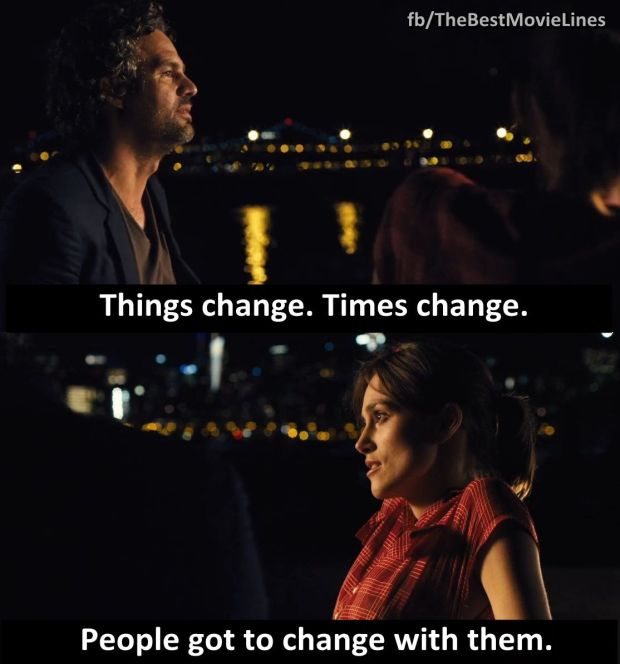
…where Keira Knightley and Mark Ruffalo are, once again…

…deep in nightscape dialogue.

Like them, it’s been a year where nocturnal serenity has frequented my cul-de-sac of vulnerability.

Perhaps this is why I’m watching this, I think to myself.

After all, it’s not every day you catch a cinematic glimpse of what you and God do once the kids go down.

Walk and talk.

Walk and talk.

The perfect end to an imperfect day.

But this time…things are different. For once, I’m inside and idle, content in a still of a different kind.

Riding the rarity, I dive in, the laughs and prose all working towards this one moment…

cba0e11cb0003455e897dafca7344ad6

…sealed by a mic drop for the soul.

And yet, this story, in more ways than one, is just beginning.

For as credits roll, I approach the screen…

…to shelve a case of what was seen…

…only to balk and wonder why.

Why don’t I want to leave this moment, I wonder.

Perhaps it’s a sequence, a song, an emotional call. Perhaps the answer is ‘none at all’.

Either way, I’m at peace. Let it go, let it rest. Sometimes, walking away is best.

Flash-forward to mid-August and I’m cleaning again…the aura of Pledge, a fitting calm.

Then suddenly, it hits me

…what struck me that night was not the scene, but the title itself

…slowly marinating into the stubborn caverns of my disbelief.

Two words…we need, but take for granted; two words…preached, yet breached and slanted.

Two words…an answer once hoped for; two words…a truth igniting my core.

Two words for two months…and likely beyond. Now comes the part I ‘yes’ and respond.

And so it goes…there’s nothing God can’t use to find us and whisper the sweet reminder…

…that sometimes, to go forward, we must go back and…

begin again.

Roll credits.

Photo creds: 7-Themes, Pinterest


Kingdom Carriers: The Reason We Exist (Part 2)

Part 1: Kingdom Agents: The Reason We Exist

So a few weeks back, I’m chillin’ in my humble abode, perusing a couple bivocational pastoral forums when I notice an intriguing update…

I work for UPS and have not taken a salary in the year and a half since I’ve been at my current church. They do provide a parsonage though. I have really been struggling with being bivo[cational]. Outside of my secular job I never feel I’m able to give enough or do enough for my ministry or my family. My job doesn’t build relationships because I’m all way in a different office and on different routes with no real interactions. It really is money only and I hate that. My dream would be to have a job [where] I can truly make money, not a get rich quick gimmick, and that gives flexibility when needed. Actually I’ve always dreamed of opening a coffee and sandwich shop. I have a dream to write but can never get enough time to make much progress. I just have been dealing a lot lately with not being enough, or not achieving enough, in any part of my life. It feels like the duck floating in the water. Things look smooth on the surface but underneath I’m fight what seems to be a losing fight right now. And I don’t know how to fix it or what to do.”

Now, before I continue, understand I’m normally not one to share anonymous posts; however, with this one, I can’t help but resonate given there are people like this all around us…

…questioning their purpose…

…making ends meet…

…all the while desperate to dream in light of their surroundings.

Accordingly, how we engage the chaos in a way that merges ‘hope of glory‘ and ‘hope of freedom‘ within our influence is worth discussion.

My thought is: whether you consider yourself vocational, bivocational, or multi-occupational, regardless of what you’re sacrificing, you desire to lay a foundation of life that pierces the mundane doldrums of an ego-driven culture.

Unfortunately, our desire to build upon this foundation is often offset by discouragement and disorientation. For example, some people know their identity as ‘loved by God’, but feel rudderless in a dead-end situation while for others, they have the ideal situation, but have no idea of who they are and what they’re truly called to.

hsy5VW5

To compound matters, there is dissonance as people who see themselves as a collection of acquired skills and experiences collide with those who view their passions and assignments as functions of their uniqueness. Granted, we live in a fallen world of mixed perspectives where you are what you do outside of what you believe; hence, the tension many believers encounter when they take a servant mentality into the marketplace.

But for the dire dreamer determined to stay up on the down side of life, sometimes acknowledging the fact it’s not supposed to be easy isn’t enough. At some point, we must accept the fact people are not only looking for momentary motivation, but long-term resources and willing availability.

Not to suggest we downplay our readiness in giving answers for the hope we have. I’m just sayin’ if all we’re doing is pointing people, like the UPS man, in the right direction, can we honestly say we’re doing all we can to help? In counseling them to find the tools and direction they’re looking for?

And hear me: I’m not sayin’ we fix all the peoples…all the situations…and make floating ducks feel like power trucks.  I get there are times when all we can do is stand and point people in the way they’re to go.

However, if we see ourselves as Kingdom agents/ambassadors, then we should expect to receive appointed assignments where the only way to reach out is to create room…

…which leads me to why I’m writing this…

…so that we all can be more attuned in extending Jehovah-Jireh hope to the UPS man’s of the world…

…in conveying the promises of God who will not only provide, but get us to the other side…both in trust and in faith.

Perhaps you’re not a fan of who you are or where you’re at right now. Maybe you feel an awkward divide between you and who you wish to pour into1.

If so, I encourage you: stand strong, know you’re loved2, and invite God into the voids you sense. Remember you have what it takes to fight the good fight (1 Timothy 6:11-16)…and by not quitting, you ultimately help others do the same.

As to how we do that?

Well, let’s just say…

that is why we exist.

tenor

Selah.

Footnotes

  1. Or who you wish could pour into you
  2. And never alone
Cover photo creds: benzinga.com