The Water Bowl: Why Pilate Washed His Hands

Written on 4/16/2017; revised 4/25/2020

Bible Passage: Matthew 27:11-26

Imagine being Pontius Pilate torn between conviction and affliction, the weight of the world in human flesh standing before you (Matthew 27:23).

No question, it’s a compelling scene: A headstrong Roman official desperate to spare a man he deemed innocent versus a bloodthirsty mob ignorant to Jesus’ Messiahship.
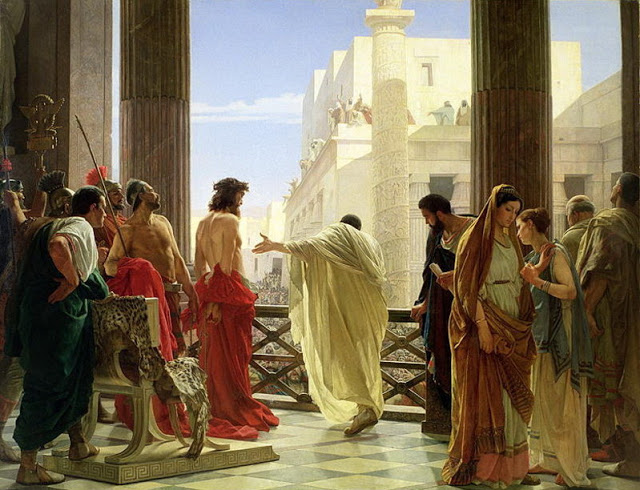
Ecce_homo_by_Antonio_Ciseri_(1)

Who knows what Pilate must have been thinking? What convictions were racing through his mind as he procrastinated the inevitable? If only we could jump inside his head into the tug-of-war, perhaps we could make better sense of such pivotal pressure.

For now, what we can discern is realizing the mob was threatening to riot…

“…he took water and washed his hands before the crowd…” ~ Matthew 27:24 (ESV)

Now, if you think is verse is random, I get it. Without context, this is simply an anecdotal observation; however, in context, this moment carries powerful significance.

For starters, the washing of Pilate’s hands not only symbolized his personal verdict but embodied what Jesus came to do in the first place – to cleanse us from sin (1 John 1:7) and free mankind from captivity (Luke 4:18). In addition, it gave future humanity the opportunity to identify with Barrabas. Like the notorious prisoner, we who deserve death have been given a second chance at life to know what real death is. Accordingly, the prisoner exchange (Luke 4:15-23) can be seen not only as foreshadowing but also as a microcosm of the Cross: Jesus, the son of God, taking the punishment that Barabbas, the anonymous everyman, rightfully deserved – a man guilty of murderous rebellion offset by the one murdered for every rebellion.

Reading on, note the verbal exchange between Pilate and the crowd (v. 24-25):

I am innocent of this man’s blood¹; see to it yourselves. 

His blood be on us and on our children!”

Again, it’s hard to ignore the irony of the situation considering these people, only a week removed from waving palm branches, were declaring judgment on the one who would soon take away their judgment. In a sense, those who knew not what they did were prophecying into those who know not what they do. Though the condemners didn’t understand the power in the blood at the time, they were essentially declaring what we understand today…

Christ’s blood is sufficient to cover the sins of mankind.

I don’t know about you, but I can’t help but marvel at this passage’s symmetry.

‘Cause truth is: While Pilate would ultimately relent to the unrelenting on the ground (v. 26), it was God’s unrelenting from on high that used all things to fulfill the completion of his Word.

And it’s here I want to zero in on since it’s this truth, this past/present/future reality that exemplifies why we celebrate Easter.

For God so loved the world, He had the Cross in mind before he created it. For God so loved us, he was making a way before we even needed it. How sweet it is to know the same God is still unrelentingly reconciling us to himself!

My prayer for you is that as you meditate on Christ’s death and resurrection, you come into a fresh understanding not only of what Christ came to do but what he wants to do in you.

Since therefore Christ suffered in the flesh, arm yourselves with the same way of thinking, for whoever has suffered in the flesh has ceased from sin, so as to live for the rest of the time in the flesh no longer for human passions but for the will of God.” ~ 1 Peter 4:1-2 (ESV)

Rejoice always, pray without ceasing, give thanks in all circumstances; for this is the will of God in Christ Jesus for you. ~ 1 Thessalonians 5:16-18 (ESV)

“He has told you, O man, what is good; and what does the Lord require of you
but to do justice, and to love kindness, and to walk humbly with your God?” ~ Micah 6:8 (ESV)

“And it is my prayer that your love may abound more and more, with knowledge and all discernment, so that you may approve what is excellent, and so be pure and blameless for the day of Christ, filled with the fruit of righteousness that comes through Jesus Christ, to the glory and praise of God.” ~ Philippians 1:9-11 (ESV)

And as you seek Him, I encourage you to pray the blood over your house and the generations to come knowing you can now receive it in joy. Unlike those pleading, ‘Give us Barrabas‘, we can now cry, ‘Give me Jesus‘.

What a way to live the new life we have.

Selah.

Until next time, I wish you all a wonderful Easter full of peace, rest, and grace.

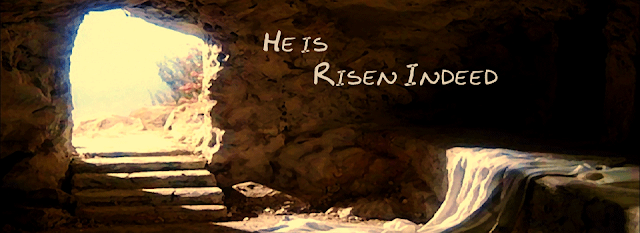
He is Risen…
untitled2

Footnotes 

1) Some manuscripts say ‘righteous blood’

Photo creds: Pinterest, Ecce homo by Antonio Ciseri & jasongoronocy.com
Jethro Principles: Structures for Organized Relationship (Part 1)

Central Thought: The Lord provides a structure in which intimacy with God is nurtured through a system of organized relationships.

Central Theme: The practice of multiple shepherds; the concept of communal shepherding.

Central Culture: A sense of ‘connection’ among members of the Body.
———————————————————————————————————————————————-
When I say ‘Jethro’ what immediately comes to mind? A husky high priest embracing Moses, guiding him from fugitive to family? A fatherly shepherd in the middle of nowhere?

Perhaps you recall that ‘Prince of Egypt‘ scene when a jovial Jethro leads the Midianites in a festive (“you must learn to join the”) dance around the campfire.

To be honest, I imagine most first impressions of Jethro involves at least one of these things.

But what if I told you Jethro wasn’t just a hospitable father-in-law but a strategic advisor with a depth of business savvy? Would the idea of him being more than a pastoral shepherd cross your mind?

If not, dare to consider Exodus 18 where Jethro advises Moses how to manage two million people, essentially giving him a promised way to the Promised Land.

Let’s set the stage:

After wondering to the wilderness, Jethro finds a swamped Moses settling disputes among the thousands of freshly delivered Israelites. Cloaked in experience, Jethro asks Moses what he’s doing knowing full well what is going on. Moses then replies he’s judging the people as they come to him inquiring God’s will. Immediately, Jethro responds by giving Moses a system and structure for accountable relationship:

Look for able men…who fear God, who are trustworthy…and place them over the people as chiefs of thousands, of hundreds, of fifties, and of tens. And let them judge the people at all times. Every great matter they shall bring to you, but any small matter they shall decide themselves. So, it will be easier for you, and they will bear the burden with you.” ~ Exodus 18:21-22 (ESV)

Heeding Jethro’s advice, Moses appoints a team of elders for each group size in v. 24-26. From there, a relieved Moses finds the flexibility and mobility he needs to meet God on Mount Sinai (Exodus 19) and receive the Ten Commandments (Exodus 20).

Now, I know what you’re thinking: But Cam, I’m low on the totem pole in my not-so-large company. How can this possibly apply to me?

Good news! These Jethro principles, while ancient, are timelessly paramount to the foundations of leadership and character. For starters, not only do they serve as a template for stewarding organized relationships, but also reveal how we, as Kingdom influencers, are to preserve our margins to experience and facilitate intimacy with God. In Moses’ case, he knew God was with him; he just didn’t know how this intimacy needed to be fostered. And I think for many of us, that’s the hardest part: While we may have the discernment, we can’t steer into the unforced rhythms of grace until we embrace our limitations (Matthew 11:20-24) and trust God’s entrusted.

As for Jethro, it’s interesting to note how his counsel reflects the Trinity in an organized relational context where each role is co-equal in value, diverse in function. One could say because of the Godhead, there’s always been a template on how responsibility, accountability, and stewardship operate since one can’t exist without the other. Either way…

…for God so loved the world, He gave us communal systems to be institutionalized so His mission could be realized.

Knowing this, we can see the heart of Jethro more clearly. While delegating authority was crucial in the moment, the intent of his objective wasn’t to establish hierarchy, but to help people discover God and to…

dcc837f9649315879703367e9cb3a17d

Selah.

Study Questions

  1. As Jethro modeled, we serve community as we provide others what they need to receive life and godliness. While the church is a primary outlet, for most, our jobs are the hubs for our social interaction. That said, do you see Jethro principles at work? If so, how are they succeeding and/or where can they improve?
  2. How can one’s concept of authority benefit from the Jethro principles? How can one’s concept of hierarchy benefit from the Jethro principles?
  3. How to Jethro principles help us deal with conflict management and resolution?
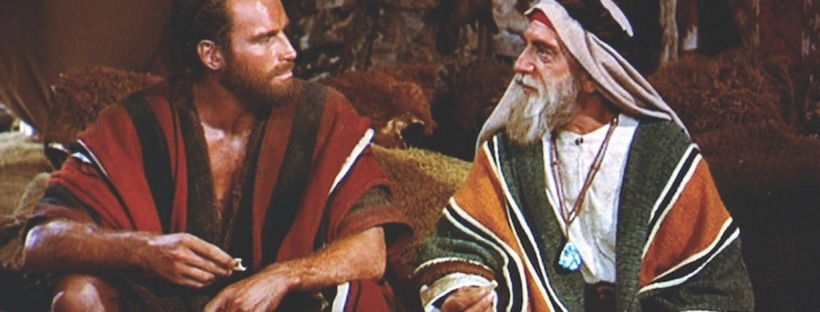
Cover photos creds: Simplify the Message; written as mini-devotional for The Gate Community Church (request at or under 500 words)

A New Thing: 4 Easter Insights You May Have Forgotten

So recently I was thinking…

For the past two Easters, I’ve taken an exegetical approach to my content, dissecting familiar topics from unfamiliar angles.

Why the Torn Veil and Split Rocks Matter: https://hisgirlfryday.com/2019/04/19/rolling-stones-why-the-torn-veil-split-rocks-matter/

Saturday Night Lifehttps://hisgirlfryday.com/2018/03/31/saturday-night-life/

However, this year, I’d like to take a different approach. Rather than forge a new facet, I want to read the Easter story from the Message translation for each Gospel…and from there, reveal four underrated Easter passages before lending my commentary.

Sound good?

200

All right! Let’s go…

1. “When it was time, he sat down, all the apostles with him, and said, “You’ve no idea how much I have looked forward to eating this Passover meal with you before I enter my time of suffering. It’s the last one I’ll eat until we all eat it together in the kingdom of God.” ~ Luke 22:14-16

It’s interesting to note Jesus’ demeanor here. In past readings, I’ve often assumed Jesus’ mien at Gethansemne as the same during the Good Supper. But to consider the magnitude of His such enthusiasm, His anticipation…it adds a new dimension to the Passover passage. From the beginning, Christ never lost sight of this moment, but He also never lost the desire to be in community. And now here He was…the Son of Man pouring into man in the most literal way with the Cross, the climax of His mission, in clear view. I don’t know about you, but to know the gladness of Jesus never detached from the glory of His Father is truly inspiring…not to mention one of the more underrated parts of the Easter story. Despite the pain and betrayal before Him, the Cross was all the more. Even in the pre-Passover hour, the tone of Jesus’ final breathes was being set.

As for us, a body of vocationals, let’s remember the model behind this historic screenshot. If Jesus can joyfully partake in a preview of His own death, then we, with Christ in us, can do the same regardless of cost and circumstance. However, in the crossing of troubled waters, remember the bridges involved are not only paved in delight but with people in proximity. Accordingly, let’s not neglect community in our communion with God. Instead, trust God to anchor your relational intentionality within the context of sharing goodness and Good news.

2. “Jesus told them, “You’re all going to feel that your world is falling apart and that it’s my fault. There’s a Scripture that says, ‘I will strike the shepherd; The sheep will go helter-skelter.’ But after I am raised up, I will go ahead of you…” ~ Mark 14:27-28

Here’s a reason why reading the Minor Prophets can prove fruitful during Easter. Remember in Zechariah 13 when Zechariah prophecies about a fountain opening for the house of David to cleanse them from sin and uncleanness? And then in v. 7, he mentions, “‘Awake, O sword, against my shepherd, against the man who stands next to me,’ declares the Lord of hosts. ‘Strike the shepherd, and the sheep will be scattered; I will turn my hand against the little ones‘”?

If not, don’t worry. I had to look it up to be reminded as well. The key takeaway here is the alpha and omega of the passage itself. Having been buried and resurrected with Christ (Colossians 2:12; Romans 6:4), we can know full well any time our world seems to crumble and crack, Jesus is there because He has gone before us. Even when we feel like the one sheep going helter-skelter, astray within our own vanity, we can know Christ will go after us. He took the nails to set us free, but also to pursue us by His Spirit and assure us of His continual Immanuel presence.

BONUS: The last ten seconds of this clip give me goosebumps. Not only did Jesus prophesy Peter’s denial but also his recovery into restoration. No question, the Cross was at the core of everything He spoke into existence.

3. “If people do these things to a live, green tree, can you imagine what they’ll do with deadwood?” ~ Luke 23:31

If you’ve ever had to recite the Easter story, chances are you didn’t quote this line. After all, it’s a tough verse to understand without context. Yes, we can deduce Jesus is the green tree and the deadwood as the ‘builders rejected’ (Psalm 118:22, Acts 4:11), but why would He bring this up in the midst of a death march? As research has shown, there’s plenty of room for debate; however, while some suggest Jesus was hinting at a specific eschatological event (i.e. the destruction of Jerusalem in 70 A.D.), I’m just impressed He was prophesying at all at this point. Even with Simon of Cyrene carrying the Cross, Jesus still had enough selfless awareness to redirect sorrow to its proper source and purify emotions in the light of His suffering. In a sense, not only was Jesus foreshadowing His request for God to forgive the ‘deadwood’, but also sowing truth (John 14:6) in His final moments.

4. “Then he opened their minds to understand the Scriptures.” ~ Luke 24:45

After Jesus’ resurrection, we tend to paraphrase the pre-ascension as ‘Christ making himself known’. And by all accounts, this is true. Before Jesus could ascend, he first needed to ‘show and tell’ before Operation: Great Commission (Matthew 28:18) could begin. However, to stop here would be to stop short. For if we look at this verse in context, we find Jesus was active in awakening faith in the faint of heart. From Mary Magdalene, Joanna and Mary (v. 10) to Cleopas, his wife (v. 31) and the 11…clearly, Jesus had more instruction and blessing to impart. But what ultimately makes these nine words stand out is the demographics behind them. In a poetic and somewhat symmetrical way, Jesus was tying a bow on what He started and cutting a ribbon on what He was about to start. At last the era of the synagogue was transitioning into the dawn of His bride, the church. And who would be in the middle of it but Jesus, the peace-making bridge-builder Himself? I know when we think Jesus as Savior, we think pre-Cross, but the post-Cross sequence, to me, is just as significant in affirming the nature of His love.

Selah.

So there you have it, my friends: Four insights among the thousands currently illuminating around the world.

As you approach tomorrow, my prayer for you is that as you come into a fresh understanding not only of what Christ came to do, but what He longs to do in and through you in the days to come.

Until then, I wish you all a wonderful Easter weekend full of peace and rest as you reflect on the ultimate sacrifice.

~ Cameron Fry

46790

Cover photo creds: Unsplash

Rise and Shine: The Secret to Giving Your Best

Inspired by vintage Keith Green…

Many of us have heard the phrase, ‘Do your best and let God do the rest’.

But lately, I’ve been wondering how well I truly understand this.

I mean I ‘get’ the Bible verses…

And whatever you do, do it heartily, as to the Lord and not to men, knowing that from the Lord you will receive the reward of the inheritance; for you serve the Lord Christ.” ~ Colossians 3:23-24 (ESV)

Do you not know that those who run in a race all run, but one receives the prize? Run in such a way that you may obtain it.” ~ 1 Corinthians 9:24 (ESV)

I can do all things through Christ who strengthens me.” ~ Philippians 4:13 (ESV)

Each of you must take responsibility for doing the creative best you can with your own life.” ~ Galatians 6:5 (MSG)

…yet somehow in the application, I’ve been missing something. And I think I’m starting to see what it is.

You see, we often approach work as a derivative of ‘doing’ be it a project we initiate or a means to manage. Define the goal and pursue it. Clarify the objective and go for it. In a way, this makes sense given we’re all hard-wired to perform with excellence for excellence.

However, while execution and effort have their place, it’s important, dare I say critical we ask ourselves: At what point are we allowing God into the picture? Into the frame-work of our work if you will?

At the point we’re exhausted? At the point we’re confused? At the point we’re doubting?

Or are we making way His way from the very beginning?

As one who has failed time and time again with this, trust me when I say…

1. If you want to do your best, let God get in front of it.
2. If you want God to do the rest, let Him get behind it.

Don’t wait until you’re burnt out. Don’t wait until you’re stuck. Rather before you clock in each day, consecrate your effort, receive His faithfulness, and know He will accomplish His purposes in you. Even if He’s guiding you into turbulence, into danger, know He’s calling you to see Him in the midst of it in a fresh way. Accordingly, don’t be discouraged by growing pains when in reality He’s sowing gains you can’t yet see.

In closing, I encourage you, friends…

1. Let God be in the midst of your best and rest, not the middle.

2. Examine any place you may be relegating God to an on-call substitute, any place where ‘doing the rest’ has become a request to autocorrect above anything else.

Let Him be more and go before!

Selah.

90999706_10101462382580722_8801131594371825664_n

Cover creds: The Youthing Magazine


High Priest in a Manger: The Nativity As Seen Through Hebrews 4

‘Tis the season to be jolly…

…or so they say.

To exalt why we exist, to know freedom abundantly…

…yeah, yeah, I’ve heard it all before.

But if you’re like me these days…drained, disoriented…wondering when and where you are…unsure of most things status and standing…lend an ear.

‘Cause while I don’t have all the answers, I’m also not one to hide what I find. Even if it means going back to certain wells time and time again.

That said, a few weeks ago, I was glancing through Hebrews 4 when it hit me: While verses 14-16 are often attributed to genealogy and lordship, they also hold value in light of Christmas.

Don’t believe me? Well, let’s read together…

Since then we have a great high priest who has passed through the heavens, Jesus, the Son of God, let us hold fast our confession. For we do not have a high priest who is unable to sympathize with our weaknesses, but one who in every respect has been tempted as we are, yet without sin. Let us then with confidence draw near to the throne of grace, that we may receive mercy and find grace to help in time of need.”

Upon first look, it’s fair to say there’s not much Bethlehem and Messianic prophesy referenced in this passage. Granted, one could say the “great high priest” achieves the latter, but either way, odds are you’re not thinking Luke 2 when reading Hebrews 4.

However, when we take a deeper dive, we begin to see the significance of what “great high priest” means for us today. For instance, after emphasizing Christ as Word and the trust/rest dynamic in v. 14, note the critical turn in v. 15. As the Message translates, “We don’t have a priest who is out of touch with our reality.” Rather, He is able to understand our weaknesses and temptations because He not only conquered them but experienced them!

giphy

From here, we begin to see how this passage pertains to Christmas. Before the Son of God could bear our sin in His body, the Son of Man had to be born into it. Before He could redeem us from the curse of the law, He had to establish His plan of grace. Before He could save us through the Cross, He had to love us through the manger. You get the picture.

Yet, even before the manger, Christ had to be our high priest relating to us before the beginning of time. In this way, His sovereign authority could craft a divine pathway for our eternal relationship and our fearless approach beforehand. After all, nothing takes God by surprise.

Of course, the theological layers run deeper, but for now, consider this. When we celebrate Christmas each year, we’re essentially saying…

… “Lord, I’m taking hold of your mercy, I’m entering your rest, I’m accepting your help, I’m renewing my mind…all because you loved us to know our flesh as flesh. And from that relatability, I can receive you in confidence as the center of my ability, humility, stability, tranquility, etc.

I love how the Amplified breaks this down…

Therefore, let us with privilege approach the throne of God’s gracious favor with confidence and without fear, so that we may receive mercy AND find His amazing grace to help in time of need…an appropriate blessing, coming just at the right moment.”

Ahhh, at the right moment. Isn’t that what we’re always searching for? The right time, a right moment, the right one, even? And yet, so often we miss the fact Jesus is all these things. A perpetual reality punctuated by the incarnation, Jesus was our hope as a high priest before He became hope as a baby. Now we can live with Him in heaven forever all because once upon a time, a hope once deferred became the hope we cling to today.

Accordingly, for all you in despair, in a rut…a funk, whatever it may be, know this: Jesus came at the right moment so He could intervene for you at the right moments. Past, present, future…He never stops being a shining light of David directing our hearts to where His rest lies. As Paul states in Ephesians 2:14, “He Himself is our peace, who has made us both one and has broken down in His flesh the dividing wall of hostility.” All the more so, His light could enter, penetrate the darkness, and shatter the mold.

And so…as we wrap up another year, my prayer is that you’ll embrace this season and boldly enter into God’s best, His rest, and His next. For when you see the Cross behind the manger, you understand Christmas; however, when you see the priest in the manger, you’ll know the courage that can be yours as you invite into your weakness. How awesome it is to know Christ made Himself vulnerable so we could be vulnerable back? Not to mention with each other as we share the good news of His love in all we say and do.

Selah.

‘Til next time, may you know the hope that is yours and the breakthrough that will be yours this Christmas season.

Love you guys…

~ Cameron

79347731_10101376553512862_7564821732050075648_n

CourageousHarmlessCollardlizard-size_restricted.gif
Cover photo creds: Renovare