3 Things Leaders Know That Everyone Should

It’s been said, ā€œA leader is one who knows the way, goes the way, and shows the wayā€ (John Maxwell).

But let’s be honest: How well do we live all three together?Ā 

I know for me, there are times I neglect to model what I know and others I forget to seek what I don’t.

Yet, when I consider Maxwell’s words, I’m reminded how what I know as a Christian leader must ultimately inspire others to become more.

So for the next couple months, I want us to focus onĀ practical and powerful ways we can better demonstrate the qualities that make us who are…where we are.

In the meantime,Ā let’s start off withĀ three things leaders know that everyone should…

1) BeĀ Stubborn to Love

Whether we’re serving in marketplace, ministry, or extra-curricular roles, it’s important we see what we do as an extension of God’s love in motion. But perhaps you’re like me having wondered how to do this consistently in the face of busyness, prejudice, distraction, etc.?

If so, I submit to step up our love, we must step up our stubbornness to show it.

Now I know what you’re thinking: stubbornness is evil. I get it. However, if it’s rooted in goodness and godliness, can we honestly say it’s a bad thing1?

For instance, when we look at Jesus’ ministry, not only do we find an unconditional love steadfast in circumstance, but committed in referencing where it came from (i.e. his Father).

This leads me to an important realization: if we’re stubborn to love at all times, then we’ll see love as a visional reality rather than a missional priority.

Not to suggest programs and projects aren’t from God. I’m just saying if we make love the lens by which we see as opposed a means to an end, then we’ll mature in our ability to continually navigate people to the source of what we reflect2.

Bottom line: If you want to better showcase God’s love, then center your leadership on pointing people to Jesus. Love always cites its sources (Luke 3, John 1).

2) Be Apparently Transparent

Recently, I heard word of a senior pastor who encouraged his staff to suppress their struggles for ā€œcongressional appearanceā€ purposes.

At first I figured he was stirring reproach; however, the more I pondered, the more I wondered if the motivation was rooted in fear above anything else. Granted, I can appreciate contrarian strategy assuming it’s Spirit-led in love; however, when a root motivation lies in self-preservation as opposed to life change, one must question.

This leads me to a second realization: While there’s a time to listen and a time to share, if we’re not honest about the realities of leadership or vulnerable about our cracks and scars, then we disallow God the chance to operate in and through them.

Again, I’m not saying we make testimony an agenda item. I’m just saying wherever we find ourselves, we must understand there are people in our path wrestling with something we’re struggling with or have struggled with. Thus, it makes no sense to pretend struggles, temptations, and failuresĀ aren’t bearable realities when truth is: faith is a journey inseparable from the ups and downs of life.

Bottom line: If we want to better reach people, we must recognize apparent transparency of past and present testimony as a key component in supporting one other (Ephesians 4, 5).

3) Don’t Just Find a Way…Make a Way

When it comes to the bivocational life, it doesn’t take a rocket science to know there’s not a one-size, fit-all way to live it. While it’s true the best way is often the most efficient way, whatever ā€˜way’ we choose, it’s paramount we not just find it, but make it.

For example, early in my youth pastor tenure, I realized while there wasn’t anything I could do to fix our mid-week attendance problem, there was something I could do to help youth stay on the same page when referencing content. The solve was simple: record the audio, edit it with the visual content applied, and distribute via social media.

Sure, the idea required extra work, but in the end, it provided a trackable short-term solution and an accessible, long-term resource. Now anytime I cite a past message, there’s at least a chance the youth will not only know what I’m talking about, but also have heard what I’m talking about.

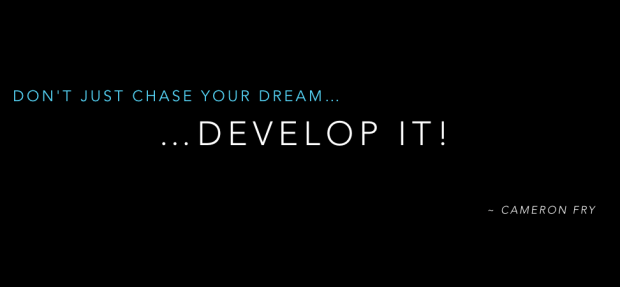
Bottom line:Ā Dreams can’t be realized until they’re developed. Therefore, don’t just consider what’s most important; focus on how you can better make it known with what you’ve been given (Matthew 25, 1 Peter 4).
Screen Shot 2017-03-13 at 6.05.26 PM————————————————————————————————————————————————

Stay tuned next time when I’ll unveil my next three leadership tips; in the meantime, if you have questions or comments on the content, feel free to drop them below.

Footnotes

  1. Actually there’s a name for that (good stubbornness = determination)
  2. Note: This has tremendous implications in marriage as well (more on this in a later post)

Photo creds:Ā http://www.ryanweimer.com

3 Ways to Elevate Your Worship Culture

When building a youth ministry, facilitating a dynamic worship culture can be a challenging, if not, grinding experience. FromĀ constructing ensembles to developing musicians, the road to ignitable liturgy is often far from ā€˜yellow brick’.

Thankfully, whether you’re a worship leader or a ā€˜leader of worship’, there’s always a way we can elevate our worship culture.Ā Granted, starting points will vary; for now, let’s focus on three of the most applicative and go from there…

1. Extend the invitation

Regardless of where you are on the worship leading spectrum, we can agree the objective of our reverence is to encounter Jesus. But perhaps you’ve wondered how to sing about history-makers and planet-shakersĀ in a way that convincesĀ your audience they can be. If so, I submit there is a way to journey yourself and your audience to those deeper places of intimate belief together.

But Cam! What if theĀ worship atmosphere growsĀ stale?

To be honest, there’s not a one-size-fits-all solution; however, in my experience, whenever I sense aĀ  disconnected audience, my default isĀ to exhort a reminder as to why they’re worshiping. For starters, people often approach the throne room withĀ distracted hearts.Ā So byĀ offering those hearts an invitation to dig deeper (i.e. stand up, lift hands, close eyes, etc.), IĀ broaden the engagement potential of the room. Of course,Ā this doesn’t mean everyone will accept; however, by laying foundation for next level intimacy, I can carry on knowing I’ve done my part in inspiring surrender.

Bottom line: When in doubt, your role is to extend direction as the Spirit leads. Once you give what needs to be given, God will take it from there.

2. Prune your routines

Over the years, I’ve found ā€œrotationā€ to be one of the most used and abused words in worship circles. While the model as a function of opportunity is constructive, to be effective it must also guard against the pride of ā€˜program’.

Hence, as youth and/or worship leaders, it’s critical we tend our unpruned routines (i.e. rehearsal times, visual aesthetics, service flows, team habits, etc.) capable of hindering full dependence on the Holy Spirit.

Yes, musical discipline and organization are key ingredients to effective worship; however, if we forget to pray before practices and services, if we’re not proactive in stewarding community with team members and congregants, then we risk tolerating our motions over God’s movement.

Bottom line: Before you get too attached to certain set lists and setups, make sure you’re constantly carving out room for the Spirit to breathe his game plan into you.

3. Incorporate the prophetic

As a Nashvillian, I’ve been around musicians and their tendency to identify value on ability all my life; however, as discussed inĀ last year’s devotion, our identity, value, and call to worship center on having been made by God and being more like Christ.

Unfortunately, for many worship leaders and musicians, the bent to limit identity to abilityĀ andĀ overlook prophetic potential is ever lurking.Ā Why this is…I’m not completely sure. What I am sure of is while we may not all be prophets in a five-fold ministry sense, that doesn’t mean we lack a prophetic mouthpiece (see 1 Corinthians 14:1-5). Contrarily, as part of our original design to worship, we were alsoĀ made to prophetically pour out.

So when it comes to facilitating engaging worship cultures, I believe it’s imperative for “spotlight leaders” to not only utilize platform opportunities to speak prophetically, but to also anticipate them in quiet times behind the scenes.

Bottom line: If we truly want to see our worship culture transform where people engage the power and presence of God in a deeper way, then we must be willing to engage it in the closet space of our heart.

————————————————————————————————————————————————

Stay tuned next time whenĀ we’ll unpack these points in greater measure, specifically knowing when and how to speak prophetically from a liturgical and bivocational perspective.

Photo creds: Pinterest

Faith at Work: A Preview of Phase

In the bivocational life, there’s arguably noĀ greater challenge thanĀ balancing marketplace and ministry. From conflicting schedules and limited availability to opportunity bias and indifferent colleagues, there are many hurdles bivocationals face on a daily basis. While the degree of difficulty may differ depending on calling, skill, and personality, truth is: Whether we’re stuck in a stale work culture or thriving in vibrant community, there’s a specific roadmap in each context to help us better reflect God’s heart.

But before we dive into a more definitive dialogue, we must first set the framework for why thisĀ content is worth discussion. As mentioned in my last devotional, there are two general types of bivocational leaders:

  1. The ministerial leader who works a secular job for provisional purposes.

  2. The marketplace leader who has a place of liturgical influence.

For both sets of leaders, it’s important eachĀ understands their own wiring and from that work in unity to guide the saints into greater wisdom and freedom.

But perhaps you’re sittin’ there wondering how to connect where you’re at to being a ‘lasting impression’ leader. Maybe you’ve grown up compartmentalizing ministry and marketplace only to have recently discovered God’s intent for them to operate hand-in-hand.

If you can relate, then I encourage you to dig into this new ‘faith at work’ series with us. ‘CauseĀ while other bivocational resourcesĀ approach marketplace as secondary, we see it as primary given marketplace is theĀ leading place of influence for most carriers of the Gospel.

Not to suggest occupational ministers lack a prevalent place in pastoral settings; however, when we consider our original design and extend it into our individual purposes, we find whether we’re marketers, accountants, doctors or psychologists, we all have vocational and spiritual gifts designed to extend God’s love to a broken world.

As for the purpose of this series moving forward, we’ll examine the marketplace side of ministry in two phases:

  1. First phase – Helping the church educate marketplace ministers in character assessment, administration, practical business wisdom, and workplace evangelism.
  2. Second phase – Helping the bivocational leader integrate their understanding of these topics into their respective roles.

Let’s dive in, shall we?

Cover photo creds: cpplunkett.photos

Pursuing the Pylon: Why Good Goals Start at 1st & 10

Have you ever wondered why it’s easier to set goals than it is to reach them? Why it’s less difficult making resolutions than being resolute about them?

If so, then congratulations; not only is self-improvement important to youĀ but you understand the value in pursuing ‘next level’ goals as opposed to run-of-the-millĀ resolutions.

Granted, this doesn’t automatically simplify the walk-it-out process.

Yet, as discussed during last weekend’sĀ LEGACYouthĀ leadership retreat, when we talk about refining our aim, the hardest part isn’t so much listing our goals; it’s living them outĀ in fullĀ together1. So how we grow as target-trainers and develop as goal-keepers in the context of community is worth discussion.

For starters, we must understand the difference and progression among plans, steps, and goals. In terms of pathway, before a goal can be achieved, it must be realized through a plan and executed by its steps (plans -> steps -> goals). A quick drill-down on Proverbs 16:9 confirms this: ā€œThe heart of man plans his way, but the Lord establishes his steps.ā€

Framing this in the context of goal-setting, we find…

  1. A goal without a plan is unachievable…
  2. A plan without steps is unbelievable …
  3. A step without the Lord’s establishment is inconceivable…
  4. Therefore, a goal cannot be fully accomplished if God is not allowed to do that which only he can do.

FairĀ enough. Still for many, while identifying goals comes naturally, it’s important we allow God establish his steps individually and corporately in every walk and pursuit of life.

ā€˜Cause truth is: the biggest reason goals fail isn’t a matter of not trying, but of not relying.

As crazy as it sounds, God may not always give us clear game-plans; in fact, there will be times his strats2 seem incomplete as his grace keeps us in the dark; however, if we’re faithful to seek him at all costs, he will surely give us clear, complete, and concise understanding as to the next steps we’re to take (Job 32:8, 2 Timothy 2:7, Psalm 119:100, Psalm 119:130, James 1:5). All we have to do is journey in trust (i.e. depend on what he’s called us to and abide in it with joyful obedience) knowing to the extent we lean on God to that extent we’re supported in rest (see application of Hebrew word ā€œshaanā€ in Genesis 18:4, 2 Chronicles 13:18, 2 Chronicles 14:11).

Will the road be tough at times? Absolutely. Will the light at the end of the tunnel seem dim on occasion? Of course. Again, I’m not saying leaning on God is always going to make sense; however, I am saying if we truly desire to hit the bullseye of our goals and for God to establish the bridge between them and our plans, relying on God is the best approach.

Think of this way: If living our goals is a game of football, then the process is like a quarterback advancing the ball down the field. For the offense, the ultimate goal is to score a touchdown; however, in the heat of the moment, the team isn’t as focused on six points as it is keeping the drive alive…in going for the first down. Can any one play produce a touchdown? Absolutely. But to the quarterback, the objective isn’t so much to score on one throw as it to anticipate the defense and execute on a play-to-play basis in hope to renew a fresh set of downs. So if we apply the goal pathway as mentioned above, we can see how…

  1. The goal is to score a touchdown.
  2. The plan is the offense scheme employed by the coach and driven by the quarterback.
  3. The steps are the single plays of the drive seeking to sustain momentum through the first down.

Thus, I submit if we want to mature our goal-setting into goal-keeping, better to go for the first down until the time comes to go for the touchdown. See the difference?

My encouragement to you, friends, is to remember since plans represent the steps needed to achieve the goals God has placed in your heart, they’re ultimately appointed to Christ. So whatever you commit to, stay ready to surrender, ask the Lord to fill you with his vision…to align his priorities within you, and then follow through by staying tethered to trust.

Cam out.

Footnotes

  • Or living them out in full together in a teaming context
  • Short abbreviation for ā€œstrategiesā€

Photo creds: GettyImages

Making H1s7tory: 3 Big Life Goals for 2017

This may sound passĆ©, but I don’t get why New Year’s resolutions are as big a deal as they are. Yes, I’m all about life change and terminating undesired behavior; however, when it comes to one’s resolve to #levelup, I guess I’m a tad skeptical. Perhaps it’s the sugarcoated tradition we, as a culture, have placed on taking spiritual inventory or the ghost of New Year’s past reminding me of the times I missed targets once aimed for. Either way, I feel like a fish out of water writing about goals in a time when it’s so clichĆ©.

Still, I can’t deny the wisdom in writing down the vision (Habakkuk 2:2) of Spirit-led aspirations. Thus, without further ado, here are my top three goals for 2017…

  1. Ā Make like a proton & stay positive.

Ok, so I know this sounds obvious, but it’s worth repeating: positivity is a choice and a fruit of the voice. Granted, I’m not saying anything new; however, speaking from conviction, while I don’t struggle with hope, I do struggle in consistently guarding it with joy. As a result, my positivity can find itself restricted to change on the horizon as opposed to living fully in the moment. If you’re like me in the sense your positivity and present aren’t always aligned, I encourage you: consider how you want your life to speak and set your mind for positivity.

ā€˜Cause truth is: you cannot have a positive life and a negative mind. You cannot use your voice for kindness, your ears for compassion, and your heart for love if you’re not consistently believing the best for you and those around you. Yeah, I know it’s easy to let the downers of life, whether people or circumstances, set the tone. Yet, when I consider how I want to grow in 2017, no question, I want to be more positive; hence, why I’m goin’ to make like a proton and stay positive no matter how ā€˜neutron’ or ā€˜electron’ life gets.

raw

  1. Capitalize on opportunity.

It’s been said nothing is more expensive than a missed opportunity. In terms of cost, I agree. Certainly there’s a correlation between seizing the day and staying alert…between staying alert and challenging oneself.

The question is: How do we actually stay alert?

For starters,Ā we must standĀ firm in prayer and faith (1 Corinthians 16:13-14). In my experience, I’ve found it easier to desire a challengeĀ than what sets us up to overcome it. We want the thrill, we want the strength, just not the silence or the persistence. Yet, while wanting to better steward the assignments of God is entirely good, we can only get there if we allow our prayer life to be more purposeful and perpetual. After all, given prayer is a cyclical process, we can’t hear if we don’t listen and we can’t be more sensitive if we’re not intentional.

I believe for many of us, 2017 is going to be a year when our minds are renewed through the refreshing of our listening…a season in which we’ll hear God’s voice more clearly through deliberate prayer and furthermore by the divine appointments he arranges.

My advice: If you’re faithful in the quiet spaces (seek first the Kingdom and his righteousness), God will ensure his confidence and influence through you in the public places…as you serve in love (and all these things will be given to you; (Psalm 118:5; Matthew 6:33).

raw2

  1. Pursue freedom.

Freedom can be a tricky word in our spiritual vocabulary. On one hand, we know it’s for freedom that Christ has set us free (Galatians 5:1) and where the Spirit of the Lord is, there is freedom (2 Corinthians 3:17); on the other, we might think: ā€œIf I’ve been purchased at a price, why do I still feel anything but free?ā€

Honestly, I think part of the reason is our tendency to equate freedom with victory. Yes, Jesus took away our chains at Calvary. Yet, while victory was attained at the cross, we still have the choice (free will) to walk in the freedom that victory produced. So while some may view freedom through a ā€˜have it or you don’t’ mentality, I contend it’s grace in motion…a pursuable, tangible reality we can knowĀ AND walk in.

Interestingly, if we dig a little deeper,Ā Ā we findĀ freedom, asĀ described by Paul’s Ā verb selection inĀ his letters,Ā asĀ obtainable in the desert places andĀ fillable in the empty places.Ā Therefore, I submit: if we’re struggling with shame yet are aiming for freedom,Ā we shouldn’tĀ be afraid to lay it all on the altar before GodĀ considering a) his compassion…his mercies are new every morning (Lamentations 3:22-23) and b) his freedom is always on the move.

As Davey Blackburn once stated: ā€œGod wants to use [us] in [our] weakness far better than [we] can use [our] talent.ā€ So why not allow the freeing work of God in Christ through his Spirit consume places where sin and its rubble once dwelt as we humbly boast in God’s ability to use our weakness as opposed to exalting it ourselves?

Selah.

giphy

Photo creds: staastao.com

This work is licensed under a Creative Commons Attribution-NonCommercial-NoDerivs 3.0 United States License.