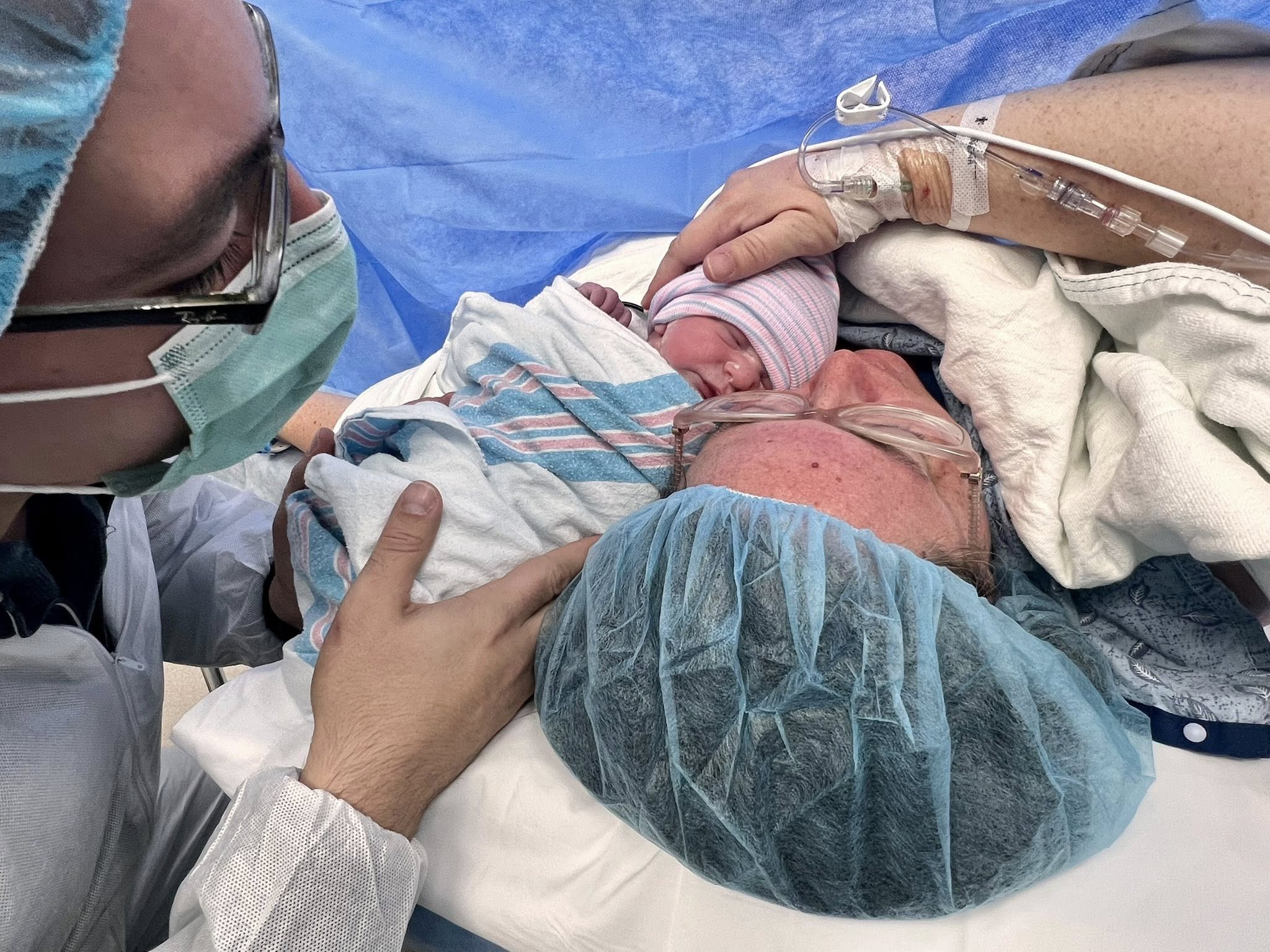
I’m strolling this corridor at Tristar Centennial, a place I never thought I’d see or walk again. Yesterday’s arrival of Jori Grace, our Little Bag Fry, our second rainbow, reminding us that the surprises of God, regardless of how we initially interpret them, are nevertheless extensions of His faithfulness.
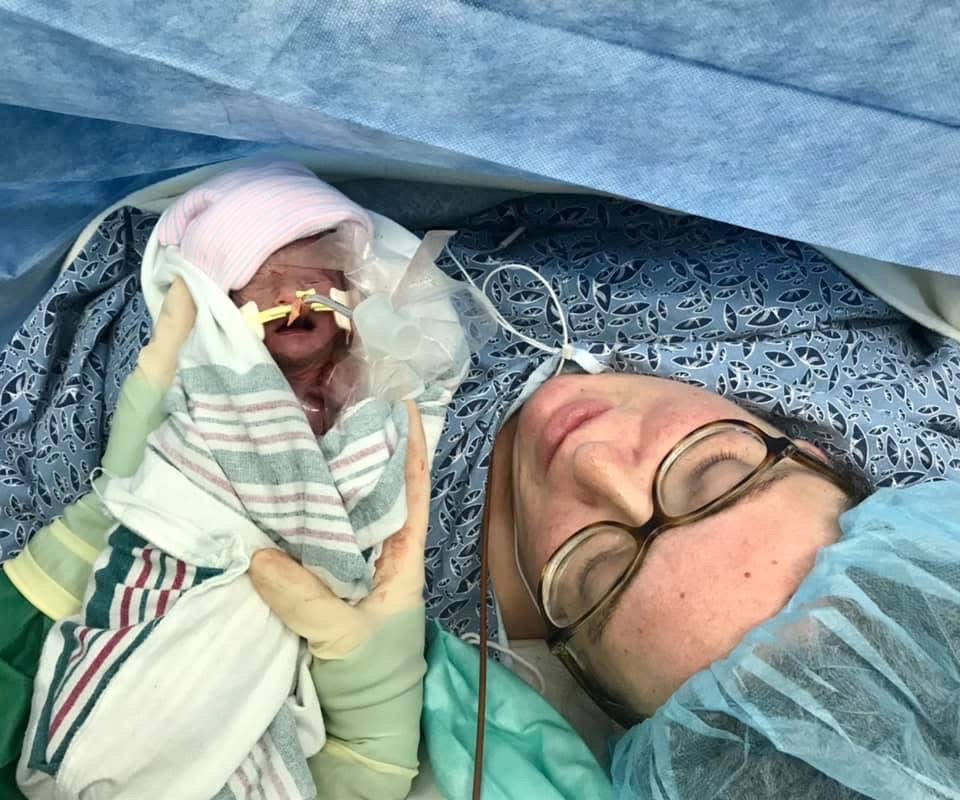
Unbeknownst to Lys and I coming into Jori’s birthday was the fact she would arrive the exact place in the same room where Jubilee debuted.
December 17, 2025
August 21, 2021
As you might suspect, this entrance was deeply and multi-emotional. Practically impossible to not think where things were four years ago. So much has changed, so much has progressed, so much new, so much next.
As I’ve considered the time warp, I’ve latched onto a single word that has a precedence of peace. That word is ‘closure’.
What does the Bible say about closure, closed loops, closing the gap, etc.?
When we talk about closure, we’re often discussing what it means to find God’s grace and strength to endure, to discover His power in the context of forgiveness, perseverance, receiving help, ultimately turning and realigning to Jesus.
It’s a word that merits a Christian worldview, since the world frames peace and good tidings primarily as functions of comfort, self-preservation, even open doors to better opportunities. However, in Scripture, we find similar evidence in God guiding us not only through new doors but closed doors
For example, I know it’s highly likely I will never be a guest patient at Centennial again. A somber thought since Lys and I have experienced so much life here. ‘Tis been a place where we’ve always felt vertically anchored, even if we were compelled into the posture. Understandably, there’s a bit of melancholia in this birthing episode as redemption arches, past and present, meet a local farewell.
Still, I’m encouraging by a certain notion. Anytime new life is given, we’re not just obliged into exuberant gratitude but to commit/recommit ourselves to the call we have to nurture that life in the ways of God, in the likeness of Christ. We may not feel like we have what need to navigate the struggle we encounter, as this season reminds us, we still have Jesus, with us and for us.
So, whether I reference scars with onsite origin or those fresh within Lys who fielded her third c-section in four years, we recognize this renewed race as part of God’s work of restoration. And as this special time of year reminds us, where there’s restoration, there can be anticipation for what is good, given the source and omni-nature of Immanuel, in loss and pain, to life as fresh gain.
To Centennial, it’s been real to the sweetest effect. I bid you all the fondest adieu and to the rest of you…
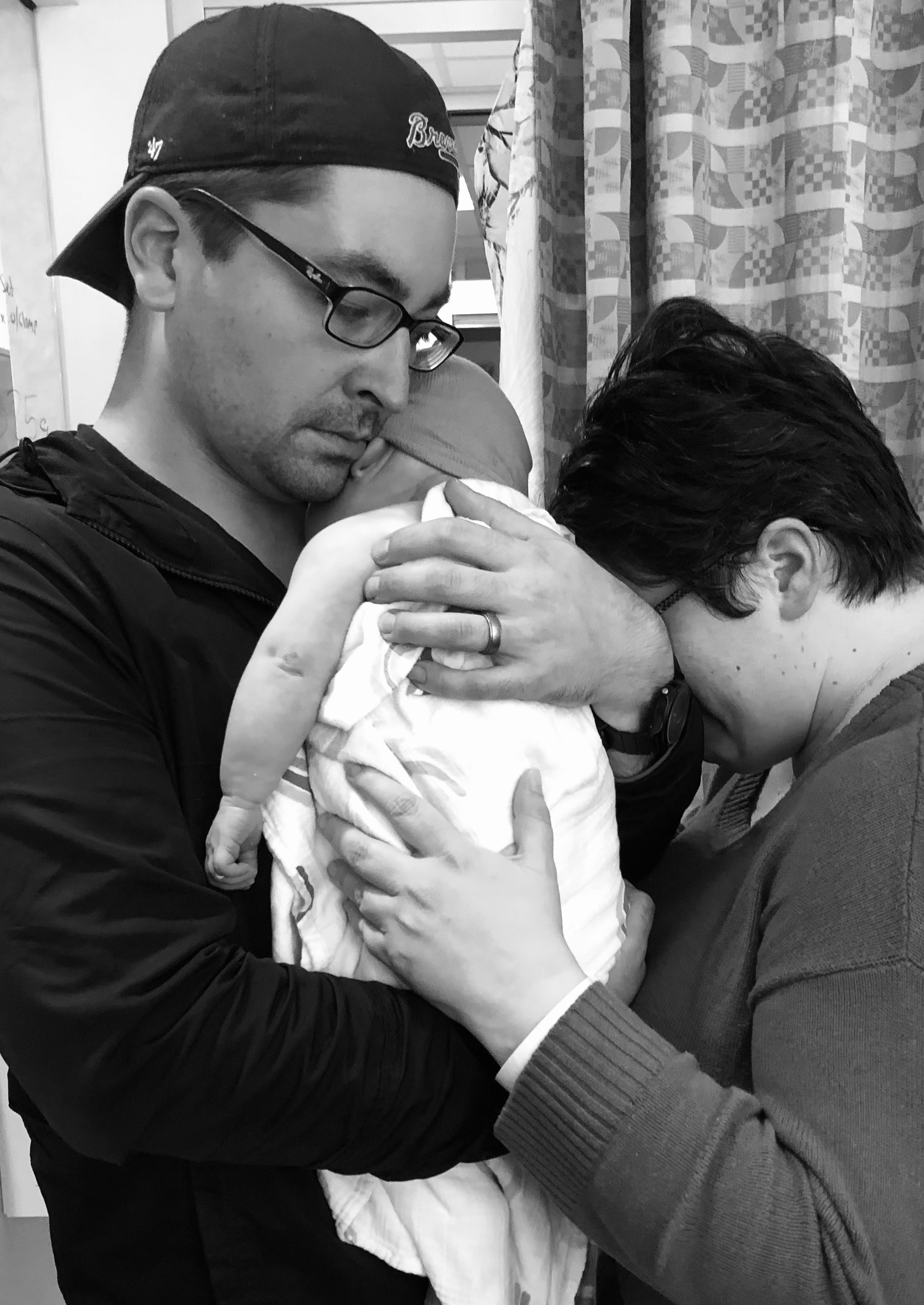
It’s been three years to the day since Juju’s death.
For better and worse, Lys and I haven’t been the same since that fateful day. While grief intensity has lessened, life still feels like a tightrope. One false step and we’re praying for a safety net, just trying to survive – like when Juju was alive only without the hope of tomorrow. If only I were better at patience, maybe this whole waiting thing would be easier.
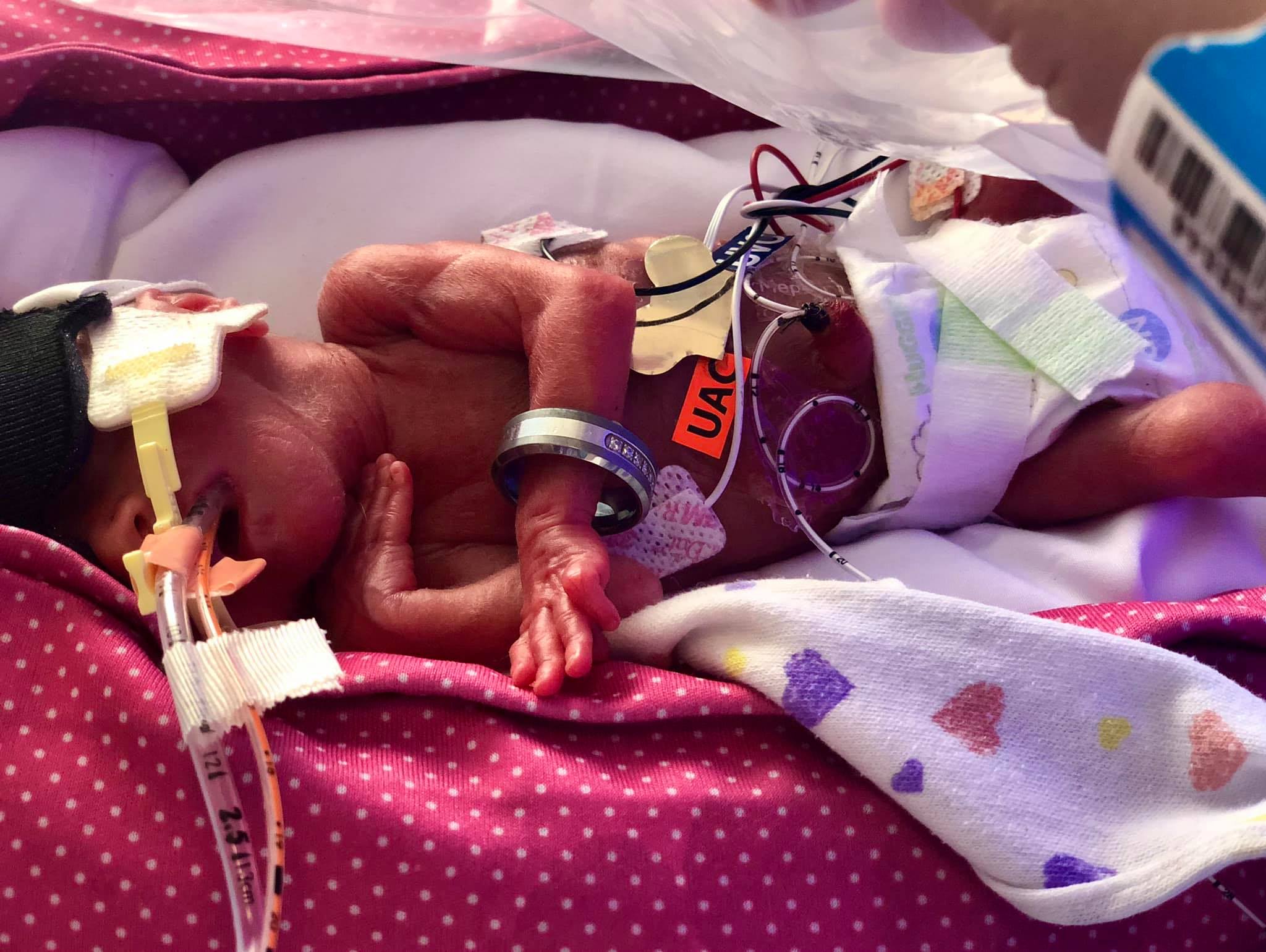
As Juju proved during her NICU tenure, progression and regression aren’t always mutually exclusive. At times within her fragile body, one element was improving while another was degrading. Her recovery and, at times, lack thereof, was anything but a linear wave. Like life itself, her journey was a winding roller coaster with unexpected turns and unprecedented breakthroughs. Her butterfly tattoo on my heart, not a day goes by that I don’t think of her and consider the glory of what she constantly experiences.
Yet, though the tears have remained mostly at bay the past year, there’s still a temptation to anger. God, why didn’t you somehow, someway cap her suffering? If you knew she was going to barely make it past a year, why defer the inevitable?
In most cases, I can convert those ‘whys’ into ‘look what God did’ and carry on. Where I stumble is the next level down: God, why aren’t people more naturally geared towards the broken-hearted? Why does the silence sometimes increase when it needs to decrease? In the shadows, you were there after Juju’s death. What about those who may not even be able to find you at all? What about them?
These questions have been raised before, and they’ll be raised again. Until the answers come, I, along with the rest of us, must settle in Christ (1 Peter 5:10; Colossians 2:6-7). For those who have lost a child, we don’t have any other option. At day’s end, everyone has a call to embrace their suffering and ditch their baggage. No exceptions. I know for me, sometimes I get into trouble tolerating the baggage while trying to ditch the suffering in a quest to find meaning in pain; however, in times of reset, I catch myself in the striving and commit my ways to God whether I feel like it. It’s hard as heck, don’t get me wrong. I just know as low as I feel sometimes, I’m only hindering my perspective when I punt prayer and vertical reliance.
I love how Paul opens Colossians 3:1: “Therefore if you have been raised with Christ, keep seeking the things that are above, where Christ is, seated at the right hand of God.”
For starters, the chapter unpacks our ‘new self’ identity as a garment we can wear regardless of the day. But even more promising, we’re reminded in the intro how we’ve been raised with Christ to a new life, sharing in His resurrection from the dead. In a weird way, this hits home even more so these days. Even when I feel dead on the inside, somehow, I know I’m that much closer to the type of life I crave. Among all the things that are above, where Christ is, seated at the right hand of God is also my daughter. Your son. His grandson. Her granddaughter. Their mother, their father, our friend, etc.
The way God’s lap is designed, there is always a comfort and rest to draw from, even if it’s simply His presence and nothing more.
The problem is we’re not often content with the safety of God’s nearness because we’re dissatisfied with the security of it. Our kid passed away, so we doubt if God is who says He is. If God is a God of love, then why didn’t His sovereignty meet my faith in the middle? If God has the capability, why didn’t His power take pity on a soul that could have done wonders for Him if given the opportunity?
While I’m not condoning this as the correct posture to take, admittingly, this is a popular contention bereaved parents wrestle through. We desire the improbable; we believe in the impossible. We just wish it could have looked a certain way. And that’s okay…assuming we regularly surrender our grief, anxiety, fear, and anger. As Juju reminds us, there’s beauty to be found in the ashes of our sorrow, especially when we reframe our perspective to see a life well fought as an altar pointing people to Jesus. Our lives may always sound like a sad song, but that doesn’t mean what other people hear is the same tenor.
Trust me, life has been brutal, dare I say, savage, this decade. Despite the positive turn in recent years, my debates with God are still on the regular.
Dear Lord, thank you for what you did during Juju’s life and gifting my family with this incredible light, this testimony unfolding, but surely you know what it’s like to grieve. You know what it’s like to be separated from your only begotten Son. If you’re stripping me of anything my life could cling to other than you, so be it. I don’t have to know how you’re exalted in those moments as long you’re exalted at all. And with a daughter dancing in your courts, I dare not lose sight of the new life I have in Christ, knowing that’s exactly what she has.
For all you readers and co-sufferers out there, ask yourself: Will I be too stubborn in my grief to don new garments of praise? To serve and think within new wineskins? Or am I too scared to endure because I don’t want God to let me down again? I know for me, I don’t have the margin, nor do I want to give that question room to manifest. Thus, I will keep looking up and pressing on one step at a time, with Juju’s rays forever on the horizon. The victory’s been won. Let’s choose to walk it in. God, show us the way…
In Luke 13:10-17, Jesus is teaching in the synagogue on the Sabbath when he notices a woman with a disabling spirit. As she totters through the temple gates, Jesus calls the woman over, confirms her restoration, and heals her condition. No longer crooked, she glorifies God and prompts Jesus to criticize the religious leaders for their lack of compassion.
Digging into this summary, we find meaningful implications, especially where sickness and infirmity dwell. For starters, we must not deny those around us who are poor in spirit and health, desperate for Jesus in a way that extends past their margins.
As a NICU alum, I can boldly testify to this. Every day during Juju’s life, Lys and I entered a larger-than-life mystery box, a stream of unknowns where anything could happen. From what we experienced, the emotional highways were unending from dead-end hopelessness to confounding crossroads. In each situation, parents, like the crooked woman, were searching for anything their hope could cling to – comfort, healing, answers, you name it!
Yet, as challenging as that season was, the contrast in processing helped us understand the power within the presence of God. While there were moments when we sought the Lord because there was no other way, there were other times we sensed his call and responded accordingly. So, it was with our protagonist in Luke 13, who not only personified what it meant to be in the right place at the right time but saw her affliction as a catalyst for intervention.
Examining the woman’s transformation, we find some notable takeaways, particularly in v. 10-13, during which Jesus orchestrates his miracle:
1. In v. 10, Jesus sees the woman even though he was already teaching in the synagogue. 2. At the start of v. 12, he calls her over instead of continuing with his message. 3. By the end of v. 12, he declares her freedom before healing her disability.
While circumstantial at the surface, we can behold the intentionality within this order when we assess similar healings in the Gospels. Like the bent woman, Jesus repeatedly modeled his heart alongside his power, relating to the context of suffering even before his presence was recognized. This poses a powerful thought:
To the extent our faith activates when we sense God’s presence, it also stirs when we hear His voice. Like gravity, His Word summons the innermost part of our being in a way that compels us to move in his direction.
No wonder the woman had no issue journeying to Jesus. the joy set before her resonating with the joy set before him.
Upon her arrival, note how Jesus reacts: He doesn’t immediately remove the woman’s iniquity but proclaims her victory! Again, this subtle progression is profound. Though some might question why Jesus would call his shot, the purpose behind his declaration wasn’t to simply highlight his divinity but to deliver salvation while proving his love. Had the purity behind the action lacked, the woman’s response may have reflected differently. But like many before her who battled long-lasting crippling ailments, the outflow of praise rode on the heels of the expectancy. In the end, it was all about Jesus, religious and wishful sentiments be da*rned.
For the griever and/or loved one stuck in the hospital, while our prayers have power and purpose, what we voice as expressions of hope yields the truth of who God is and what he wills from his nature. Ultimately, God is going to finish the good work he started in you (Philippians 1:6) as heaven meets earth in wonder-working fashion (Matthew 6:10). True, we will never have all the answers as to why we must endure in specific ways; however, when we remember how Jesus made space to heal a woman in the middle of a sermon on a day His Father set apart for rest, we can draw encouragement knowing God is always for us, even during the darkest and craziest of days.
Prayer: “Jesus, you told your followers, ‘Do not let your hearts be troubled. You believe in God, so believe in Me as well. Peace, I leave with you; my peace I give you. I do not give to you as the world gives,’ (John 14:1, 27). We confess we need your peace, the peace of God, which transcends all understanding’ (Philippians 4:7) to guard our hearts and minds. We humbly come before you with our weary hearts and pray that you continue to show us fresh levels of love and grace as we go through this season of sorrow and transition. Help us to find peace in your presence. Wipe our tears, Lord, and carry us through this season of mourning and deep sadness. Help us to trust in your unfailing love and to fix our eyes on you, Jesus. As we lift our worries to you, we humbly ask that you lift up our hearts from what may overwhelm us. May your presence bring us joy and comfort as we embark on this journey of healing with you. In your most holy name, we pray. Amen.”
I don’t have much to say today. Based on this post’s time stamp, you can deduce how sleep…just isn’t easy on September 18. Perhaps rightfully so.
That said, I want to set a friendly reminder to all who believe and profess the name of Jesus to stay intentional in making room for Him. As recent Mercy devos have reminded me, there’s a sweetness in meeting Christ in the incarnation, delighting in His Immanuel presence, and declaring His Hosanna. All day, every day, He’s in the business of being with us, His arm never too short to save and settle what we’re meant to cast upon Him.
For me and the fam, we will be visiting a couple places today to remember Juju in a way that allows lamentation to become celebration. For those wrestling with grief, we must understand both realities have their place and must be entered into with expectancy. When we lament in the Biblical sense, we’re not only emptying ourselves before God in vulnerability but surrendering to His Lordship in confidence.
Applied to the road, think of lamentation as the slow-down before the yield. To drive defensively in this situation, one must prepare the car’s direction by first adjusting the speed necessary for it to align to the proper course. In many ways, this is how we should view the heart when we’re asking God for help, relief, even salvation. When in doubt, slow down, anticipate the yield, and invite God into your space.
Once your inner man is at the right speed, sound out your gratitude and heartache in praise knowing there will be glory after this. To me, this is the beauty of lamentation given it’s almost always the first or second leg in our immediate journey to refreshment and release. Although it’s never a straight line, you can count on it as a bee-line to the Father’s heart of love.
In due time, some media will emerge as snapshots on the wall of a day done well; however, if you’re reading this, you now know the framework, the ‘why’ if you will. Wherever you’re at, whatever you’re going through, understand lamentation is more than the expression of sorrow meets honesty, but a key way we say ‘yes’ to God as we make room for Him. Be encouraged to go and do likewise.
As I continue to work on Juju’s book, I wanted to share one of my new excerpts. Still making progress one piece at a time…
One of my favorite first quarter moments of Jubilee’s life came during her transfer from Centennial Women’s Hospital to Vanderbilt Children’s Hospital. As 2022 dawned, hopes were high this move would help improve her health thanks to a more structured environment. After all, more screens, new equipment, and seasoned staff could only accelerate the healing.
Yet, for the rest of the family, we needed a spark as well. As they say, desperate times call for desperate measures and in seasons of chaos, you have to take what you can get, even if that special something is animated fiction. Hence, our corporate satisfaction when we watched the new Disney classic, Encanto, for the first time. As if God had orchestrated the timing just for us, the movie centers on a single word with a multitude of meanings, some good, some bittersweet. That word…
…was ‘miracle’.
Before Jubilee, if someone mentioned ‘miracle’ in conversation, Lyssah and I would have responded favorably upon knowing the context. Based on our belief, signs and miracles are still relevant today as authored by a sovereign God. While man often yearns for a miracle on specific terms, the purpose of any heaven meets earth miracle, even if delayed or unforeseen, is perfect. Sure, we may not understand the breadth and scope of the parameters, but I mean, isn’t that one of the fundamental conditions of any miracle in that it could look differently than what we expect? Shouldn’t a miracle be transcendent, mysterious, and challenge us to consider the benevolent hands of an almighty God? Or are we so jealous and zealous to assess the unexplainable with explicable rationale?
Frankly, the reason we sometimes fail to see God in our midst is because we haven’t cultivated the sensitivity required to sense His presence. Like the Sadducees and Jewish priests, we have in our minds a checklist of what must happen in our favor for God to be true to who He says He is. We think His love, goodness, any tangential trait is contingent upon us having proof of Him hearing us when the fact is God hears us through the cries of humble prayer. In other words, how we ask of God reveals what we believe of God. So, when we pray for a specific outcome in ‘miracle or bust’ fashion, we ultimately weaken the hope we crave by making it conditional. And for what? To feel in control? To have the assurance of being on the right path doing all that we can?
Having spent 393 days in the NICU, I can confirm the depths of desperation that flood those halls. What’s less certain is the integrity of their hope or as I like to say, the width of their anticipation. For Lyssah and I, we not only approached each day as if it was Juju’s last but considered the pathways of her life and the ways God could use each outcome. Were our prayers anchored in health and life in abundance? Of course! However, we also knew to pray what Jesus prayed in Gethsemane: Not my will but yours be done. So, while we were in unprecedented territory, striving to care for an afflicted daughter, we knew we could only see a sliver of God’s infinite perspective. This is why trusting God became more effortless the more we kept in a prayerful rhythm. Whenever we caught ourselves wanting God’s will to conform to our requests, we called on God in our weakness recognizing any display of spiritual discipline was for His glory and to His credit.
Back to Encanto. If you’ve seen the movie, you know the story of Mirabel, who in an enchanted home full of gifted family members, is the only ordinary member. Although she strives for her Abuela’s approval, she struggles to find acceptance based on receiving a gift from Casita, the family house and source of the magic. Accordingly, she grows up feeling inferior wondering why the magic passed her by. No question, her grief is no greater captured than in the song, ‘Waiting on a Miracle’. Take a look at these lyrics:
I can’t move the mountains I can’t make the flowers bloom I can’t take another night up in my room Waiting on a miracle I can’t heal what’s broken Can’t control the morning rain or a hurricane Can’t keep down the unspoken invisible pain Always waiting on a miracle, a miracle All I need is a change All I need is a chance All I know is I can’t stay on the side Open your eyes, open your eyes, open your eyes I would move the mountains Make new trees and flowers grow Someone please just let me know, where do I go? I am waiting on a miracle, a miracle I would heal what’s broken Show this family something new Who I am inside, so what can I do? I’m sick of waiting on a miracle, so here I go I am ready, come on, I’m ready I’ve been patient, and steadfast, and steady Bless me now as you blessed us all those years ago When you gave us a miracle Am I too late for a miracle?
You talk about a heart cry in anguish. Of all the Disney movies in which the protagonist confronts her despair, Encanto arguably takes the top spot.
Moments after this confession, a mystical danger emerges and threatens to eradicate the magic. That’s when Mirabel summons the courage to not only rise above her despair but also restore order and unite divided family members, reminding them the miracle is not the gift but the giftee as part of the overall family journey.
Why is this important? Because the movie confirms an aspect of how God works His wonder. Specifically, a miracle isn’t limited to answered prayer since a miracle is not about what we get over but what we get through. In His Word, God doesn’t promise us we’ll get over everything but He does promise we’ll get through anything. In our case with Jubilee, while our prayers for her to survive the NICU and make it home did not materialize, as our hearts healed, we learned to see her miracle as the impact she made on the thousands of lives, including us, shattering medical expectations and probabilities along the way.
Yet, even if she hadn’t survived past day one, the miracle of her life would have still been clinched. For even as we contended with God in our pain, He enlarged our capacity to sense the sweetness of His nearness, His tender hand holding ours. Were there some days we were beyond angry? Absolutely. There may have been a choice word or two. But in the end, we recognized God as the one who gives purpose, resets our perspective, and redeem fallenness and fallen spirits alike during moments, especially in seasons of grief.
————————————————————————————————————————————————
Even with Mirabel and Abuela reconciling at the end of Encanto, the question still remains for those who feel they lost a miracle with their child’s passing. Surely, I’m not alone when I say it’s easy to feel alone though the Bible speaks to the contrary.
For instance, I believe whole-heartedly in Isaiah 41:10 but struggled to believe it fully after Jubilee’s death.
“So do not fear, for I am with you; do not be dismayed, for I am your God. I will strengthen you and help you; I will uphold you with my righteous right hand.”
In my mind, the truth had become conditional, like an expired contract or coupon. At one point God was strengthening us, helping us, imparting the supernatural, but not anymore, or so I thought. With no more life to sustain, the upholding felt more like withholding. Deep down, I knew God was still God, but couldn’t connect the dots of a passage once absolute, now more theoretical. At some point, I had to accept my belief process as the primary problem, specifically in God’s upholding hand being a dependent variable.
In our case, God’s ability and capacity to keep Jubilee alive had become a middle wheel teetering on the edge of legalistic perspective. In desperation, we prayed without ceasing and never stopped believing in God’s wonder working power; however, there were some days we felt the fear of what would happen if we stopped. As such, our faith, incomplete as it was, sometimes served as a false catalyst, subconsciously greasing the true wheel of God’s sovereign hand. On days Jubilee was doing well, God had his foot more firmly on the gas petal. On days she was struggling, He may or may not have been waiting for us to press in and request some aspect of His nature to intervene.
Thankfully, the reality of Isaiah 41:10’s conclusion eventually found us to awaken alignment. For the upholdings of God are not subject to words and beliefs of man. By no means, is God in any way driven by our righteousness, given any earthly display is a direct reflection of the divine in the first place. When Isaiah says God will strengthen, help, and uphold you, he’s not suggesting these actions are chained to outcomes but rather the eternal, perpetual essence of His nature. If there is a joy to grab hold of within this verse, it’s the steadfastness of His hand in all situations. As Lys and I wrestle through our grief, we realized the tangibility of God’s constancy is just as much in the heartbreak of disappointment, if not more so, than its prelude. With the Beatitudes in mind, when hearts and heads are heavy-laden, that is when God’s upholdings are at their best so we can sense Jesus saying ‘Come to me’, so we can hear His call.
Does this sound like we’re alone? As if a fear of loneliness has a legitimate place?
I didn’t think so. In no realm are we truly alone, despite what the NICU may tempt us to believe. True, the hospital halls can seem like a secluded place where we feel fight our battles alone. But that’s when we must remember and believe God’s Word. As Point of Grace once sung, when it looks like you’ve lost it all and you haven’t got a prayer, Jesus will still be there. Hence, why we fight the good fight of faith and confess the goodness of God (1 Timothy 6:12) in all situations so those who lack hope will see a glimmer of it.
I suppose that’s one of the key silver linings in Juju’s life. As she fought against all odds, she compelled us to see God amidst the chaos and challenged us to appreciate the trials in real time. Just as light shines brighter in darkness, so does perspective sharpen during adversity. If I’m dealing with greater pain, whether physically, spiritually, or emotionally, so must I desire God to be greater. So must I crave His presence and peace as crooked roads are made straight. And the choice for us can be a net encouragement in perceiving NICU stress as a way to desire God the right way, a purifier of our thirst for ‘more’ of God.
Perhaps this is why I love the redemptive conclusion of Encanto. For starters, we shouldn’t want more of God’s magic to sustain the miracle of health. Rather, we should perceive the miracle as Trinitarian life, life that was, life that is, and life that will be. Trust me, I get how hard it is to accept this truth when our precious candles have burned out. Yet, as dear to our hearts our offspring may be, the miracle goes beyond the flesh and touches the divine in ways that daily inspire. Just as mothers carry the DNA of her children for the rest of her life, so too can we sustain the memory of God’s sustaining us in our darkest hours.
We carry on not because we want to be carried but because the carry is imminent. This is the paradigm shift any NICU parent must embrace when they inevitably question whether God will strengthen them in moments of weakness.











 hisgirlfryday.com