Like a Good Neighbor

Written 11/09/2025

It’s a crisp autumn night as I overlook a neighborhood that, at the moment, resembles a bowl of Fruity Pebbles. I guess that’s what happens when severe weather strikes during peak foliage season. Rivers of color up ahead and flowing on sideroads across the subdivision. A bizarre spectacle as I pen these thoughts.

To be honest, I’m not okay right now. When a neighbor whose dog viciously attacked one of my boys last February cusses out my older two for cleaning up debris 15-20 yards from his property and demands I “move the f***” away”, how can you not be jolted? Dude, your dog almost killed my son. We relocated ours for healing and trauma counseling. The dust has settled. Move on. We have no intention to invade. Let life happen. Don’t curse my kids.

Of course, I keep the struggle internal and swiftly comply. But deep down, I’m livid. Just 15 hours prior, I had pulled over in my in-laws’ subdivision to ride out a storm, hazards flaring, my upper half documenting. For the first 10 minutes, everything is fine, my awe struck at the scene of one of the most impressive, hail-laden downpours I’ve ever seen.

That’s when an older gentleman with an umbrella walks out to my passenger door. Instead of asking if I was okay, he stoops down and yells, “What the hell are you doing?” Without any official storm-chasing designation, I stumble into my explanation, though emphasizing my place on public property. “What is your reason for being here? Is there somewhere else you can go?” Annoyed at the mere existence of this exchange, I conclude with a defiant, “Absolutely!” I turn the key and drive away, a tough shrug-n-go at first, but digestible upon realizing the man lives in literal darkness every night. Lord knows the reason behind such crabby cantankerousness. Honestly, I should feel bad for the man.

Fast-forward to this morning and I’m feeling it in the wake of another brutal interlude. That piece of you that prefers some faith in humanity, it’s fading with the wind knocked out. Discouraged, I return to my pile of downed limbs and trampoline shrapnel. That’s when something remarkable happens. Only 15 minutes later, a stranger in a tan pickup pulls up to my driveway and asks if I need any help. Surprised, yet amused at the poetic symmetry of the moment, I welcome the assistance and process the intel. After recently moving from the upper Midwest, this younger gentleman, who wore the part through his swagger and 220-lb frame, confessed how he had been jonesing for a situation like this in which he could contribute mass relief. For the next 20 minutes, we hauled a healthy load, even swung on some stubborn maple and oak limbs, loosening them before their saw-off. Caeden as my witness, we had a grand time. Such serendipity, you couldn’t have timed it better.

As my new neighbor drove off, I couldn’t help but yearn for a healthy calibration of what I’d just experienced. A few years into our move, Lys and I took a similar approach to our neighbors around the holidays. We were intentional in our giving, made efforts to share goodness, especially in our December dealings; however, post-COVID/post-Juju, we started to slack off a bit, more cynical and protective in light of stranger times. Sometimes, you wish you could just go back before the drama and find a way to bypass it. Just one tweak there, and the whole trajectory changes. Less mess and way less fallout.

But sometimes, all you have to do is consider the script you wish was imminent without the mulligan and pray into the next steps. For me, the truth is, the type of gusto I show during planned storm chases and disaster relief meetings— when I set out not only to track nature’s worst but also to help people in the path — should not be confined to the planned, but even more so, the unplanned. After all, random acts of kindness aren’t just for outreach-friendly entities. They are for every man on call for any situation. ‘Tis the silver lining any time chaos and crisis come knocking at our door and/or the one next door.

So as I bid this day adieu, I’m taking in the daily narrative. Like a heartening State Farm ad, not only is my faith in ‘good neighbor’ restored, but my hope in being the type of person I want to be more consistently.

I know I’ve said it before, but I’ll say it again: The Lord knows exactly what we need, when we need it; hence, why we must adhere to the hope of glory we carry within so we can spark it within spontaneous generosity. We got this! Together, we will get there.

Selah.

Graphic cover creds: Dreamstime

Healing at Work: Why God Leads Us Through Desert Seasons

The other day, I was catching up with a former colleague when the following topic came up: Why does God lead us to places we don’t belong, places so far out of our giftings and comfort zones, they are practically impossible?

These are fair and popular questions during and after seasons of intense shaking and course-correcting. If we’re to start our exploration on the right foot, we must know who God is and how He journeys us. After all, God’s concern is not so much where we’re going as much as who we’re becoming. While man, in his lust for understanding, craves direction for his gain, be it clarity, validation, or something tangible, God is always after our hearts, relentlessly pursuing us in love (1 John 4:19). True to His Word, He never forsakes us and is always ready to help when we ask for it (Matthew 7:7; John 14:13-14).

So, if God is all this and more, why does He migrate us into deserts and wildernesses? Why does God sometimes open doors to places we’re hard-pressed to thrive, to be most effective?

As Jennie Allen suggests in her book, Untangle Your Emotions, when processing these questions, we must start with the right ‘W’. Often, we wonder why so we ask ‘why’, when really, we should be asking, ‘what’. For example, rather than ask God, ‘Why did you lead me here? Why did you let this happen? Why aren’t you manifesting’, inquire with, ‘God, what do you want me to know? What must I do to help this situation? What is it you want me to receive from you at the moment?’ While these are but a few examples, the mere shift in approach gives us a healthy starting point from which we can troubleshoot internal dissonance.

I believe for many of us, we’re searching not only for answers but stillness with a side of healing. Often, to what we hope for, we’re desperate for an improvement of circumstance, character, even health. The problem is while our reliance in the vertical is perpetually possible, the restoration we crave in the horizontal isn’t always plausible; hence, why we sometimes succumb to a ‘why’ question as we seek to bridge the disconnect. The good news is while this divide may hurt in the short term, it can have long-term, large-scale impacts given it validates our call to rely on God when we’re overwhelmed. Feeling down in your doubt? Cast it on Him! Sensing unfair treatment? Pray for peace-making discernment. Struggling to reconcile the past or advance in your way? Submit your intent to Christ knowing He desires to mature you according to His purposes.

Stumble as we may, our grooming for eternity doesn’t pause in the potholes of life but by His stripes can be enhanced in our weakness.

Accordingly, if you’re questioning God at a crucial intersection, if you’re struggling to arrive at peace, rest, forgiveness, whatever it may be, consider changing your ‘Why God’ into a ‘What God’ and watch what happens. Once your ‘what’ questions are in rhythm, marinate in the sweetness of God’s sanctification and strategize ways in which righteousness and holiness can cover your interactions with other people. Like ‘why’ questions, harboring offense and intentionally withholding good things (i.e. availability, a gentle critique/response, a listening ear, an effort to understand, etc.) will only cloud judgment and cap God’s love from flowing through us. Rather than quench the fires of tension or repair the damages of burnout, inquire what God wants to show you as you walk through it in humility. No need to panic or freak out; just leave it to the wrath and ways of God to straighten and enlighten. From there, all you have to do is breathe, release, and release again.

Ultimately, what compels us to journey through impossible places is God’s love filling in possible spaces – those spaces being our ‘deep’ (Psalm 42:7) desiring to know and grow in God within the world around us. As the Word attests, we were made to discover God; however, this cannot happen without the opportunity to trust Him in the desert, the wilderness, and all points in between. Remember God uses all things for good according to His perfect will purposed for those He loves (Romans 8:28). Core to our maturation as believers, we must learn to align faith and hope during adversity so any wresting against God can turn into wrestling with and for Him. Granted, this isn’t possible in our strength and requires daily sacrifice and surrender. But at the very least, we can respond to God’s pursuance and where He’s leading us, knowing we have nothing to lose and everything to gain in Christ Jesus following in His footsteps.

Cover graphic creds: Framework Recovery

Cultivating Compassion: The Power of Empathy at Work (Part 1)

When we assess intelligence in the marketplace, we often refer to one’s aptitude. If one can critically think and problem-solve under pressure, chances are they’re qualified enough to do the job. But in an increasingly tolerant and diverse era, executive priorities are changing. Long gone are leadership committees prioritizing the paper and potential. These days, employers are not only looking to scale one’s ability to reason but also their capacity to relate to colleagues, clients, and social climates.

Essentially, while intellectual ceilings are still being explored, how one nurtures endurance is being implored all the more. In the construct of empathy, this promotes some imperative questions with candidates. Are they willing to broaden their perspective to extend awareness and morale? Can they pierce through emotional dissonance in high-stress situations? Are they able to resonate with the thoughts and feelings of others?

As for those in leadership, are we taking thorough inventory? Have we corporately inquired, ‘What space are we making for cognitive empathy in our workplaces? Heck, do we even know how to define and refine it, let alone shine it?

Regardless, to best answer these inquiries, we must start our examination in the Word. As always, let’s dive in…

Although empathy is not directly stated in Scripture, the concept is conveyed through the behaviors of Jesus and apostolic teachings on love, kindness, and understanding (Romans 12:15, 1 Peter 3:8, Philippians 2:4, and 1 John 3:17-18). While secular approaches paint empathy as little more than emotional sensitivity and selfless concern, when we consider the empathy of Christ, we discover how the virtue goes beyond shared feelings into hands-on support.

One of my favorite examples of this takes place in Luke 13:10-17. In this passage, we find Jesus teaching in the synagogue on the Sabbath when he notices a woman with a disabling spirit. Unable to stand up straight, the woman seeks him in desperation anticipating her deliverance. Upon seeing her, Jesus calls her over, declares her freedom, and proceeds to heal her condition. No longer crooked, she gives glory to God stunning the Sanhedrin.

To me, this story has profound implications in the marketplace. For starters, if we want to lead effectively, we must seek the Lord and apply what He loves with whom He loves. As John 15:13 alludes, no greater love has no hidden agenda, and we must abide accordingly. As leaders, we shouldn’t wait for opportune moments to find us. Rather, we should pursue them with aligned surrender and humility. Christ in us, we don’t need to prove our solicitude, but with eager attentiveness, comfort those who struggle and rejoice with the joyful, allowing our fear of God to be set in motion. In this life, there will be times when we must bear another’s burdens; however, there will also be moments when we must enter into the victory God is unlocking within us as well as those around us. Hence, the significance of empathy in that it keeps us ready to act selflessly in any circumstance!

Furthermore, if we desire empathy, we must aspire to inspire unity in community. Depending on your vocation, this may involve relating to a customer’s experiences, playing peacemaker between colleagues, or offering help on a challenging project. No matter the opportunity, empathy allows you to take heart as you give heart. Within boundary and bandwidth, you can enter into one’s grief, talk to those who may be lonely or hurting, even approach correction with compassion. Honestly, the possibilities are endless!

Bottom line: You have a valuable part in not only enhancing the well-being of your colleagues but also improving the health of your workplace culture. Applying Scripture to your surroundings, you have everything to gain living like Jesus. The more empathy abounds, the more peaceful and effective your organization will be. No need to fear what others say or think as long as your aim is anchored to the voice and heart of God. As for those wrestling with idolatry in the form of craving influence, remember Jesus didn’t passively connect to gain followers but intentionally pursued the salvation and heart change of others. May it be so in our respective surroundings as we believe and minister in greater confidence!

Stay tuned next time when I’ll break down different types of empathy and tie them to various Scriptures and scenarios. Until then…

Selah.

Cover graphic creds: PeopleTalk Online

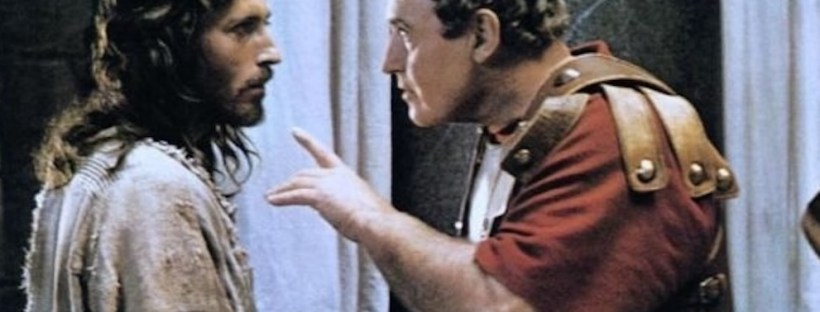
Auto Pilate: A Procurator in a Plane Crazy Situation

Imagine being Pontius Pilate. A man of high esteem among the Romans but despised by the people of Israel. A leader marked by confidence and chaos, peace and provocations. An ambassador puppet to a foreign land where conflict comes with the territory, where everything you stand for promotes a visceral, divisive reaction. 

For a while, things are status quo with the occasional shaking here and there. But then, without warning, in walks a king, the Son of God, a man whose very name was questioned, whose presence would foreshadow the greatest kingdom collapses in history. Who could have known outside the divine? How epic a decision, how dramatic the plate in your lap? 

Yet, that’s exactly what you have in John 18-19, a chapter duo ridden with deep denial, betrayal, and surprise confessions. 

For many, the chapters read as a prelude to the greatest account of eternal measure, and rightfully so; however, what if I told you the books are more than just a literary overture? What if I told you the exchange between Pilate and Jesus would preview the kind of perspective and contrast we dare embrace today? Where naivety begets a redemptive recognition of truth. Would your mind not be changed or at least freshened to reconsider? 

Either way, my curiosity is compelled to Pilate and his part in the resurrection narrative. As always, let’s drill down and dive in…

In the first half of John 18, the Sanhedrin, a council of priestly and lay elders, arrests Jesus during the Jewish festival of Passover, threatened by his teachings and kingdom assertions. After Annas and Caiaphas determine Jesus guilty of blasphemy, he’s brought before Pontius Pilate for judgment in v. 28. At the time, Jewish law prohibited killing one of their own. With Pilate being the only one with power to impose a death sentence, the elders pressure him to crucify Jesus. Amidst the commotion, Peter denies Jesus three times before the rooster’s crow as was foretold. 

Seeking to understand the danger behind Jesus’ condemnation, Pilate probes his origin and lordship, stepping in and out of his governor’s headquarters to appease the council. After Pilate asks, “Are you King of the Jews”, Jesus answers, “You say that I am a king. For this purpose, I was born and for this purpose I have come into the world—to bear witness to the truth. Everyone who is of the truth listens to my voice.” Hearing more than he likely anticipated, Pilate poses a fair follow-up, “What is truth?

While a response isn’t recorded, Pilate’s initial verdict is clear. Without criminal proof, Pilate declares Christ’s Innocence to the Sanhedrin: “I find no guilt in him” (v. 38) and encourages his release again before being met with resistance. Stuck in a stall pattern, Pilate orders Jesus to be flogged and beaten, hoping to satisfy the elders. After applying a crown of thorns into Jesus’ head, the soldiers bring him back to Pilate where again, he proclaims Christ’s blamelessness: “Take him yourselves and crucify him, for I find no guilt in him.” Desperate for control, the elders double-down and ‘double-mind’ their earlier statement (18:31): “We have a law, and according to that law he ought to die because he has made himself the Son of God.” Fearful of a riot, Pilate makes one last attempt to gain clarity from Jesus in a classic ‘help me help you’ moment. 

Starting in John 19:9: “He entered his headquarters again and said to Jesus, “Where are you from?” But Jesus gave him no answer. So, Pilate said to him, ‘You will not speak to me? Do you not know that I have authority to release you and authority to crucify you?’ Jesus answered him, ‘You would have no authority over me at all unless it had been given you from above. Therefore, he who delivered me over to you has the greater sin.’ From then on Pilate sought to release him, but the Jews cried out, ‘If you release this man, you are not Caesar’s friend. Everyone who makes himself a king opposes Caesar.” So, when Pilate heard these words, he brought Jesus out and sat down on the judgment seat at a place called The Stone Pavement, and in Aramaic Gabbatha. Now it was the day of Preparation of the Passover. It was about the sixth hour. He said to the Jews, “Behold your King!

In re-examining this passage, several insights stand out. For starters, the irony of these chapters is largely filtered through its symmetry and the awkwardness of Pilate’s position. The in-and-out of governor’s headquarters, the tug-of-war wavering between two parties keen on not defiling themselves, the contrast between Peter, a disciple, denying Jesus three times and Pilate, an alien, edifying His nature three times. The content and its layout is undoubtedly rich.

But to me, what resonates the most is how this piece of the narrative ends. Say what you want about Pilate’s predicament and decision-making. When we connect the dots within this exchange, we see nothing but truth (and truth seeking) from one who could relate to being despised by Jews, who communicated from authority to authority, who defended the guiltlessness of what he couldn’t understand even when it stood before him.

Make no mistake: Pilate isn’t a hero in the Passion narrative given his indecisive moments and people-pleasing tendencies; however, he is a worthy case study in the sense he sought to circumvent envy and relate to Christ’s innocence not only from what he boldly promulgated but his washing of hands post-sentence (Matthew 27:24). In essence, Pilate was given a tight-rope over shaky ground yet still pursued due diligence to free a righteous man hell-bent on freeing the world from sin. At the very least, we owe Pilate some props in pursuing truth. After all, if we want to point people to Jesus, we must be willing to discover who He is and from there, allow ourselves to be convinced He is set apart as our Messiah.

As for all of us this Easter season, I submit we re-receive the truth about our identity in light of the Cross. For Pilate, he made every attempt to be made innocent of Christ’s blood. But thanks to God’s master plan and Jesus’ sacrifice, we can walk in innocence because of Christ’s blood. No need to wash our hands as long we intend to wash others’ feet. Forward and onward. It’s all up front from here. 

Selah.  Ecce homo. 

Photo creds: pshir.com

Springs Within You: A SOAP Study on Psalm 85-87

Well, folks. The weather outside is finally changing. You know what that means…

  1. Fire up ‘severe weather mode’ on Flash Weather.
  2. De-winterize the house.
  3. Compose another SOAP Bible study!*

*For those who don’t know, Lys and I are huge fans of this practice having implemented it during our youth pastor tenure. While our time in student ministry is long gone, in recent years, we’ve efforted to tailor these studies towards vocationals as part of our His Girl Fryday initiative; hence, why the legacy lives on.

Today, we’ll examine Psalm 85 and Psalm 87 in the context of Israel’s exile. While these selections may seem random at first glance, my hope is you’ll know why I chose these chapters by the end. 

As always…

Observations: If you’ve studied the Psalms in detail, you know the book is composed of 150 chapters broken down into sections. With Book 3 (Psalm 73-89) focusing on the tragedy of Israel’s uprooting and downfall of David’s family, one might think the tenor of Psalm 87 is out of place; however, this is partly due to how the sons of Korah¹ constructed their songs. Anticipating transition, Psalm 87 represents a confident foreshadowing, specifically Israel’s restoration and relationship to other nations.

A precursor to Psalm 87, Psalm 85 establishes the following tropes, all essential to our spiritual walk:

  1. God is faithful to bring a foundation to our footsteps, especially during seasons of adversity (Psalm 85:13).
  2. God draws near to those who fear and revere Him, who anticipate His voice and glory to manifest (Psalm 85:9).
  3. God’s love and faithfulness aren’t mutually exclusive as they’re intertwined within the same flow (Psalm 85:10-11).

These realities set the stage for Psalm 87, in which the privileges of God’s people are recognized and celebrated. Although the chapter is relatively short, the song lacks no exclamation given the holy tribute and 3:1 ‘verse-to-selah’ ratio. The general gist is straightforward and simple: As salvation comes forth from Zion, God takes note to what He can foresee.

But perhaps my favorite part of Psalm 87 is the final verse (v. 7): “All my springs and sources of joy are in you.”

While the ‘you’ is a cite to Jerusalem, given the polysemy of the Psalms, one could deduce this refers to something more than the city itself. Again, we must discern the tone and style of the author. For instance, the sons of Korah tended to ask questions they knew the answers to but framed anyway. 

Will God do ‘x’? Why, God, do you ‘y’? How long, O Lord, will you ‘z’? 

In almost every case, the resolution comes in the conclusion and inspires a modern-day practice. No matter, how dire, how challenging, how impossible a situation might seem, God, in both His Word and Way, is everlasting. Even if we seem far from the promised land we seek, God’s sovereignty is constant and His love is steadfast. Knowing this, the concerns we have should not interrogate God’s nature but inquire how we must journey with Him to see greater character, intimacy, and fruit result.

As for us, there may be an uptick in storms in the weeks and months ahead, literally and figuratively. but spiritually speaking, why not let the word picture of ‘spring’, both the season and water source, refresh our inner man? As Psalm 85:10-11 and Psalm 87:7 encourage us, why not receive the fullness of God’s springs and assess our return flow? After all, every good and perfect gift is from above. All we are or hope to be, all we have or ever hope to have, all we attain or ever hope to attain is from Him. Let the people of God acknowledge this and praise Him for it. 

Application

Prayer: Lord, as the winds of change surround us, we thank you for being at hand. As we worship you in Spirit and Truth today, we’re reminded how grateful we are that you are Lord of all, the God who sustains our help and gives us everything we need for goodness and godliness. No matter what tomorrow holds, we pause now to reflect on your love, your faithfulness, and how we can allow your currents to purify the rhythms in which we believe and operate. To what needs to be surrendered, convict us with grace so we may properly deal with our baggage. To what needs to be received, we ask you to not only revive us to taste you in full but to broaden our capacity to trust your truth in an increasingly compromising world. Help us not be overly discouraged by where abandonments are occurring. Rather scale our faith to see the grander scheme unfolding and how we can partner with you in victory. Give us this day and season as bread so we may feed your sheep as fed. In your holy and precious name. Amen. 

Footnotes:

  1. The sons of Korah were Levites, from the family of Kohath. By David’s time, they served in the musical aspect of the temple worship (2 Chronicles 20:19).

Cover graphic creds: Wallpapers.com