Like a Good Neighbor

Written 11/09/2025

It’s a crisp autumn night as I overlook a neighborhood that, at the moment, resembles a bowl of Fruity Pebbles. I guess that’s what happens when severe weather strikes during peak foliage season. Rivers of color up ahead and flowing on sideroads across the subdivision. A bizarre spectacle as I pen these thoughts.

To be honest, I’m not okay right now. When a neighbor whose dog viciously attacked one of my boys last February cusses out my older two for cleaning up debris 15-20 yards from his property and demands I “move the f***” away”, how can you not be jolted? Dude, your dog almost killed my son. We relocated ours for healing and trauma counseling. The dust has settled. Move on. We have no intention to invade. Let life happen. Don’t curse my kids.

Of course, I keep the struggle internal and swiftly comply. But deep down, I’m livid. Just 15 hours prior, I had pulled over in my in-laws’ subdivision to ride out a storm, hazards flaring, my upper half documenting. For the first 10 minutes, everything is fine, my awe struck at the scene of one of the most impressive, hail-laden downpours I’ve ever seen.

That’s when an older gentleman with an umbrella walks out to my passenger door. Instead of asking if I was okay, he stoops down and yells, “What the hell are you doing?” Without any official storm-chasing designation, I stumble into my explanation, though emphasizing my place on public property. “What is your reason for being here? Is there somewhere else you can go?” Annoyed at the mere existence of this exchange, I conclude with a defiant, “Absolutely!” I turn the key and drive away, a tough shrug-n-go at first, but digestible upon realizing the man lives in literal darkness every night. Lord knows the reason behind such crabby cantankerousness. Honestly, I should feel bad for the man.

Fast-forward to this morning and I’m feeling it in the wake of another brutal interlude. That piece of you that prefers some faith in humanity, it’s fading with the wind knocked out. Discouraged, I return to my pile of downed limbs and trampoline shrapnel. That’s when something remarkable happens. Only 15 minutes later, a stranger in a tan pickup pulls up to my driveway and asks if I need any help. Surprised, yet amused at the poetic symmetry of the moment, I welcome the assistance and process the intel. After recently moving from the upper Midwest, this younger gentleman, who wore the part through his swagger and 220-lb frame, confessed how he had been jonesing for a situation like this in which he could contribute mass relief. For the next 20 minutes, we hauled a healthy load, even swung on some stubborn maple and oak limbs, loosening them before their saw-off. Caeden as my witness, we had a grand time. Such serendipity, you couldn’t have timed it better.

As my new neighbor drove off, I couldn’t help but yearn for a healthy calibration of what I’d just experienced. A few years into our move, Lys and I took a similar approach to our neighbors around the holidays. We were intentional in our giving, made efforts to share goodness, especially in our December dealings; however, post-COVID/post-Juju, we started to slack off a bit, more cynical and protective in light of stranger times. Sometimes, you wish you could just go back before the drama and find a way to bypass it. Just one tweak there, and the whole trajectory changes. Less mess and way less fallout.

But sometimes, all you have to do is consider the script you wish was imminent without the mulligan and pray into the next steps. For me, the truth is, the type of gusto I show during planned storm chases and disaster relief meetings— when I set out not only to track nature’s worst but also to help people in the path — should not be confined to the planned, but even more so, the unplanned. After all, random acts of kindness aren’t just for outreach-friendly entities. They are for every man on call for any situation. ‘Tis the silver lining any time chaos and crisis come knocking at our door and/or the one next door.

So as I bid this day adieu, I’m taking in the daily narrative. Like a heartening State Farm ad, not only is my faith in ‘good neighbor’ restored, but my hope in being the type of person I want to be more consistently.

I know I’ve said it before, but I’ll say it again: The Lord knows exactly what we need, when we need it; hence, why we must adhere to the hope of glory we carry within so we can spark it within spontaneous generosity. We got this! Together, we will get there.

Selah.

Graphic cover creds: Dreamstime

The Road Less Traveled By: A SOAP Study on John 4

Written 2/15/14; revised 6/1/20

Back when I was a young buck studying the Word, I had a bad habit of downplaying settings. Geography, time, historical backdrops…I figured by skimming the peripherals, I’d discern the passage more quickly without distraction.

However, as I now know, when we consider the Scriptures, we find every word, pronoun, and article carrying strategic purpose and placement.

Take John 4 for instance…

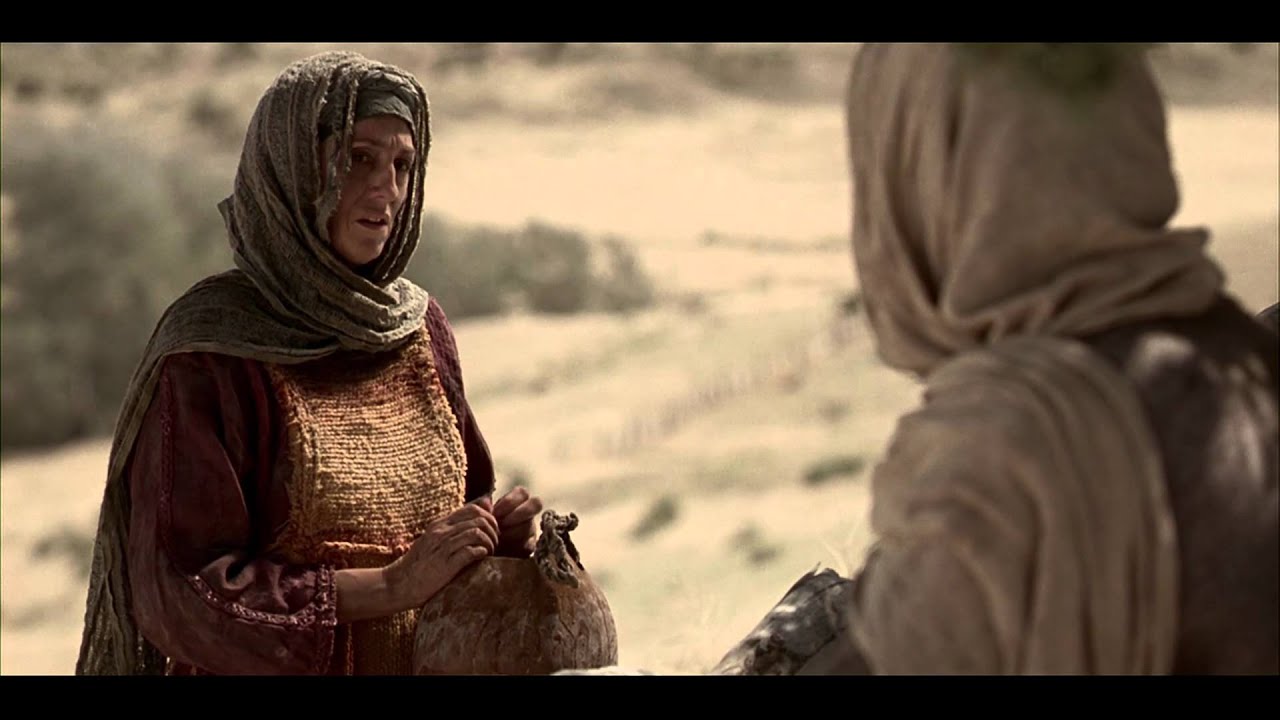
In this chapter, not only do we find Jesus ministering to a woman at a well but [literally] going the extra yard in finding her.

Jesus-Walking-Sand-2

Yet, before the encounter takes place, we’re given important context retroactive to John 3:22-23:

After this Jesus and his disciples went into the Judean countryside, and he remained there with them and was baptizing. John also was baptizing at Aenon near Salim, because water was plentiful there, and people were coming and being baptized.” 

This in mind, let’s flash-forward to John 4:1-5:

Now when Jesus learned that the Pharisees had heard that Jesus was making and baptizing more disciples than John (although Jesus himself did not baptize, but only his disciples), he left Judea and departed again for Galilee. And he had to pass through Samaria. So he came to a town of Samaria called Sychar, near the field that Jacob had given to his son Joseph.”

In these two passages, we’re given three regions as backstory to John 4: Judea, Galilee, and Samaria. With Galilee and Samaria, we’re given specifics; with Judea, the reference is less clear. Still, we have enough detail to discern the relationship between the communities.

Note the maps below as they will come in handy in a minute…

This slideshow requires JavaScript.

Going back to v. 2, we find Jesus leaving Judea for Galilee from a somewhat debatable departure point. Assuming Jesus started where John was baptizing, we can deduce Sychar not only as a sensible midpoint but a contrast to how Jews traveled given the cultural climate between them and the Samaritans (see black/white graphic above). While traveling through Sychar made sense in terms of mileage, it’s only fair to wonder:

Why Jesus did go there in the first place?

To answer this, we’ll need to examine two more components…

  1. Relational dynamics

  2. The timeline

Relational Dynamics: Back in Jesus’ time,  it was culturally unacceptable for a Jew to enter a Samaritan town. As we see in the Good Samaritan parable, Samaritans were widely considered half-breeds (half-Gentile, half-Jew). If a Jew was departing Jerusalem on route to Galilee, he likely would have traveled east of the Jordan to avert Samaria (a difference of a marathon give or take); however, in Jesus’ case, he took the road less traveled by for two reasons:

1) To shatter the mold of social norms through his message of unity.

2) To share the Good News and preview the Spirit as part of an emerging worship culture (more on this in a future post).

The Timeline: Additionally, we must consider the timing of this passage as v. 6 indicates:

 “Jacob’s well was there; so Jesus, wearied as he was from his journey, was sitting beside the well. It was about the sixth hour.”

Again, it’s worth wondering why John would emphasize a topical detail like the “sixth hour”. At first glance, one would think the “sixth hour” to be 6:00 am; however, according to the Jewish clock, the “sixth hour” would have, in fact, been 12:00 pm. Like the location, the ramifications of this observation is significant. If Jesus arrived at noon, then he would have appeared during ‘peak heat’ – a time when many were indoors. With well activity peaking during dawn hours, had Jesus wanted to preach, he would have needed to arrive in the morning or evening. Accordingly, one must wonder: Did Jesus arrive at random or did he time his journey to Sychar? 

In short, ‘yes’, Jesus had every intention of meeting the woman exactly when he did; however, the longer answer integrates the ‘why‘, specifically why Jesus came to inspire this particular woman at this particular time in light of her history (v. 16-19).

Based on these verses, I submit the ‘why‘ is as follows…

Jesus came to change a woman’s life through the revelation of his divinity so she could inspire a town through the revelation of his compassion.

As the Spoken Word attests, Christ so loved this woman at the well, he couldn’t help but transform her from an ostracized outcast to a victorious vessel. From the very beginning, this woman had been tapped to speak life into a cultural revolution. And now here she was – once an adulteress, now a mouthpiece with testimony and a message to share. If that’s not the Kingdom, I don’t know what is.

maxresdefault

Bottom line 1: When we consider Christ’s intentionality, his strategy to free this woman from bondage and ignite her hope through his identity, how can we not get excited? Like Jesus, we should want to restore life amidst the broken hearts and dreams we encounter. We should want to ignite change in those who doubt their worth. But above all, we should want to accept the call to lead others to a greater understanding of who God is. Because at the end of the day, God’s love is contagious and captures why we’re here: To encourage the discouraged, to be salt and light, to be unity in community, and stir love as the root of faith.

As the story concludes, the woman accepts Christ, his prophetic declaration (v. 21-24), and fearlessly saves many Samaritans as a result:

“Many Samaritans from that town believed in him because of the woman’s testimony, ‘He told me all that I ever did.’ So when the Samaritans came to him, they asked him to stay with them, and he stayed there two days. And many more believed because of his word. They said to the woman, ‘It is no longer because of what you said that we believe, for we have heard for ourselves, and we know that this is indeed the Savior of the world.‘ After the two days he departed for Galilee.” ~ John 4:39-43 (ESV)

Not bad for an ex-social leper who wasted years trying to find her identity in relationships and social status.

Bottom line 2: Scenic and demographic details are valuable in studying the ministry of Christ. As this chapter reminds us, God can use the lowliest of men to sow the highest good for His glory and in bringing communities closer to Jesus. As for being that catalyst of change in your arenas of influence/expertise, dare to seek God like no one else so you can live intentionally like no one else. By believing God has established your steps, you can trust him to help you get to where you need to be even if it’s mean a few extra minutes or miles along the way.

Selah.

Looking ahead, I will look to build upon this post by examining the worship culture aspect of John 4. I’ll also break down what the ‘radical middle’ (i.e. living in Spirit and in Truth) looks like as present-day Kingdom agents in the marketplace.

‘Til then, you got this.

~ Cameron

Cover photo creds: Million-Wallspaper.com