Wading for God: A SOAP Study on Romans 15:1-7

Note: Usually I separate the observations and applications when writing these SOAP Bible studies; however, I believe the following observations are better attached to their respective applications in light of the content. While normally I  flesh out marketplace implications, due to word count, I’m allowing the pod above (and future pods) to cover this piece.

Scripture: Romans 15:1-7 (MSG)

Those of us who are strong and able in the faith need to step in and lend a hand to those who falter, and not just do what is most convenient for us. Strength is for service, not status. Each one of us needs to look after the good of the people around us, asking ourselves, ‘How can I help?’ That’s exactly what Jesus did. He didn’t make it easy for himself by avoiding people’s troubles, but waded right in and helped out. “I took on the troubles of the troubled,” is the way Scripture puts it. Even if it was written in Scripture long ago, you can be sure it’s written for us. God wants the combination of his steady, constant calling and warm, personal counsel in Scripture to come to characterize us, keeping us alert for whatever he will do next. May our dependably steady and warmly personal God develop maturity in you so that you get along with each other as well as Jesus gets along with us all. Then we’ll be a choir—not our voices only, but our very lives singing in harmony in a stunning anthem to the God and Father of our Master Jesus!

Observations/Applications:

1. I like how the Message captures Paul’s heart in v. 1:Strength is for service, not status.” For one thing, it quickly defines what strength is designed for while contrasting it to the contrary. I might even add ‘skill’ to the ‘not list’ given our culture’s way of synonymizing strength to societal contributions. Still, it’s imperative we grasp what Paul is stating: We are strong in Christ meaning we’re strong in faith and in our conviction to persevere in weakness. Internally, this can mean accepting God’s grace without debate; externally, this can mean patiently enduring with shortcomings outside of our control. Regardless of how this looks, we must be thorough in translating faith to action since many practice truth in theory without it correlating to tangible care. For instance, some forgive without saying the words while others are easily content being willing to help without actually helping. Perhaps this is why in v. 2, Paul is straight-up straightforward: “Let each one of us [make it a practice to] please his neighbor for his good, to build him up spiritually.”

2. If there’s one main concern I have about the church (and the Christians in them), it’s how we have programs to reach people, yet avoid people’s troubles in fear of not being able to handle them. One could say we want to win souls for the Kingdom without having to address their warts and worries along the way.

tenor

Yet, as Paul emphatically states, in v. 3, “That’s exactly what Jesus did. He didn’t make it easy for himself by avoiding people’s troubles, but waded right in and helped out.” Put another way, He took on the troubles of the troubled and that in a nutshell is how we should approach the communal aspect of our evangelism and discipleship.

Galatians 6:1-3 (MSG) captures this beautifully:

Live creatively, friends. If someone falls into sin, forgivingly restore him, saving your critical comments for yourself. You might be needing forgiveness before the day’s out. Stoop down and reach out to those who are oppressed. Share their burdens, and so complete Christ’s law. If you think you are too good for that, you are badly deceived.”

3. The dance between the Message and Amplified translations in v. 4 is fascinating:

For whatever was written in earlier times was written for our instruction, so that through endurance and the encouragement of the Scriptures we might have hope and overflow with confidence in His promises.

Even if it was written in Scripture long ago, you can be sure it’s written for us. God wants the combination of his steady, constant calling and warm, personal counsel in Scripture to come to characterize us, keeping us alert for whatever he will do next.”

For starters, we don’t just endure through the Word; we encourage through it. Likewise, we don’t just read the Word to stay alert; we study the Word to inspire diligence and vigilance. After all, for counsel to exist, there must be a community of ‘two or more’ gathered (Matthew 18:20) where confidence and trust can be shared maturing in God’s promises. Furthermore, while it’s important to be ready for the ‘next’, we can’t get there if we’re not loving in the now with apparent hope. This is why trust isn’t an individual exercise, but a corporate pursuit. To be on mission with Christ is to co-mission with each other. All the more reason we should embrace weakness as our endurance, encouragement, and counsel strengthen and builds up the body.

4. Finally, in v. 5-7, we see the purpose of endurance and encouragement captured in one word: Harmony. To have harmony is to have unity. And like the early church in Acts, God desires these gifts to help us be of one mind and one heart…according to Christ Jesus. But how do we achieve this in a way the words resonate at our core? In short, Paul gives us a template in these verses:

May our dependably steady and warmly personal God develop maturity in you so that you get along with each other as  Jesus gets along with us all…so reach out and welcome one another to God’s glory.” 

Again, it’s interesting to note how many facets of God’s nature can’t exist in a vacuum or isolation. Case and point: “glory” – the very last word of this passage reminding us why all of this matters. As for how we experience glory, many would say righteousness, walking the walk, living out the truth we declare and believe, etc. But honestly, this is more how we posture ourselves to glory. To encounter it, we must seek the Lord as we reach out and welcome one another to where He is. Doing this implies love and as we know from 1 Peter 4:8, love covers a multitude of sins and seeks the best for others. Accordingly, as we’re inviting people to glory one step at a time, let’s embrace weakness as pressing into Jesus regardless of our circumstances. If we’re actively pursuing freedom and healing from strongholds and helping others do the same, no question we’ll inspire Scripture to come alive in people.

giphy

Prayer:

Lord, we thank you for your goodness, your grace, your capacity to redeem and restore. We thank you for the golden opportunities and divine appointments you’ve been setting up around the world in recent months. We declare our joy and satisfaction in your ways and purposes. But now, Lord, we ask you to forgive us for not taking our faith seriously, specifically in the areas of relying on your strength and for helping others as we see fit, not as you see fit. We say it is you, God, who makes us fit, who equips us for good works and establishes our steps for them to happen. I know in my case I have hidden behind the quarantine at times and avoided being available to lick wounds from past resentments. I admit there have been times I’ve prioritized my perception of healing, basing it in distance from people and the absence of personal errors and wrongdoings toward me. But I’m gripped, oh God, by how you pursue us regardless of the trouble we’re in. I’m amazed how you’ve orchestrated the Scriptures through the passage of time for our benefit. As such, we choose to wait for you as you wade in for us and choose to lean on you as the rock of ages who never forsakes us. Even though we may not see the evidence of maturity and growth in every place in our lives, we ask God you help us rely on your steady counsel as our source, our refuge, and our strength. We choose to make peace with our brothers and sisters, with those who disagree with your ways and who criticize without compassion. We choose to not be disheartened by the evidence of disunity. Instead, show us the way to harmony and maturity in dealing with those who are lost, whether by faith, in character or in their understanding of you. After all, at every point in our lives, we are lost without you one way or another. Why not be warm in our correspondences with one another as we humbly seek your heart, your strategies, and your invitations? Why not say ‘yes’ to your unfathomable joy as we hand out those invitations to those who really need them for such a time as this? Be with us as we go forth from this moment and this place. To yours be all the glory, forever and always. Amen.”

Selah.

31rtLQlTNVL._SX369_BO1,204,203,200_

Cover photos creds: wallpapercrafter.com


What Keeps Us From Being Addicted to Jesus?

Shout-out to my colleague, Karen Hall, for bringing this question up during our latest Messenger Fellowship Zoom call…

What keeps us from being addicted to Jesus?

Scripture references: Ephesians 1:19-20; Colossians 3:1

In fewer words, not living the full Gospel…in the fullness of hope. One could say the answer to what compromises our hope is also the answer to this question.

Yet, digging deeper, I believe a good chunk of this comes down to entitled expectations concerning the new life we have. For some of us, we think like Martha through the lens of ‘becoming’, not ‘it is finished’; for others, the concept of a ‘new thing’ may be a ‘new way’ tied to an ‘old thing’ in disguise.

Whatever the case, to be addicted to Jesus, it’s important we give into God as our default, not just as a ‘go-to’ option. For instance, we may want to help more people in more situations ‘Christ in us’; however, if we deny our help as anything without helplessness, are we really capturing the love and life of Jesus? Are we really capturing the power of Cross in our arenas of influence? Or are we content letting worldly systems (and our proximity to them) get in the way?

I know for me, independence has a way of exposing my attitude towards Jesus. To the extent I shy away from weakness, to that extent I yield to self-preservation and self-effort. At times, it’s almost as I’d rather embrace defeats I can understand than total sufficiency I can’t. Perhaps some are like me wondering what might happen if they have too much of Jesus? As if there’s an imaginary cutoff…or overdose limit?

Either way, the problems with independence are many, but if I had to pick some common themes, I’d say…

1. It hinders daily abiding.
2. It chains us to ‘old creation’ thinking/keeps us from celebrating our 100% helplessness in light of God’s 100% sufficiency
3. It distracts us from Jesus/wanting to be like him.
4. It separates Christ and Cross as the source of our new creation.

No wonder so many feel dead where they’re alive, alive where they’re dead, and thirsty to cope to bridge the divide.

Selah.

Looking ahead, if there is a follow-up to this bonus post, I’ll look to discuss the following…

  1. How we, as business leaders, can rest in victory and be released in confidence knowing our future is guaranteed.
  2. How intercession is an expression of our certainty in Christ’s power to save.
  3. How God guarantees outcomes is core to his sovereignty.

Stay blessed and healthy, my friends…

~ Cameron

Cover photo creds: HipWallpaper

Corona Fight: Why We’re to Be Unshaken, Not Stirred

So recently, I was reading a blog post about how God is using this COVID-19 crisis to help believers see what is still shakable in their own lives (Haggai 2:5-7, Hebrews 12:22-29).

And by all means, my heart resonates with this truth.

Until something is unshakable, there’s always room for greater stability and strength.

Yet, while much focus is on how God is shaking out our co-dependencies¹ (and rightfully so), I can’t help but wonder if we’re forgetting the grander scheme unfolding.

‘Cause truth is: Yes, God wants to prune our dependencies and purify our securities. But I also believe He wants to use this time to train the body to be hope in the face of age-defining uncertainty.

Not to suggest we be insensitive to personal conviction or how God is shaking the nations. Certainly, now is a perfect time to take inventory and ask the Lord to awaken us in this season of chaos.

However, in our quests for enlightenment, let’s not forget the bigger picture either – specifically, how the church must show the way amidst the dismay through love-distance (a.k.a. long-distance) relationship².

As for the days ahead, I wish I knew more. For now, what I can say is a super creative God is illuminating new creative outlets for those He loves. And as the evidence pours in, let’s keep one thing in mind:

The same God who is shaking global foundations is the same God fixing your eyes on what He intends to remain unshaken.

Even though there’s much change to behold, there’s still plenty of life in you purposed for consistency (be it joy, faithfulness, endurance, etc). Accordingly, let’s not lose sight of what God has done as we lean into what He’s about to do.

As for any of you feeling displaced or out of rhythm, be encouraged: God is not one to run out of ideas. If anything, He’s working out a temporary solution with lasting repercussions you can’t see yet.

As for you with spiritual gifts centered on direct services, like giving, compassion or hospitality, be discerning and disciplined, but don’t vacation from your calling either. Rather, research, network, build your technological awareness (To be fair, this goes for all of us 😉)…and dare to see where God’s bridges of benevolence take you.

In closing, I charge you, my friends, to calibrate to God’s character/Word (see verses below) and consider what He’s anchored within you. After all, even when life seems to fall apart, He never stops refining your part in helping others find Jesus.

Selah.

Stay tuned next time when I’ll finally unveil ‘part 2’ to my ‘4 convictions for 2020‘ series. Until then, may God’s hedge of protection cover and calm you in these turbulent days.

“Worship the Lord your God, and his blessing will be on your food and water. I will take away sickness from among you.” ~ Exodus 23:25 (NIV)

“For the LORD protects the bones of the righteous; not one of them is broken!”  ~ Psalm 34:20 (NIV)

“Praise the Lord, my soul; all my inmost being, praise his holy name. Praise the Lord, my soul, and forget not all his benefits—who forgives all your sins and heals all your diseases, who redeems your life from the pit and crowns you with love and compassion, who satisfies your desires with good thing, so that your youth is renewed like the eagle’s.” ~ Psalm 103:1-5 (NIV)

“Gracious words are like a honeycomb, sweetness to the soul and health to the body.”  ~ Proverbs 16:24 (NIV)

Footnotes

  1. For some, you may feel God is sifting your heart Amos 9 style as opposed to shaking it (see video above).
  2. More on this term in a future post; for now, view it as a love that stays in bounds because it knows no bounds.

giphy

6a0192ac343706970d025d9b3673bb200c

Cover photo creds: Action News Now

Rise and Shine: The Secret to Giving Your Best

Inspired by vintage Keith Green…

Many of us have heard the phrase, ‘Do your best and let God do the rest’.

But lately, I’ve been wondering how well I truly understand this.

I mean I ‘get’ the Bible verses…

And whatever you do, do it heartily, as to the Lord and not to men, knowing that from the Lord you will receive the reward of the inheritance; for you serve the Lord Christ.” ~ Colossians 3:23-24 (ESV)

Do you not know that those who run in a race all run, but one receives the prize? Run in such a way that you may obtain it.” ~ 1 Corinthians 9:24 (ESV)

I can do all things through Christ who strengthens me.” ~ Philippians 4:13 (ESV)

Each of you must take responsibility for doing the creative best you can with your own life.” ~ Galatians 6:5 (MSG)

…yet somehow in the application, I’ve been missing something. And I think I’m starting to see what it is.

You see, we often approach work as a derivative of ‘doing’ be it a project we initiate or a means to manage. Define the goal and pursue it. Clarify the objective and go for it. In a way, this makes sense given we’re all hard-wired to perform with excellence for excellence.

However, while execution and effort have their place, it’s important, dare I say critical we ask ourselves: At what point are we allowing God into the picture? Into the frame-work of our work if you will?

At the point we’re exhausted? At the point we’re confused? At the point we’re doubting?

Or are we making way His way from the very beginning?

As one who has failed time and time again with this, trust me when I say…

1. If you want to do your best, let God get in front of it.
2. If you want God to do the rest, let Him get behind it.

Don’t wait until you’re burnt out. Don’t wait until you’re stuck. Rather before you clock in each day, consecrate your effort, receive His faithfulness, and know He will accomplish His purposes in you. Even if He’s guiding you into turbulence, into danger, know He’s calling you to see Him in the midst of it in a fresh way. Accordingly, don’t be discouraged by growing pains when in reality He’s sowing gains you can’t yet see.

In closing, I encourage you, friends…

1. Let God be in the midst of your best and rest, not the middle.

2. Examine any place you may be relegating God to an on-call substitute, any place where ‘doing the rest’ has become a request to autocorrect above anything else.

Let Him be more and go before!

Selah.

90999706_10101462382580722_8801131594371825664_n

Cover creds: The Youthing Magazine


Kingdom Agents: The Difference Between Gifts, Functions and Vocations (Part 1)

When I say ‘vocation’, what immediately comes to mind?

The 9-5 grind, the hustle and bustle, doing anything and everything to make ends meet?

If so, you’re not alone. After all, the world loves to condition us to view work as a ‘got to’, not a ‘get to’.

Yet, as I was reminded over the weekend, our marketplace vocation goes far beyond immediacy, intellect, and [our sense of] importance. Even though the nature of our jobs may require these elements, the aim of our jobs…the aim of our calling…is to serve as a royal priesthood, as Kingdom agents functioning in personal commission.

The question is: What does this look like and how does this happen?

tenor

For starters, it’s imperative we understand the difference not only between call and vocation but gifts and function.

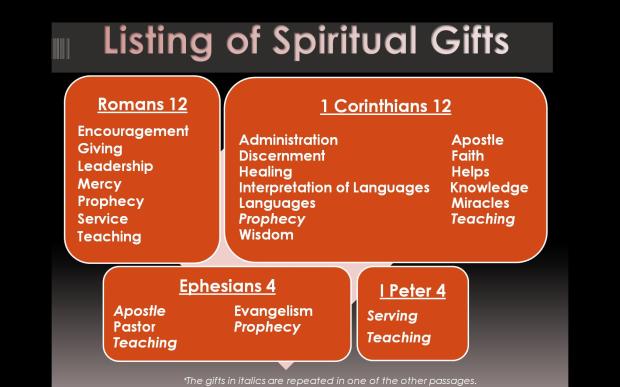
To do this, let’s recap the spiritual gifts as outlined in the New Testament:

*Jesus gifts (Ephesians 4:1-3) – These are part of our vocation and include ascension and equipping gifts as well as the fivefold spiritual gifts (i.e. apostle, pastor, teacher, evangelist, prophet).

Note: While all are wired to shape influence, not all are wired to employ these gifts in the church/in these specific occupations. More on this in a sec.

*Spirit’s gifts (1 Corinthians 12) – These belong to the Spirit and are gifts in a gathering. Some examples include administration, discernment, wisdom, healing, and miracles.

* Community gifts (Romans 4:4, 12:4-8) – These help us function in a local body. Some examples including leadership, encouragement, service, and mercy.

list-of-spiritual-gifts

Due to word count, I’ll link these passages rather than copy/paste; however, after you read them, consider their Greek roots:

1. Romans 12:4-5 – The word for function is the Greek word ‘praxis’ meaning “practice function” and signifies continual activity.

2. Romans 12:6-8 – The word for gifts is the Greek word ‘charismata’ meaning “grace function” and signifies communal activity. In the workplace, we can know these functions as influencing functions.

In both these cases, it’s important to note the origin of gifts point to corporate functions created for unity, not individual skills and talents.

3. Ephesians 4:1-3 – The word for vocation is the Greek word ‘klesis’ meaning “calling function” and signifies the work in which a person is employed. This not only references our occupation but our acceptance of it as a divine call to a particular pathway/course of action.

In this case, it’s critical we know how vocation and calling work together. As Martin Luther once said, “Every person is capable of having a vocation”; however, our universal calling is to be a royal priesthood.

Accordingly, we can break this down as follows:

Our universal calling: Priest (1 Peter 2:9)
Our gifts and functions: Romans 12:4-8
Our vocation: Romans 12 filtered through Ephesians 4


I like how Timothy Williams, author of The Spiritual Gifts, captures the vocational aspect of our spiritual gifts: While we know there are 5 ascension gifts and 7 community gifts,  it’s important to note “each ascension gift has a corresponding functional gift.” For instance, a certain accountant may not be called to serve as a prophet in a ministry setting (i.e. a liturgically designed ascension gift); however, he can still employ prophetic insight through encouragement and counsel in financial arenas (i.e. a vocationally designed ascension gift with specific communal functions). Of course, there may be times the accountant imparts guidance for church staff in critical situations. But the bottom line is: The man of God is at peace serving the body as a financial advisor with a prophetic anointing as opposed to a prophet with financial skills. 

Before I continue, I want to share a couple quick points on ‘vocation’ and how we’re to perceive it in light of our identity:

1. Gifts and vocations are NOT meant to soothe your ego or confirm your identity. If you base ‘who you are’ by ‘what you’ve been given’, you’ll reinforce territorialism in place of influence. Don’t do it!

2. Gifts and vocations are meant to enhance a sense of intimacy. If you base ‘what you’ve been given’ by ‘who you are’, you’ll reinforce a radical dependence on God and radical equality in how you view authority and hierarchy.

3. If we see ourselves as ‘Kingdom agents’, then we’ll a) desire to use our vocation to emphasize the work cultures that already point to Jesus (i.e. redeem our work environment) and b) seek to give clients and colleagues a taste of God by ‘calling forth their destinies’ (i.e. restore people).

4. If we don’t see ourselves as ‘Kingdom agents’, not only will we risk compartmentalizing our sacred and secular lives, but we will also miss opportunities to help people discern spiritual things with their natural minds.

5. Remember we’re all co-equal in value, diverse in function. Therefore, let’s engage our vocation as a holy partnership in influencing people to discover the fruit of their work/organization and in speaking restoration to people without agenda.

Looking ahead to ‘part 2’, I want to revisit William’s quote to help bridge the gap between Ephesians 4 and Romans 12.

‘Cause truth is: If we’re to better understand the relationship between gift and function within our vocation, we’ll need to apply additional grids and principles.

*Cough, Jethro. Cough, perichoresis. Cough*

Additionally, we’ll also need to add ‘elders’ and ‘deacons’ to the pastoral cluster so we can match 7 gifts with 7 functions. But I’m getting ahead of myself.

For now, I hope you were able to glean something out of this introduction. If you have any thoughts or questions, please don’t hesitate to leave a comment or contact me at your convenience.

Until then, God speed on your week. May His sweet presence be fresh wind in your sails as you press into His goodness.

You got this!

Selah.

Cover photo creds: Fast Company; body graphic creds: Msinop; content written by Cameron & Steve Fry; audio voiced by Steve Fry at the 2020 Commission U Leadership Retreat on February 29, 2020