Tag: ministry

Rethinking “Bivocational”
For those who’ve been following us the past few years, you’ve probably noticed how I often branch “bivocational” into two camps: those who work multiple secular jobs and those with a gig in the ministerial arena1.
However…in recent months, I’ve begun to question if this approach best captures the contrast.
‘Cause truth is: we’re all ministering something…because we’re all worshipping something.
Or to put it another way…we’re ministering something because somehow, someway (whether we realize it or not) we’re being continually empowered to attend the needs of someone else…whether a co-worker, a boss, a family member, a friend, a loved one, etc.
Now, before I continue, let me clarify this one point: when I say ‘ministerial arena’…I am (more often than not) talking about those who provide full-time or part-time service under the occupational ministry umbrella, but this doesn’t mean I believe other umbrellas are inferior.
Contrarily, I view all callings as unique given what God creates, assigns, and rations is infallible (Galatians 3:28, Genesis 1:27, Acts 10:34). So while the majority of what we discuss may naturally gear itself to those with one foot in a more ecclesiastical door, that doesn’t mean you fail if your feet find themselves on a different foundation2.
You see…I think far too often those in the church, those in ministry tend to pump up their own cause through the mission God has called them to…
…which, to me, represents one of the greatest tragedies not talked about in forums like this.
And while I’m not insecure about people taking prior His Girl Fryday blogs out of context, I still wanted to take time on this beautiful Monday afternoon to autocorrect how I breach bivocational topics in the now…and then.
All that to say…moving forward, when I mention “bivocational”, please know I’m referring to all Jesus-followers as ministers under the covering of 1 Corinthians 4:1-7, 2 Corinthians 3:6, and 2 Corinthians 6:4.
‘Cause when we put them together, we discover…
- Every Christian is a servant in ministry.
- Whether we’re consultants, salesman, doctors, nurses, lawyers, accountants, teachers, journalists, designers…whether we’re a combo platter of diverse professionals and/or have liturgical responsibilities…God has made us sufficient to be ministers of life through His Spirit.
- By our effort and endurance, we can demonstrate the power of God operating in and through us by reflecting His heart of love, purity, patience, kindness to the lost/broken/backslidden, etc.
So when you think about it, getting caught up in ranking standards with a “This person has more weight because ‘this’…’ …or “That person has it easy because ‘this’…’ attitude makes no sense ‘cause the reality is we all have a calling and a purpose for such a time as this…
…not to mention…

For me, the real question comes back to: are we being faithful to walk what God has called us to walk…and are we going to do so with an appreciation for the diversity by which God has fashioned us?
I’ll just let the mic drop there. 😉
So hopefully this ties up some loose ends. If not, feel free to shoot us a comment below…or drop us a personal message if you prefer the confidential route.
At any rate, we’d love to hear from you. ‘Til then, be strengthened, encouraged, and challenged to live as Christ.
Know we’re with you every step of the way.
Footnotes
- A fair angle when looking to simplify
- After all, we live and grow in stride…and in seasons. Where God has you today may look totally different tomorrow.
Photo creds: challies.com & recyclingchristiandollars.com

Purifying our Thought Life (Part 1)
Last month, we started an intro discussion on how to purify our priorities and how we discover more of God’s desires as we love at all costs. Today I want to continue in the same vain, but switch gears slightly by exploring ways we can purify our thought life.
But before I dive in, let me just say…I may have gotten a little ahead of myself in writing that last post. ‘Cause while godly resolutions are certainly worth discussing, if we don’t have that foursquare foundation (i.e. mind, heart, soul, strength) set and surrendered, then we’ll likely find it difficult to live how we want to live/how we’re called to live when we reach the crossroads of life…
…which brings me to why I’m writing this…
…that no matter where we find ourselves, we’ll be reminded how the greatest battle is the one unseen1…
With that said, here are three (of many) ways to purify your “thought life”.
1) Pay Attention
As obvious as this may sound, it bears mention at the #1 spot ‘cause…let’s face it: it’s hard to change something you’re not aware of. Thankfully, when we pay close attention to our thought life, it’s not long before we’re able to identify those patterns and triggers that shape the framework of what we believe and how we behave.
For example, one of my guilty thought habits in recent years has been to focus on people who’ve hurt me whenever I work out. More often than not, I’ll be running along rockin’ out to my jams only to hit a burst of energy as I indulge the idea of proving them wrong.
Now, as a runaholic, I can appreciate the extra bounce in my step; however, as I recently realized, whatever “benefit” is gained on behalf of vain fantasy is worth giving up for the sake of thinking like Jesus. After all, it was him who regularly taught how a person’s thoughts determine who that person is.
In my case, I was taking past pain and projecting it into fiction so I could somehow feel “un-rejected” and appreciated; however, if only I hadn’t engaged the pattern to the point it matured into habit, perhaps it’d be easier for me to trust God as far as who He says I am today.
Bottom line: Before we can take action on purifying a thought pattern, we first must be made aware of it. Only then can we begin to proactively renew our minds.
2) Pray Attention
While recognizing growth potential is certainly freeing, it’s not until we encounter that growth that we experience freedom. That’s why I submit the best way to boost awareness into action is through prayer. ‘Cause as it pertains to our thoughts, if we are willing to take our thoughts captive (2 Corinthians 10:5) and submit them to the authority of Christ, we’ll inevitably discover the joy in repentance…not to mention being transparent and vulnerable before the Lord.
Think of it like this: your mind is a spiritual battleground where evil forces combat agents of light every day. If you know your mind is being pursued, you wouldn’t want to leave it unprotected, right?
So how then must we defend it?
By declaring the Word through prayer2! See…this is why knowing and meditating on the Word of God is so important…’cause if you’re fearless and faithful to cover yourself in prayer…then you can ultimately experience the wonder-working power of God’s truths transforming that foursquare foundation we mentioned earlier.
Bottom line: By purifying your thought life through prayer, you put yourself in position for His thoughts to become your thoughts.

3) Stand at Attention
As great as prayer is, purifying your thought life doesn’t end there. Yes, catching bad thoughts and making them obedient to Christ is important, but it’s not until this exchange becomes a daily pattern that we begin to see heart + mind + soul-change.
Thus, if we want to seal the deal in purifying our thought life, we must be committed to stand at attention…at all times (Ephesians 6:14-17, 1 Corinthians 16:13). Only then can we truly pull our negative thinking out by the roots.
Bottom line: “Be sure you put your feet in the right place, then stand firm.” ~ Abraham Lincoln3
————————————————————————————————————————————————————————————————-
In closing, I encourage you to put these three steps into motion the way God has you.
Just make sure that whatever route you choose, you…
* Consider your goals…
* Create a game-plan…
* …and close out by praying over it/submitting it to God so He can breathe over your good intentions with His intentions.
Remember: the world’s counsel will try to distract you from bad thoughts4, but through Christ, you can defeat and conquer them.
I don’t know about you, but I’ll take the permanent solution all day, every day.
Stay tuned next time when we’ll go one step further in troubleshooting some of the more stubborn, resilient thought patterns. In the meantime, if any of this resonates with you, feel free to shoot a comment below.
Peace…
~ Cameron
Footnotes
1) A notion completely contrarian to what we find embedded within our fragile, postmodern world
2) Seriously…if you were ever looking for a weapon that never fails…Word-fused prayer is it
3) Think of points #1 and #2 as getting your feet in the right place…and #3 as “stand firm”
4) Like yoga, journaling (which isn’t bad unless it’s an ends to a mean itself), Oprah’s “no-nonse strategies”, etc.
Photo creds: cutwatersolutions.com & fbccov.org
This work is licensed under a Creative Commons Attribution-NonCommercial-NoDerivs 3.0 United States License.

3 Resolutions Everyone Should Put at the Top of Their List in 2016
Ever feel like January is a bunch of Groundhog Day’s stitched together…like an iPod stuck on replay?
Perhaps you’re like me in the sense you wonder why so many are still hopping on and off the resolution bandwagon, scrambling to find the right short-term fix for their long-term “needs”.
If you can relate, then hear me out. ‘Cause today we’re going to talk about how we can better fine-tune our resolutions1 by focusing on three practical “heart goals” we can all aspire to in 2016.
- Pray…more.
Okay, okay…I know this is a “chalk” point2; however, it’s still worth mentioning considering it’s the most powerful form of communication we can experience.
Think about it: God loves us so much…He gave us a limitless lifeline (i.e. prayer) so we can dial into Him at any time…and join Him in making a difference.
I don’t know about you, but I find this [very] encouraging…knowing we can pursue God through prayer and partner with Him in His work no matter where we are or what we’re going through.
Granted, as bivocational believers, there will be times the enemy tempts us into thinking our prayers are less effective (compared to full-time ministers)…and distracts us into less frequent, circumstance-driven prayer.
However, the truth is: we can pray boldly and effectively because we’re made righteous through Christ (James 5:16)…and are equipped with a purpose and a plan that no one can strip away.
Thus, it’s important we take time to consider how God wants to use us through the power of prayer in 2016, whether it involves healing the brokenhearted…opening closed doors to advance the mystery of God…and/or shedding light on the truth of who God is (Colossians 4:3, Ephesians 5:13).
2) Memorize…more.
To be honest…I’m not the biggest fan of memorization; not because it’s a waste of time3, but because I’m simply not that good at it…it’s somewhat rudimentary (as a learning technique)…plus I’m perfectly content being familiar with as many things as I can.
So it should be no surprise when I say I don’t often involve memorization when studying the Word, considering I’d rather get the concept than the verbatim.
However…this doesn’t mean memorization doesn’t have a place in our spiritual walk…or that I’m even correct in my overall assessment. In fact, I’d submit it’s one of the most underrated forms of spiritual preparation (abiding + equipping).
Consider 1 Peter 3:15: “…but in your hearts honor Christ the Lord as holy, always being prepared to make a defense to anyone who asks you for a reason for the hope that is in you; yet do it with gentleness and respect…”
 At the sake of sounding cheesy, whenever I hear “being prepared to make a defense“, I immediately imagine a 19th century cowboy minister being able “draw” the words of God on demand…like John Wayne, except instead of a Winchester Model, you have powerful words of two-edged truth.
But though Peter isn’t emphasizing a particular apologetic discipline here, it can be said memorization is a worthy component to any readiness strategy, given its tendency to root head faith deeper into heart faith.
My advice? Don’t hesitate to memorize more…and take advantage of the fact there’s an app for that (See “Fighter Verses” app (right screenshot); Jeff Ling’s post for more insight here).
3) Reach out…more.
Whenever we hear “reach out”, it’s easy to think go on more mission trips or go to the soup kitchen every weekend. But in this case, when I say “reach out”, I’m talking about confidently pursuing life-on-life opportunities…in the flesh. Person-to-person…face-to-face. Yes, there is a place for online community and virtual relationship (as I wrote about a few weeks ago); however, with more of our social interaction taking place by “i-Products” these days, it’s important we commune intentionally, especially if leaving a Kingdom legacy matters to us.
Case in point: A couple years back, my wife and I talked about this issue…and at the end of our conversation, she challenged me to initiate three hangouts/phone-calls (outside my normal routine) a month for three months.
At first, I had my reservations…especially since we were in the middle of a relationally dry season. But as I started to carry out the charge, it wasn’t long before I realized this is what I was made for; this is what I should be doing more often!
I’m telling you…simply putting myself out there was a game-changer. In fact, had I not gone into “challenge accepted” mode, I wouldn’t have been able to listen, encourage, and pray God’s will/best into action the way God had for me.
You see…often times, we think we have something to lose being vulnerable and available, but once we realize this kind of withdrawal mentality doesn’t come from God, we can take it captive and ultimately discover the pure thrill of reaching out on purpose.
In light of this, my encouragement to you, friends, is to keep the foot on the gas pedal this year…to keep doing the good things you’ve been doing…just more of it.
Seriously, just imagine if we all got in on this…how many more lives would be impacted…
Footnotes
- As January fades into February…I find the transition to be a great time to reevaluate my resolutions. After all, when we aim to cling to what is good, we should also want to cling to what is necessary…and appointed for such a time as this…so at the end of the day, we may reach the prize to which we’re running towards
- “Chalk” point = an obvious statement worthy of mention
- Though I’d say otherwise if it’s used as a primary means of retaining knowledge
Photo credits: themogulmom.com

Purifying our Priorities (Part 1)
Well, folks…it’s that time of year again.
- HR Block is heating up its campaign…
- Companies are sending out their W-2/1099’s…
- TV’s are going on sale’
- …and New Year resolutions are officially underway2.
After all, ’tis the season to be better, right? To start afresh and anew…and to grab change by the horns…
But perhaps you’re like me in the sense you wonder how many really know how to do this…or maybe you’re hesitant…afraid of prematurely falling off the resolution bandwagon.
Whatever the case, it’s important we get real about the type of world we live in. ‘Cause when we take a good, hard look into the deep, dark crevices of our culture, we find we’ve grown too content taking matters into our own hands…yet too passive in carrying them out…

…a paradoxical attribute of a society that constantly suggests having a heartfelt desire is “good enough”.
Not that “heartfelt desires” are bad; by all means, we were created to have them.
I’m just saying if we truly want to reach the next level (in any phase of life), it doesn’t make sense to be self-reliant, given the human tendency to fall short and mishandle change. Conversely, if we want to see growth become a permanent reality in our life, we not only have to accept the existence of a higher alternative, but we must be willing to depend on it as a supreme solution that exists (and only exists) in God Himself.
All that said… How do we turn our heartfelt desires, the seeds God’s plants within us, into lasting realities? How do we change from the inside out in a way that takes deep root within?
Before we can answer these questions with a customized five-point self-improvement series3, I submit we must first be willing to purify our priorities…
…which can only happen when we become intentional in spending time with God.
But first..what exactly is a “priority”?
According to the Random House Websters Dictionary...
- A priority is “something that’s regarded as more important…a right to precede above in rank, privilege, etc. …
- …and “to prioritize” is a process by which we arrange, particularly in order of importance, relevance, value, etc.
Thus, when we consider what a priority is…and apply it to morality…our faith, we ultimately discover the importance of recognizing God’s priorities for our life.
Take Philippians 1, for instance, where in verses 9-10, Paul prays for the Philippians’ love to abound all the more so they could better discern and approve the things that are excellent4.
Essentially, Paul is saying: if you’re feeling overcommitted, overloaded, overwhelmed…if you’re mired in apathy, confusion, striving…or simply trying to decide what is best, what’s best for your spiritual well-being…and those around you…the answer is simple: love at all costs!
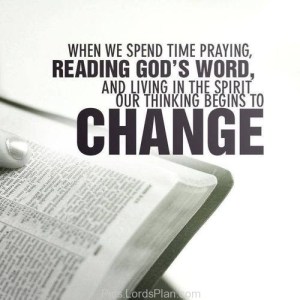
‘Cause at the end of the day, we all need Jesus in the middle of our everything…not only so we can conquer the burdens of life…but so we can love better in every circumstance (hence Paul’s use of the word “abound”).
My thought is: let’s be unified in seeking first the Kingdom (Matthew 6:33) together…in being fervent in loving one another (1 Peter 4:8; Colossians 3:14)…so we may…
- Better identify what’s most important in our own life…
- Better concentrate on the relationships God has called us to…
- Be quicker in our humble obedience…
- Be more available to God, our family, those God has called us to be around…
- Use time more effectively, including family and ministry time (and not sacrificing one for the other)…
…all the while being Spirit-led everywhere in between.
Stay tuned next time for “part 2” of this series, where I’ll discuss a couple practical pointers on how we can better engage God in our midst and live transformationally in 2016.
Footnotes
1) In prep for the Super Bowl
2) Take a good, hard look at gym attendance…and you’ll see what I mean
3) Granted, this is a popular trend this time of year
4) I don’t know about you, but I love this association, specifically how Paul links “the greatest gift of all” (i.e. “love”) to our call to judge righteously.
Photo creds: lightwork.typepad.com, quotesgram.com, indy.shine.fm
 hisgirlfryday.com