Divine Reset: How to Refresh with God in 2025

Well, folks. A new year is upon us. Time to take inventory of the good, the bad, the ugly, and yes, the awesome!

For some, 2024 was a rough year, easily worth leaving behind; for others, the year wasn’t so bad, perhaps the kind one can build from. Regardless of your 2024 narrative, there’s a way to find footing and advance with confidence into the new year. While the steps are unique depending on the person and situation, there exists a holy outline from which we can corporately adhere; hence, why I’m sparing no time (and expense) in publishing this post. ๐Ÿ˜Š

As always, let’s plug our nose and dive in…

1. Invite God Into Your Midstย 

    If you’re a regular on here, you know Lys and I love this topic. 

    Before we can start working on our inner man, we must first connect with God, humbly and often. While ‘come as you are’, a popular phrase in Christian circles, isn’t expressed verbatim in Scripture, the Word is clear how God desires us to invite Him into our brokenness. Interestingly, we find support in both testaments. In Isaiah 1:18, God invites people to come to Him, even if their sins are like scarlet. In Joel 2:32, the prophet declares deliverance to those who call upon the name of the Lord despite the chaos in context. In both instances, God not only offers His availability to engage, but His intention to heal, purify, and restore. 

    Regarding application, we must understand God accepts us ahead of our clean up, not just after. While some gospels preach doctrines of “progress downpayment” in which God requires a degree of level-reaching, when we consider how Jesus prepared and troubleshot during His ministry, we find His love, compassion, and grace was in the moment as well as beyond it. During these times, Jesus always brought salvation to the immediate while encouraging whom He saved to leave their baggage behind and follow Himยน . To me, this is an inspiring facet of Christ’s presence with people and should be embraced as a model to the believer.

    For starters, Jesus never forced theology and mission upon His audience but rather received them with a tender heart, a firm charge, and in some cases, hands on ministry. Secondly, Jesus anticipated forgiveness and reconciliation wherever He went. Even if it didn’t happen right away, His desire to plant hope in people was crucial to His love being felt along with His call to release the past. Accordingly, if anyone wants to experience radical change, we must see Jesus as foundationย andย cornerstone to whatever endeavor we launch or sustain in 2025.ย 

    As for those who hesitate to invite God in regularly on account of prior acceptance, I employ you to daily act in accordance with the grace you’ve received and not undermine it for personal gain. As Hebrews 10:22 confirms, only God can give His children the full assurance of faith while cleansing them from sin. Though the point of salvation is an eternally significant mile-marker, there is no sense in forsaking conviction and tolerating strongholds if what we allegedly confess peaks to the contrary. 

    Bottom line: If we desire to see God’s ways be made straight in our lives, if we want to encounter the totality of His peace and joyยฒ without reducing them as ends from a mean, then invite God into your midst, the unknowns, and the fragility of your circumstances, and watch what He will do. 

    2. Request a Divine Reset

    Once you’ve invited God into your brokenness, submitting applications in prayer is generally the next step. But in the case of a new year, whether you’re looking to jumpstart faith or grow deeper with God, dare to request a divine reset. In Isaiah 43:18-21, God gives an illustration of a divine reset by telling the Israelites He will do something new like they’ve never seen before. After imparting them not to remember the former things in v. 18, we find the new thing one verse later:  

    “I will make a way in the wilderness and rivers in the desert.”

    Using a relatable word picture, God previews His power made manifest; however, it’s important to note the sequence here doesn’t end with a supernatural display but a subsequent call for the people He makes a way for to declare His praise (v. 21). Thus, when we request a reset, we must see the endgame as more than our breakthrough but also an avenue to discover God make known His goodness tot he world. Remember God is not some wishful genie on standby but the author of our redemption and source of our sustenance. Though resets and renewals come in all shapes and sizes, the key is to understand the reason is Him shining at the center of whatever growth we aspire to see. 

    Bottom line: When requesting a divine reset, don’t just ask for it to cover past mistakes, but expect it in the spirit of obliterating obstacles standing between you and God. Sometimes, the reason we find ourselves stuck is because we aren’t in the practice of speaking truth to every lie and fear we face. Eventually, we find ourselves in the mire wondering how we got stymied in the first place. Though setbacks are inevitable, when we cry out for rescue or redemption, may we see with fresh eyes the sovereignty of God straightening His ways while also removing the clutter hindering our awareness of His presence and power. Again, God has a plan and purpose for you. Even if 2025 is an extension of a desert or wilderness season, He is more than enough to meet you as an oasis any time, any place. 

    Selah.

    Stay tuned next time when I’ll share my final two points on how we can refresh with God heading in the new year. Until then, stay safe, classy, and blessed in all you say and do. 

    Footnotes

    1. Laying down our weights in exchange for our cross (Matthew 16:24-26) is how we position God’s paths to be made straight in our lives. This can’t be strived for in our own strength.
    2. Diving in deeper, Paul is clear in his letters how God governs us through peace and motivates us through joy. When we see what God wants to do, when we catch His purposes (and focus less on what our purpose is), the Lord promises there will be joy in the process. This doesn’t negate the challenges we walk through but ensures there will be glory amidst the endurance and perseverance.

    Photo creds: Unsplash, iStock

    Year in Review: A Look Back at 2024

    Remember Charles Dicken’s epic opening in “A Tale of Two Cities”?

    “It was the best of times, it was the worst of times…it was the epoch of belief, it was the epoch of incredulity…it was the season of Light, it was the season of Darkness, it was the spring of hope, it was the winter of despair.”

    Back in the day, I used to read these clauses as ‘either/or’, as if you could only be on one side of the ledger.

    But lately, my interpretation has evolved to something more in line with Shannon Alder:

    โ€œSometimes the best and worst times of your life can coincide. It is a talent of the soul to discover the joy in painโ€”-thinking of moments you long for, and knowing youโ€™ll never have them again. The beautiful ghosts of our past haunt us, and yet we still canโ€™t decide if the pain they caused us outweighs the tender moments when they touched our soul. This is the irony of love.”

    Indeed, 2024, like any year, has featured its share of ups and downs, the rollercoaster largely attributable to family dynamics and the neurodivergences we daily troubleshoot. 

    Yet, unlike last year, I’ve rediscovered my smile again, and as a vintage Mastercard commercial will tell you, you can’t put a price tag on that. As my prior Year in Review update attests, 2023 was one of the worst years I experienced, not only for me but for Lys and the rest of the family. Stuck in post-Juju grief, financial hardship, desperate for new work, there were many discouraging narratives outside our control. But twelve months later, I’m happy to say the landscape has changed dramatically, and with it, our perspective and outlook.

    Of note, my first year at Mercy Multiplied was a major highlight. Heading into the year, I didn’t know how I would adjust to an Accounting Manager role after a four-year stint as a Client Support Manager; however, as I would soon find, the environment, training, and teaming would provide plenty of stability and balance. While much more could be said, the skinny is the faithfulness of God. By His grace, He has not only fused the best from past pitstops, but has also networked a foundation from which I’ve been able to apply lessons learned from those eras. Even in a high transition/turnover year, I’ve felt more anchored during the 9-5 as new skills, connections, and opportunities have accrued. Consequently, I head into 2025 with more occupational momentum and excitement than anticipated. 

    On the home front, the most notable occurrence took place on February 13, 2024, on which my son, Milo, survived a brutal attack from our neighbor’s dog. Emotionally and physically shredded, Milo recovered quickly during the spring, though we continue to devote many hours to his healing. In light of Milo’s autistic diagnosis following the incident, his progress has included weekly occupational, feeding, and trauma therapies. As we navigate legal hurdles, we’ve also been investing in life wellness activities for Caeden and Everly as they advance in their own grief journeys. Needless to say, much of life this year has centered on restoration, though we rejoice in God’s sovereignty and knowing Satan’s intent to destroy our family has backfired tremendously.

    In terms of memorable moments, our family trip to California in mid-May proved to be a horizon-broadening experience for the kids. Honoring the late Reverend Dennis Shuey in our travels, we soaked up the sun from Monterey to San Jose during our 8-day voyage. While the inspiration behind the trek was dampening, our time in the Golden State allowed for some much-needed family bonding and quality time. 

    Weather-wise, there were two instances worthy of mention:

    1. Winter Storm Heather (January 14-15, 2024) – This event not only shattered expectations but was verified as a top three snow event dating back to the 1995-96 winter. Stuck at home for over a week, the eight consecutive 1+” snow depth streak at BNA was the longest since January 1978. The refreezing of melted snow kept sledding conditions ideal during much of this time. Iโ€™ll let the time lapses and highlights below take it from thereโ€ฆ

    2. Columbia Tornado (May 8, 2024) – While snow has a special place in my heart, the top meteorological moment of the year was my Columbia storm chase on May 8, during which I confronted the mesocyclone that produced a killer tornado just a mile from my location. Tracking on a whim, the tornado was the second I successfully intercepted. Unfortunately, 67 year-old, Cheryl Lovett lost her life when the tornado struck her home on Bear Creek Pike.

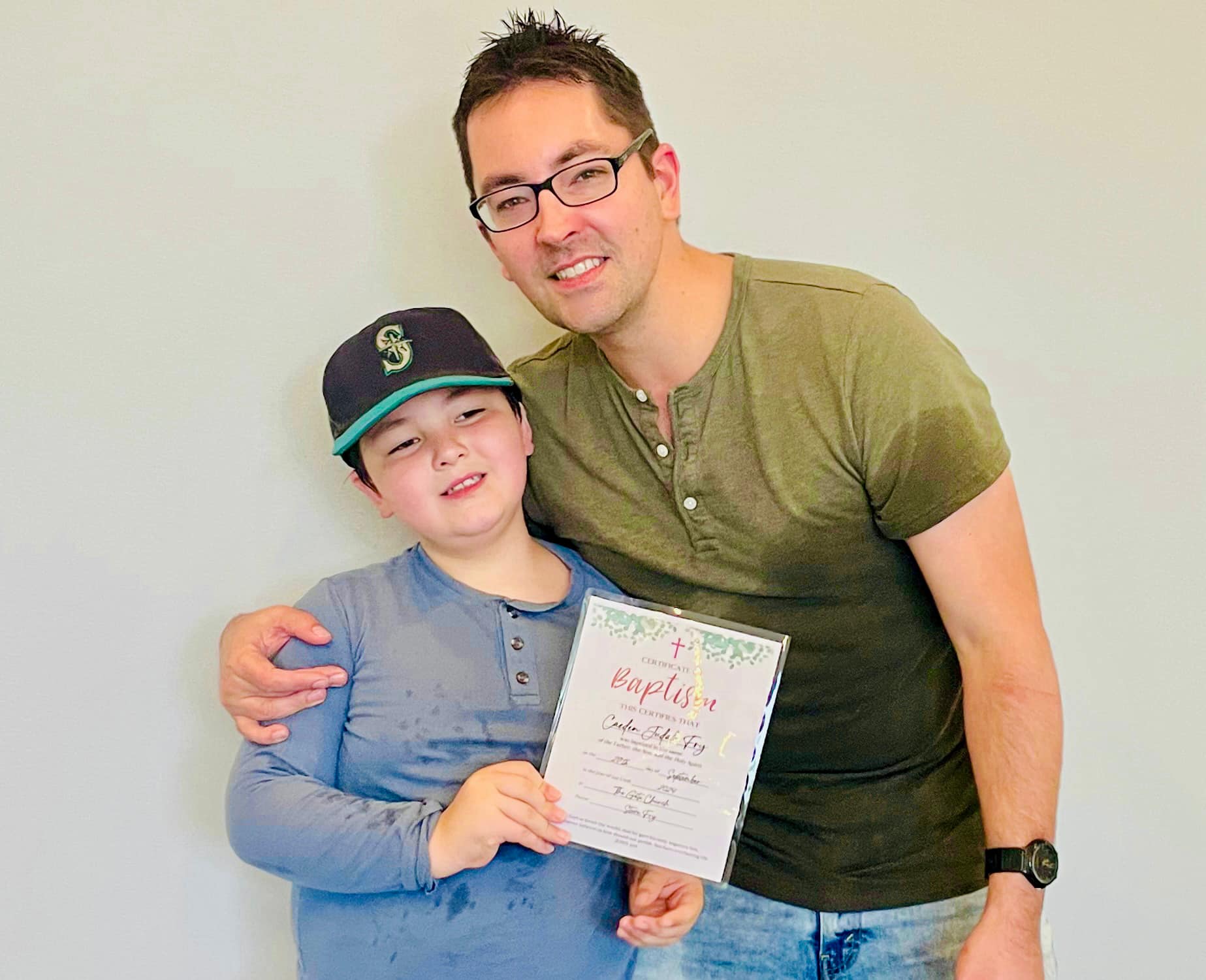
    Spiritually speaking, 2024 came full circle for Caeden, who expressed a desire to be baptized in January before taking the plunge on September 29, 2024.

    Church-wise, we continue to attend and serve at The Gate Church. As Communication Directors, Lys and I are eager to see what the new year brings with new pastoral care initiatives in motion.

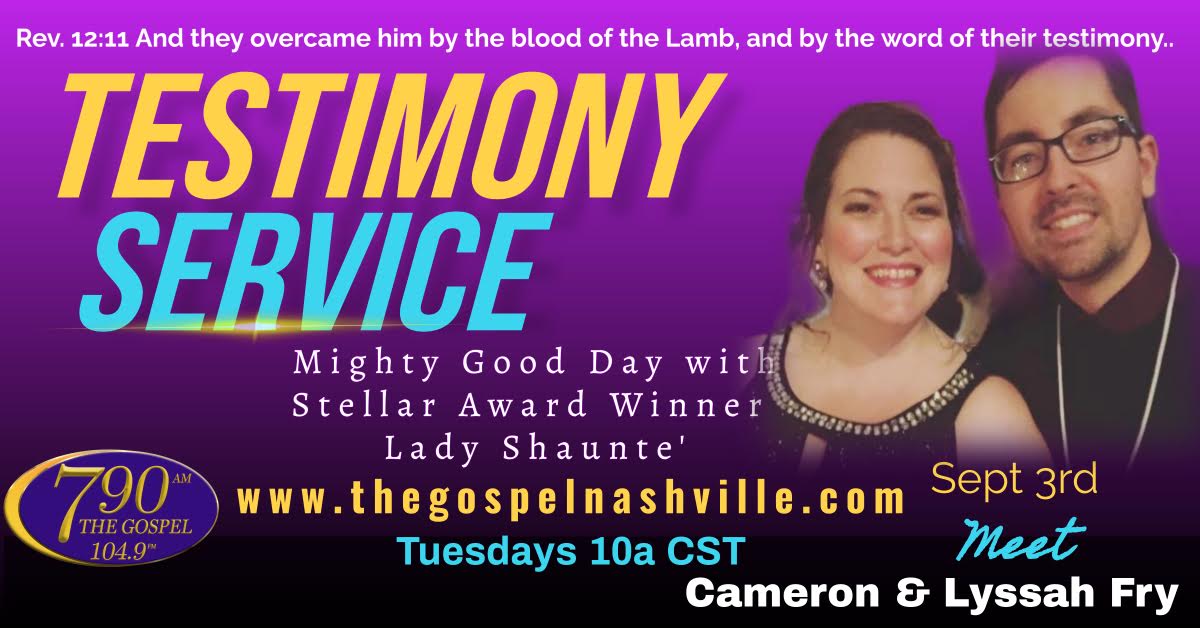
    Regarding our While We’re Waiting small group, Lys and I continue to ‘grassroot’ a local cohort. Since June, we’ve partnered with two on-air ministries, Christian Missionary Radio and 104.9 The Gospel, in sharing our heart behind the community. With a rejuvenated passion to reach bereaved parents, we hope to facilitate greater healing within our group so onsite and virtual ministry can coincide. No question, planting this tribe of God’s presence has been a breath of fresh air. 

    In other news, Fry Freelance has expanded its wings again with new podcasting projects and two new books under construction. Even as AI invades more digital and entrepreneurial space, we hope to keep up with the times while staying true to our brand. Don’t be surprised if the His Girl Fryday website and name go under construction in 2025 after a 10,000 hit-year. As these endeavors fill in the lines, Lys and I are also hoping to mature our homeschooling rhythm in tandem with the wonderful people and curriculum of Arrows Academy. Since our January enrollment, they have provided a safe learning space for Caeden, Everly, and Milo. The three even got to be in their first school production when they were cast as spiders in Charlotte’s Web!

    As for smiley Aili, well, she continues to amaze us with her growth and cunning. The epitome of rainbow baby, she’s been a mellow glue binding the family since her arrival last July. We celebrate not only her health and development but also her upbeat and centralizing energy.

    Overall, while there were setbacks in 2024, they pale compared to the rebounding narratives we find ourselves in. After the third worst year of the century last year, 2024 wraps up as the best since 2016 and one of the best start-to-finish years since graduating college. Whether next year features another two steps forward, we know having been through the wringer in recent years how God works out all things for His glory and good. So it is with our prayers for you and your family that you endure and press forward in His name with hope and expectancy fully attached.

    To you and yours, we wish you a very Merry Christmas and a Happy New Year!

    ~ Cameron, Lyssah, Caeden, Every, Milo, Jubilee, and Aili Fry

    Cover photo creds: NWS-Nashville

    Scriptural Introspection: Why Self-Awareness and Self-Consciousness are Not Synonymous

    The story of 2024 continues to write itself as one with Rivendell themes. As time progresses, so does the rest and recovery. Granted, working in a place where refuge is naturally extended helps; however, this doesnโ€™t undermine the revelations that have accrued as a result.

    Consider the most recent illumination rocking my boat of lateโ€ฆ

    Historically speaking, Iโ€™ve been way too self-conscious and self-critical, enough to the point I sometimes project it onto others and assume unfair judgment as the recipient. Itโ€™s twisted and messed up, as Carrie Underwood would say, enough to compel me to discern the missteps. What causes the heart to stray from alignment, especially during challenging circumstances?

    While the reasons vary, we must be careful not to overanalyze our situations given the tendency is a byproduct of unanchored introspection. At work, at home, wherever we go, taking inventory, from the physical to the spiritual variety, makes sense and carries value. In fact, one would be unwise to limit or avoid the practice altogether. But when we talk about faith, trust, and surrender, these virtues need room to breathe in our life, which can only happen when weโ€™re at rest inviting God into our midst, when weโ€™re abiding with Christ as we seek first the Kingdom.

    As to how this applies within the dichotomy of self-awareness versus self-consciousness? In the spirit of a healthy introduction, Iโ€™ll keep it simple:

    Self-awareness in its purest form is an honest evaluation of oneself, from innate wirings to strengths and weaknesses whereas self-consciousness is an assessment insecurity tied to preservation.

    Many people think these concepts are synonymous, but this couldnโ€™t be further from the truth.With self-awareness, you are โ€˜wokeโ€™ to your original design, equipped in knowing your โ€˜whyโ€™ but also where internal improvements can be made. Scripturally applied, self-awareness can advance us to the Father as we are in the moment, desperate for appointed pathways to be made straight. Conversely, with self-consciousness, you are stuck in striving mode, bogged down by one or more of the following:

    1) An entitlement that seeks situation justification
    2) Vindication against the adversities limiting your influence and/or capping your maturity
    3) Self-doubt that God can accomplish His purposes in the face of whatever mountain youโ€™re scaling

    Too much self-consciousness and youโ€™ll ultimately misappropriate the way youโ€™re to overcome (or climb the terrain assuming #3 relates). As Oswald Chambers warns us in โ€˜My Utmost for His Highestโ€™, the more self-conscious we are, the more at risk we are for self-pity, a snare of the enemy chaining us to negative thought and behavior patterns. If youโ€™ve ever wondered why life seems to be such an unfair game of Minesweeper, chances are youโ€™re knocking on the door of this scheme.

    Thankfully, where thereโ€™s a will, thereโ€™s a way. No matter where we are, on the clock or off the record, we can approach God in the spirit of childlikeness and resist the temptation to dispute or dissect our misfortunes. As Iโ€™m gradually learning, self-consciousness is a bane to discovering Christ since it recenters our aim, focuses on the distractions we complain exist, and misaligns our steps. If weโ€™re to recalibrate, dare to โ€˜awareโ€™ yourself to God, not from Him. Own the places where youโ€™ve made life a sad song based on what isnโ€™t working and receive by faith the happy song concerning what has and what will work with time, devotion, and unwavering dedication.

    Remember God delights in our repetition, so donโ€™t be afraid to pray and declare the same truths over and over again.

    As long as we have breathโ€ฆ

    Until next time, stay safe and sanctified…

    You got this!!!

    Supporting verses: Matthew 11:28-30; Psalm 139:23-24, 2 Corinthians 13:5, Romans 12:2

    Graphic creds: Pngtree

    Kingdom Agents: The Difference Between Gifts, Functions and Vocations (Part 1)

    When I say โ€˜vocationโ€™, what immediately comes to mind?

    The 9-5 grind, the hustle and bustle, doing anything and everything to make ends meet?

    If so, youโ€™re not alone. After all, the world loves to condition us to view work as a โ€˜got toโ€™, not a โ€˜get toโ€™.

    Yet, as I was reminded over the weekend, our marketplace vocation goes far beyond immediacy, intellect, and [our sense of] importance. Even though the nature of our jobs may require these elements, the aim of our jobs…the aim of our calling…is to serve as a royal priesthood, as Kingdom agents functioning in personal commission.

    The question is: What does this look like and how does this happen?

    tenor

    For starters, itโ€™s imperative we understand the difference not only between call and vocation but gifts and function.

    To do this, letโ€™s recap the spiritual gifts as outlined in the New Testament:

    *Jesus gifts (Ephesians 4:1-3) โ€“ These are part of our vocation and include ascension and equipping gifts as well as the fivefold spiritual gifts (i.e. apostle, pastor, teacher, evangelist, prophet).

    Note: While all are wired to shape influence, not all are wired to employ these gifts in the church/in these specific occupations. More on this in a sec.

    *Spiritโ€™s gifts (1 Corinthians 12) โ€“ These belong to the Spirit and are gifts in a gathering. Some examples include administration, discernment, wisdom, healing, and miracles.

    * Community gifts (Romans 4:4, 12:4-8) โ€“ These help us function in a local body. Some examples including leadership, encouragement, service, and mercy.

    list-of-spiritual-gifts

    Due to word count, Iโ€™ll link these passages rather than copy/paste; however, after you read them, consider their Greek roots:

    1. Romans 12:4-5 โ€“ The word for function is the Greek word โ€˜praxisโ€™ meaning โ€œpractice functionโ€ and signifies continual activity.

    2. Romans 12:6-8 โ€“ The word for gifts is the Greek word โ€˜charismataโ€™ meaning โ€œgrace functionโ€ and signifies communal activity. In the workplace, we can know these functions as influencing functions.

    In both these cases, itโ€™s important to note the origin of gifts point to corporate functions created for unity, not individual skills and talents.

    3. Ephesians 4:1-3 โ€“ The word for vocation is the Greek word โ€˜klesisโ€™ meaning โ€œcalling functionโ€ and signifies the work in which a person is employed. This not only references our occupation but our acceptance of it as a divine call to a particular pathway/course of action.

    In this case, itโ€™s critical we know how vocation and calling work together. As Martin Luther once said, โ€œEvery person is capable of having a vocationโ€; however, our universal calling is to be a royal priesthood.

    Accordingly, we can break this down as follows:

    โ€ข Our universal calling: Priest (1 Peter 2:9)
    โ€ข Our gifts and functions: Romans 12:4-8
    โ€ข Our vocation: Romans 12 filtered through Ephesians 4


    I like how Timothy Williams, author of The Spiritual Gifts, captures the vocational aspect of our spiritual gifts: While we know there are 5 ascension gifts and 7 community gifts,ย  it’s important to note โ€œeach ascension gift has a corresponding functional gift.โ€ For instance, a certain accountant may not be called to serve as a prophet in a ministry setting (i.e. a liturgically designed ascension gift); however, he can still employ prophetic insight through encouragement and counsel in financial arenas (i.e. a vocationally designed ascension gift with specific communal functions). Of course, there may be times the accountant imparts guidance for church staff in critical situations. But the bottom line is: The man of God is at peace serving the body as a financial advisor with a prophetic anointing as opposed to a prophet with financial skills.ย 

    Before I continue, I want to share a couple quick points on ‘vocation’ and how weโ€™re to perceive it in light of our identity:

    1. Gifts and vocations are NOT meant to soothe your ego or confirm your identity. If you base โ€˜who you areโ€™ by โ€˜what youโ€™ve been givenโ€™, youโ€™ll reinforce territorialism in place of influence. Donโ€™t do it!

    2. Gifts and vocations are meant to enhance a sense of intimacy. If you base โ€˜what youโ€™ve been givenโ€™ by โ€˜who you areโ€™, youโ€™ll reinforce a radical dependence on God and radical equality in how you view authority and hierarchy.

    3. If we see ourselves as โ€˜Kingdom agentsโ€™, then weโ€™ll a) desire to use our vocation to emphasize the work cultures that already point to Jesus (i.e. redeem our work environment) and b) seek to give clients and colleagues a taste of God by โ€˜calling forth their destiniesโ€™ (i.e. restore people).

    4. If we donโ€™t see ourselves as โ€˜Kingdom agentsโ€™, not only will we risk compartmentalizing our sacred and secular lives, but we will also miss opportunities to help people discern spiritual things with their natural minds.

    5. Remember weโ€™re all co-equal in value, diverse in function. Therefore, letโ€™s engage our vocation as a holy partnership in influencing people to discover the fruit of their work/organization and in speaking restoration to people without agenda.

    Looking ahead to โ€˜part 2โ€™, I want to revisit Williamโ€™s quote to help bridge the gap between Ephesians 4 and Romans 12.

    โ€˜Cause truth is: If weโ€™re to better understand the relationship between gift and function within our vocation, weโ€™ll need to apply additional grids and principles.

    *Cough, Jethro. Cough, perichoresis. Cough*

    Additionally, weโ€™ll also need to add โ€˜eldersโ€™ and โ€˜deaconsโ€™ to the pastoral cluster so we can match 7 gifts with 7 functions. But Iโ€™m getting ahead of myself.

    For now, I hope you were able to glean something out of this introduction. If you have any thoughts or questions, please donโ€™t hesitate to leave a comment or contact me at your convenience.

    Until then, God speed on your week. May His sweet presence be fresh wind in your sails as you press into His goodness.

    You got this!

    Selah.

    Cover photo creds: Fast Company; body graphic creds: Msinop; content written by Cameron & Steve Fry; audio voiced by Steve Fry at the 2020 Commission U Leadership Retreat on February 29, 2020

    Woke Faith: A SOAP Study on Acts 17:15-34

    When I say ‘Acts’, what immediately comes to mind?

    Early church? Paul’s conversion? Pentecost? Speaking in tongues?

    Perhaps you’re like me in thinking ‘Holy Spirit’, ‘encounter’ or some variation. To be fair, all these are great answers; however, they also occur during the first half of Acts. And as vocationals, I believe it’s important we examine Paul’s ministry in the latter half to understand modern-day application as Kingdom influencers in the marketplace.

    That said, afterย discussing the Capernaum centurionย in our last SOAP study, let’s fast-forward toย Acts 17 where we find a provoked Paul stirring in Athens.

    Scripture: Acts 17:15-34

    Observations:

    Relative to prior pitstops, the setup to Paul’s Areopagus address is fascinating. After mixed receptions in Thessalonica and Berea, Paul lands in Athens, a densely paganized hub drenched in idolatry (v. 16). Weary from travel, it’s fair to say Paul could have withdrawn or charged the scene in an abuse of confidence; however, as v. 17 states, Paul not only turned the other cheek, but reasoned in the synagogue with the Jews, city officials, and…[wait for it]…marketplace leadersevery day with those who happened to be there“.

    This tells me three things off the bat:

    1. ย Paul knew his audience, intentionally seeking it out realizing where the influence was coming from.
    2. ย Paul was persistent, persuasive, and patient in his dealings with people from the get-go. As we’ll later see, how else could Epicurean and Stoic philosophers go from โ€œWhat does this babbler wish to say?” to “May we know what thisย new teaching is that you are presenting?” in one verse?
    3. Paul understood the seeds of truth he needed to sow, but also the soil he needed to cultivate for those seeds to take root.

    Continuing on through v. 28

    Some of the Epicurean and Stoic philosophers also conversed with him. And some said,ย โ€œWhat does this babbler wish to say?โ€ Others said, โ€œHe seems to be a preacher of foreign divinitiesโ€โ€”becauseย he was preachingย Jesus and the resurrection.ย 19ย And they took him and brought him toย the Areopagus, saying, โ€œMay we know what thisย new teaching is that you are presenting?ย 20ย For you bring someย strange things to our ears. We wish to know therefore what these things mean.โ€ย 21ย Now all the Athenians and the foreigners who lived there would spend their time in nothing except telling or hearing something new.

    So Paul, standing in the midst of the Areopagus, said: โ€œMen of Athens, I perceive that in every way you are very religious.ย 23ย For as I passed along and observed the objects of your worship, I found also an altar with this inscription:ย โ€˜To the unknown god.โ€™ย What therefore you worshipย as unknown, this I proclaim to you.ย 24ย The God who made the world and everything in it, beingย Lord of heaven and earth,ย does not live in temples made by man,25ย nor is he served by human hands,ย as though he needed anything, since he himselfย gives to all mankindย life and breath and everything.ย 26ย Andย he made from one man every nation of mankind to liveย on all the face of the earth,ย having determined allotted periods andย the boundaries of their dwelling place,ย 27ย that they should seek God,ย and perhaps feel their way toward him and find him.ย Yet he is actually not far from each one of us,ย 28ย for “‘In him we live and move and have our beingโ€™ as even some of your own poets have said,โ€˜For we are indeed his offspring.โ€™”

    From here a couple more points stand out…

    1. Paul, knowing his audience, not only adapted his language in preaching the Gospel but included secular references in verifying the Scriptures. Note how inย v. 28ย he cites Epimenides of Crete and Aratus’s poem โ€œPhainomenaโ€ to prove the invalidity of temples gods.

    I love how Cameron McAllister, a speaker with RZIM, captures this as “cultural apologetics”…

    2. Paul, up until now, has not introduced the concept of repentance. This is because he was more concerned about connecting God’s love to creation than freedom from sin – which they lacked context for anyway.

    3. Like today’s world, 1st century Athens valued diversity, connectedness, and were open-minded towards many philosophies (v. 21). This is likely why Paul prioritized a) singularity and relationship when explaining God’s absolute nature and b) centralization metaphors/analogies that made sense to them. In other words, Paul knew to capture the sovereignty of God, he had to first emphasize what they inherently knew about Him whether they recognized it or not.

    CTA-Makes-Sense

    4. As we find in v. 32-34, Paul saw few people converted in Athens on behalf of his presence; however, the lasting influence of his ministry is evident in that today the text of his speeches is still engraved on a bronze plaque at the ascent to theย Areopagus.

    Applications:

    As Paul portrays, relating to the Athens of life is one of the most significant choices we can make as marketplace leaders. Like some of our working environments, Athens was a junkyard of idols, a toxic wasteland where intellect trumped truth. But amidst the funk, there were still people, blind as they were, who were open enough to listen – to give an open space as the Message translates. Thus, it could be said the greatest weakness of the Athenians was also their greatest strength given their misplaced devotion ultimately gave Paul the opportunity to testify.

    As for us, there’s something to behold about this moment, especially as it pertains to our vocational environments.ย For one thing, I believe there are more people with receptible bandwidths in our midst than we think. Like Paul among the Athenians, we are often surrounded by colleagues, co-workers, and supervisors – many of them with a story, a set of ears, and a desire to be heard. Why then do we assume these people wouldn’t want to hear what we have to say? Is it because we’re afraid our vulnerability will not be received? Because we fear the truth will fall on deaf ears? Or are we so insecure, we evade judgment before it’s even cast? Not to downplay the discouragement Christian workers face operating in worldly systems of enterprise. I get how tough it can be when twenty seconds of insane courage become twenty minutes of painful rejection. I’m just sayin’ like Paul, we don’t have to resent the lost for being lost or the hurt for being hurt. Rather, we can sit down, invite them into our confident zonesยน, and peacefully present the good news by which we live our lives.

    Furthermore, I believe the power in our testimony is enhanced when we choose to speak the language of those we’re witnessing to. Remember everyone has skills and abilities, but very few know where they come from. As such, it’s imperative we acknowledge and affirm the areas God is manifesting through, whether or not they’re immediately recognized. After all, we’re all created by a master Creator with breath to take in the evidence of His presence. Hence, why it makes sense to incorporate the simple things we share in common into the unique ways we capture God’s love.

    Selah.

    Prayer:

    “Lord, we thank you for being our source and our rock. We thank you for going before us to make a way when none seem possible. Day in and day out, you are our sovereign sustenance. What can we do but declare gratitude and victory in your name? But Lord, we also realize as vocationals, as marketplace leaders, as Kingdom influencers…we are not immune to daily alignment. Every day we’re exposed to idolatry, deception…worldly systems of tolerance and reciprocity disguised as love and compassion. We confess there’s much to be frustrated and angry about; however, we also confess your will in us, your Holy Spirit burning within, we have everything we need to counter culture with goodness, godliness, and the love you’re constantly perfecting inside our deep (Psalm 42:7). Give us the strength and discernment, Lord, to use your words in a language those around us can understand. Help us not be closed off to the raw giftings you’ve planted inside those who are far from you. If anything, help us know how to steward those divinely sown seeds so one day those carrying them will know without a day who they come from and why they are there. We choose you and accept the paths you’re establishing even now as we speak. May this all be so in your precious name. Amen.”

    Footnotes

    1. As opposed to comfort zones