So yesterday I’m reading Mark 5 and it hits me: Why does Jesus tell the once demon-possessed man to go home to his people and tell them how much the Lord has done for him (v. 19), but gives strict orders to the sleeping girl’s family not to let anyone know about her miraculous healing (v. 43)?
At first glance, Jesus seems inconsistent. Why tell one party one thing and contradict it with another?
I mean…yeah, Jesus was always yielded to the Father following the Spirit’s lead. Fair enough. Still, I can’t help but dive a little deeper. As always, let’s grab a shovel and dig in.
Scripture/Observations
In Mark 5:1, we find Jesus, fresh off of calming a tempest (4:35-41), crossing the lake to Garasenes, a country region lying on the east side of the Sea of Galilee. Upon arrival, a demon-possessed man decked with torn chains coming out from the tombs approaches Jesus (Spooky, right? Talk about the ultimate Halloween Bible read). Once within range, the demon reveals itself as Legion (“for we are many” – v. 9) and begs to be cast into swine. From there, Jesus grants the request and inspires the man to proclaim the good news of what He had done John 4 style.
Now, check out v. 21: “When Jesus had again crossed over by boat to the other side of the lake, a large crowd gathered around Him while He was by the lake.”
Like similar encounters, we see life flocking to Jesus upon arrival, perhaps more causal than coincidence given the west side was more populated, not to mention Jesus’ reputation had established momentum. Yet, it’s here I want to pause to highlight a key contrast.
When Jesus arrives at Gerasenes, how many people come to him? At least one that we know of, right? How about the flip side? If you said ‘large crowd’, you’d be correct. Granted, the population difference may seem like a subtle detail; however, when we stack it against proceeding context, we see its connection to part of the answer.
That answer, you ask?
I’ll get to that shortly. For now, we must understand the correlation between Jesus’ intimacy with the Father and how this enabled Him to know the best way to unleash the truth. In the case of Mark 5, Jesus, having already revealed His nature on the west side, knew the best way for the good news to spread at Gerasesnes was for the ex-possessed man to ‘go tell it on the mountain’. After all, what occurred at the Decapolis post-healing centered, in part, on Jesus’ identity being made known to the masses.
Yet, as I teased earlier, the truth of Jesus’ identity was already spreading on the west side. Therefore, it’s fair to say Jesus’ cross-country trek was just as much about manifesting love through power as it was confirming the truth of who He was (see v. 25-34).
Quick side note: I find it amusing how ‘crowd’ is mentioned not once, not twice, but five times between v. 21-31. If in fact the author intended the reader to grasp the chaotic backdrop, mission accomplished. The point here, I submit, is less about Jesus having to endure uncomfortable circumstances than it is Him loving in spite of them. Imagine having zero personal space, teaching to the culprits responsible, and being interrupted mid-sermon setting commotions between people crying and wailing loudly (v. 27). I’d probably lose my mind and grey my hair all at once!
But not Jesus. Instead, look at how unruffled he is, first in v. 36 when he says, ‘Don’t be afraid; just believe’ in response to the disciples telling Jairus’ people, ‘Why bother the teacher anymore?’ and second in v. 39 when he says, ‘The child is not dead but asleep’ after the entire house thought Jairus’ daughter was dead.
Seriously, it’s like Jesus is calming a second storm here.
Now, for most, the story ends here, but the truth is Jesus had one more thing to say before peacing out, which in my paraphrasing, goes something like ‘Shhh! What happens here, stays here.’
But again, why would Jesus demand this? Well, go back to v. 36: ‘Don’t be afraid; just believe.’
Throughout this whole chapter, we’ve seen three miracles, three transfers of power; however, this doesn’t mean Jesus was on the ‘power play’. Rather, Jesus was on a mission to inspire belief in people’s hearts. Accordingly, we can assume what mattered most to Jesus more than signs, more than miracles was the truth of His Word.
In this context, Jesus knew if He allowed the news to break in synagogue central, it would lead to a major distraction. Remember there was enough pandemonium leading up to Jesus’ encounter with the little girl. Any more attention would likely have caused an uproar and reduce Jesus to the role of ringmaster. How fascinating it is to see how timely silence was sometimes part of Jesus’ strategy to further the Gospel!
Bottom line: While Jesus was Spirit led in all He said and did, He also discerned the theology of the land and time He was in as He constantly yielded to the Father. As a result, Jesus was able to reach more people through love and teach them with the truth and power of his Word.
Note: A more detailed analysis of this passage will be included in the Juby Journey book I’m working on. For now, I’m converting preliminary thoughts into the SOAP Bible study below to archive insight and encourage the saints in the short term.
As one dealing with grief, who went through the ringer last year while Juby was alive, I can’t help but resonate with this passage. Like the protagonist, Lys and I can relate to an afflicted daughter and the desperation for her deliverance. Granted, Juby was not demon-possessed but stricken with chronic lung disease. Still, as we cried out for Jesus, hopefully not to the chagrin of others, we discovered a posture far greater than a spiritual bookmark but of a daily exercise with reproducible influence.
Accordingly, without further ado, I’d like to unpack the remarkable faith of the Syrophoenician woman and how her hope can be a blueprint for those seeking restoration.
“And Jesus went away from there and withdrew to the district of Tyre and Sidon. And behold, a Canaanite woman from that region came out and was crying, ‘Have mercy on me, O Lord, Son of David; my daughter is severely oppressed by a demon.’ But he did not answer her a word. And his disciples came and begged him, saying, ‘Send her away, for she is crying out after us.’ He answered, ‘I was sent only to the lost sheep of the house of Israel.’ But she came and knelt before him, saying, ‘Lord, help me.’ And he answered, ‘It is not right to take the children’s bread and throw it to the dogs.” She said, ‘Yes, Lord, yet even the dogs eat the crumbs that fall from their masters’ table.’ Then Jesus answered her, “O woman, great is your faith! Be it done for you as you desire.’ And her daughter was healed instantly.“
Observations
1. Before we can dive into the dialogue, we must first assess the setting. While time and place may seem arbitrary, in this case, they carry notable purpose. With the end in sight, Jesus withdrew with the disciples outside Jewish territory to prepare them for the Cross to come. His days numbered, Jesus realized some final exposures and tune-ups were necessary to groom them for life in ministry without His physical presence. As such, the fact He retreated to the hostile confines of Tyre and Sidon should not be perceived as random as Jesus desired to foreshadow the Gospel going out to all peoples. How amazing it is to know Jesus, even in His last days, never stopped breaking down barriers through radical love.
2. Fast-forward to the woman’s cameo, it’s interesting to note what she requests right out of the gate. Instead of healing or intervention, she addresses Jesus as ‘Son of David’ and calls for mercy, instantly acknowledging the Master’s identity, authority, and sovereignty in one swoop (v. 22). While intellectual origins are unknown, somehow, someway, she understood who Jesus was much to the surprise of the cohort. Per the importance of this sequence, we’ll break this down as we go.
3. I also find Jesus’ response to be somewhat peculiar: “But he did not answer her a word” (v. 23). This, to me, is a critical point to examine and requires us to broaden out to consider the context. Again, this will be explored in the points below.
4. Starting with the woman’s location and situation, we find her labeled as an unclean outsider despite her Canaanite designation and erroneously judged for her non-Israelite daughter’s condition. In terms of geography and timeline, we aren’t informed of any prior wonders performed in Tyre and Sidon prior to this passage. This adds a curious wrinkle to the story as one must wonder how a woman of this stature and status could recognize Jesus as the Messiah.
5. Going back to Jesus’ response, we find multiple motives. For the disciples citing the woman as a distraction, Jesus addresses their bias prior to answering her cry (v. 24):
“I was sent only to the lost sheep of the house of Israel.”
The reason behind this is at least twofold: On one hand, Jesus wanted to remind the disciples who He was in light of what He came to do as clearly, a portion of the twelve were still pigeon-holing His kingship. On the other hand, Jesus’ intended His initial silence to be an opportunity for the woman to show patience…and resilience. From ‘have mercy’ to ‘help me’ in consecutive pleas (v. 25), the woman wasn’t just conveying poetic symmetry but reiterating Jesus’ mission. Already she had correctly identified Jesus as the Son of God (a full two chapters prior to Peter’s declaration in 16:16); now, she was begging Jesus to be consistent to her…
…what you do to Israel, please, Lord, do to me and my household as well.
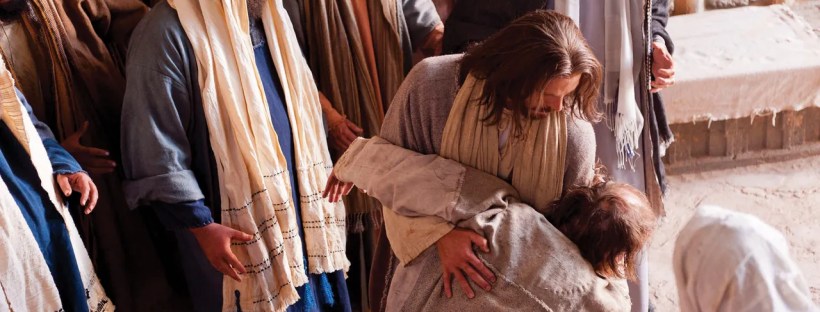
6. In addition to the woman’s opening inquiry, I’m captivated by her posture. Even if she just said, ‘Son of David, please help me. My daughter is possessed’, Jesus would have recognized the woman’s understanding of His lordship through her positioning. While the woman’s kneel wasn’t evident during her first appeal, the fact Jesus gave the woman more time, in part, to let her go deeper in referencing Him was not part of instinctual circumstance. Rather, it was an intentional maneuver for her to anchor her surrender and confirm her awareness in front of a freshly humbled core of disciples.
7. The exchange between Jesus and the woman immediately following is arguably one of the most profound moments during His ministry. Up to this point, Jesus hasn’t said a word. Now ready, we again see the silence’s effect per His decision to test the depth and sincerity of her invitation. With the woman’s hopelessness on a timer, He uses the woman’s location and sense of identity as a means to assess her heart:
“It is not right to take the children’s bread and throw it to the dogs” (v. 26)
Here, Jesus elects to use ‘dog’ knowing the term was derogatory as a Gentile reference. To be a dog in Israel was to be regarded as a dirty, street scavenger; however, Jesus doesn’t associate the term to her poverty as much as her perceived sense of spiritual destitution. At the time, the rift between Jew and Gentile (between ‘clean’ and ‘unclean’) was still strong but, in a preview, we find a woman authenticating her hope while also foreshadowing the expiration of Gentile believers’ spiritual homelessness.
In the woman’s reply, “Yes, Lord; but even the pet dogs eat the crumbs that fall from their [young] masters’ table” (v. 27), we not only find confidence beyond imminent healing but in the salvation of her people. While the woman’s yieldedness was key as a demonstration of submission, Jesus knew this wasn’t simply a self-centered strategy to obtain instant results.
8. Finally, per the prior point, the significance of ‘crumb’ cannot be understated. For a “lost sheep of Israel” (v. 24) to be so hungry for Jesus that even a mere morsel would tell us the woman saw her situation as secondary to the power and presence of God. In essence, she accepts the status of a family’s dog knowing just a crumb of Jesus would be powerful enough to defeat the demon oppressing her daughter. No question, the woman had her priorities and perspectives set straight, almost as if she had anticipated the moment in advance.
Application
Despite its short duration, the passage carries immense application and universal relatability potential. Regardless of our situations, we can all identify and empathize with the Syrophoenician woman if not at least through her adamant clinging to hope in a bleak situation. Even when we’re struggling with our identity, a love deficit, and/or challenges outside our control, even when we feel stuck in a dark place, we can approach God in humility with thanksgiving acknowledging who He is and what He can do.
For some of you, you may have a loved one, a son or daughter, burdened by a disease or satanic assignment. You may feel the target on your back and paralyzed to shake it off. If this is you, don’t work to faith and prayer; start with faith and prayer. To the Lord of grace, ask for mercy and request His appointed portion of providence. If you’re lost, don’t deny the position but receive yourself as one worth saving. Like the woman, you may be deeply conscious of the misery of the soul, but this doesn’t disqualify you from bread of life crumbs.
For others, you may not have a grim circumstance on the board, but you may be thirsty to anticipate the proximity and power of God. While we don’t know exactly how the woman learned of Jesus before His arrival, we know she put herself in position to receive Him following His arrival. Like her, you don’t have to limit your bended knee to the moment. Rather you can extend it as a general posture wherever you go. Ask yourself, ‘Do I want more of Jesus? Do I want a fresh touch of Him today?’ If the answer is ‘yes’, know whatever He decides to give is more than enough even if what He offers is partly an invitation to go deeper.
Either way, dare to believe good things will happen when you seek Jesus and ask of God according to His will.
Prayer
Heavenly Father, we come before you today as we are. Heavy laden with our fears, anxieties, and insecurities, we lay them down in anticipation of what you’re going to do. Wemay feel “dogged” by life, by consequences of past decisions, by unforeseen trials and happenstances. But like Mary, we choose you ahead of any other commitment and priority in our life right now. We thank you for going before us but recognize your faithfulness before us now. For those who are hungry for you, we ask you provide something afresh to they may taste and see a new facet of your goodness. For those who don’t realize they’re hungry, guide and position them to discover the bread of life you carry. Stir in all of us an awakened passion to the wonder of you and help us to see even what we can’t control as opportunities for sharpening, pruning, and maturing. Whether or not we’re personally afflicted, we pray you prepare our hearts for inevitable testings to come and remember those who are going through tragedy, who are journeying through grief. Tend their hearts and make us sensitive to our part in nourishing them just as you are intentional in nourishing us. Whatever piece youintend to give, we receive itwith praise on our lips and gratitude in our hearts.In Jesus’ precious and holy name…







 hisgirlfryday.com
