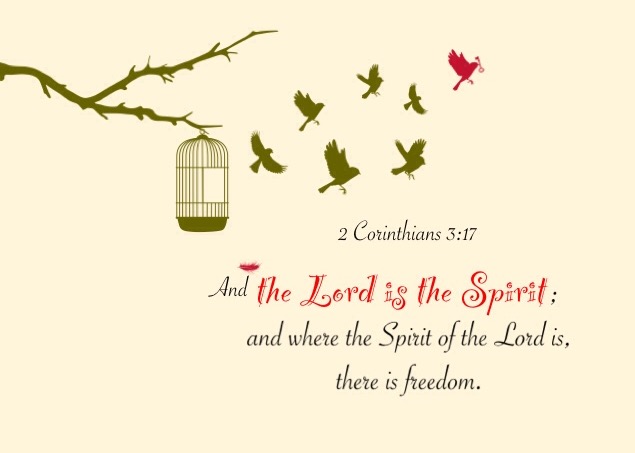
Work as Freedom: Hearts of Flesh (Part 1)

Inspiration passages: Ezekiel 11:19; Ezekiel 36:26-27; Jeremiah 31:33; Hebrews 8:10

Backdrop passages: 2 Corinthians 3; 2 Corinthians 5:13

Core concept 1: God has qualified us to communicate the Gospel as Kingdom influencers; however, to walk in this competency, we must receive hearts of flesh in place of hearts of stone.

It’s no secret the world bombards us with the idea success is an identity we achieve through ability. If we want to get something, we got to first become something; if we want to reach ‘x’ status, we must set an ‘x’ goal; to reach an ‘x’ goal, we must get there by ‘x’ effort, etc.

However…

37xlq2

For example, you may have a counselor’s heart, but doubt its validity since you’re not a licensed counselor. The world would say until you receive the proper credentialing, you’re not a counselor. But to God, you are a counselor because that’s what He’s made you to be. Of course, you may have much to learn and have to wait a few years until certification. But this doesn’t mean you’re not who God has called you to be.

You see, the world wants you to think it’s all about the process…that what you hope to be can only be accomplished through how you get there. But think about it: In order for there to be a ‘how’, there has to be a ‘what’ and for there to be a ‘what’, there has to be a ‘who’, right?

The question is: Who do we believe when it comes to who we are?

While the outcomes are many, by allowing God to be the answer, we can know the sweet reality that not only is our salvation secure for those who believe (Romans 10:9-10), but our purpose, our destiny,  and our future as well.

Accordingly, growth and improvement should not be seen as functions of development, but of yielding. After all, what you hope you are, you already are because your identity is not a matter of be-coming and self-refining (heart of stone thinking), but be-lieving and aligning (heart of flesh thinking).

This in mind, if what you seek to experience has already been prepared, why not enter into God’s best with a ‘yes’  than effort with a sigh? Why not accept His ‘realized new’ than take a chance missing it all for the sake of going your own way?

Core concept 2: To receive a heart of flesh is to believe God always sees the ‘finished you’. Accepting this sets us up to experience radical life in the Spirit…to be transformed through the Spirit’s inner power.

Consider this illustration from my dad/Gate senior pastor, Steve Fry (8:46-11:30)…

As created (or in this case, painted)…

…there’s amazing freedom to be found when we accept our future as known and pre-determined rather than unknown and self-determined.

Understandably, this can be challenging to accept since we often seek to control our destiny through achievement and effort. We think as long as we work hard and ask God for the right things, they’ll be given to us and to a certain extent, this is true; however, if making requests to God and modeling faith through excellence are detached from alignment, are we not craving what He can give versus valuing what He creates?

If so, dare to view present and future struggle through David’s Psalm 51:10-12 heart-cry, where he asks not only for a clean heart, but a new one! (more on this in a sec)

NewHeart-iPad

As Paul emphasizes in 2 Corinthians, we’re not changed into a new creation, we are made as a new creation. We aren’t born again through accrued improvements; we’re born again through the Spirit’s transformative power which enables us to become what God has and continues to declare. As for us, all we have to do is align to God by His Spirit and walk His appointed paths through daily tuning and reliance. In a sense, that is life in the Spirit – an ongoing presence meets power, abiding meets trusting reality with God.

Think of this way: If the Good News is ‘Jesus is alive and has set you free‘, then by extension, you don’t have to earn your freedom because your efforts aren’t the keys to your life. Instead, you can relish in your freedom knowing you don’t create it by self-effort, but discover it being present with God.

Core concept 3: Believing God sees the ‘finished you’ allows you to embrace helplessness and surrender your veils.

When Paul mentions ‘veil’ five times in 2 Corinthians 3:12-18, it’s easy to assume he’s talking about revealed glory; however, when we consider v. 17 and its modern-day application, we find Paul is doing, at least, three things:

  1. He’s linking Christ’s finished work on the Cross to our finished person (to see freedom through the lens of the New Covenant is to accept both Cross and weakness as the plan for our transformation). 
  2. He’s charging the church to fearlessly turn to the Lord.
  3. He’s cautioning the body against obedience through self-effort.

Concerning point #3, it’s worth noting even when we do the right thing, if the act is rooted in fear, our hard hearts will remain since trust is self-reliant. That’s why the flip-side is so radical. To do the right thing by trusting God is to allow God’s tender heart to tenderize your own. This is evident when we turn to Jesus in moments of dependence, desperation, and/or negative thinking. When you turn to Jesus, you’re essentially abandoning fear of conviction and exposure for the sake of discovering new levels of His nature, character, and glory. It’s the ultimate ‘His fullness exceeds my voids‘ proclamation…an acceptance of God and His desire for us to know His heart out of abundance, not fear.

As mentioned in Core Concept #2…

God doesn’t want to change your heart; He wants to give you a new one! He doesn’t want to improve you; He wants to take out your heart of stone and put in a brand, new heart of flesh. 

Yes, God is able to fully restore health (Jeremiah 30:17), relationships (2 Corinthians 13:9-11), fortune (Job 42:10), strength (Isaiah 40:29), and the joy of our salvation (Psalm 51:12), but with our hearts, our inhabitable being, He never stops wanting to go deeper; hence why God implants new hearts in His people so the larger dimensions can contain the future ‘more’ He’ll inevitably reveal.

As for our response, remember we don’t believe the right things so we can experience the cool buzz of God’s presence. We contend for them so the glory of Lord can fill our spaces…work, church, living, family/friends, etc. God desires His created to be free from performance and fear-based systems of thinking; however, we can’t tap into this desire if we try to effort our way there. Instead, we must yield our way to His way. That’s the hope of glory meeting the Good News as modeled in our own life!

Final Thoughts:

  1. Stop trying to be a Christian and turn to Jesus regardless of how you feel
  2. Accept God’s acceptance of yourself
  3. Pain is real, but irrelevant when you consider we are his workmanship created not only for good works, but for fullness from our finished future. Side note: Combining Colossians 2:10 and Ephesians 2:4-10 is super fun!)
  4. (see graphic below)

where-the-spirit

from your effort, self-reliance, systems of performance, and the deepest of emotional hurts.

Stay tuned next time for ‘part two’ when I’ll discuss how this theology works in the marketplace. ‘Til then, praise the One with the key not only to your heart, but your future as well.

Selah.

Cover creds: Heartwell
Content inspired by ‘New Heart’ series @ The Gate Community Church

7 Ways to Be Alive in Christ at Work

Scratch notes/commentary from my latest run through Ephesians 2

1. v. 1-4 – We have every reason to be humble given we’re all blind/once blind as students of worldly systems (hence, ‘course’ in v. 2). As Paul suggests in Colossians 2, these systems operate out of fear and independence, not disobedience. Therefore, it’s worth noting many who are lost won’t immediately see the rebellion of what they’re doing. For those who are saved and now see, we need to focus on what the lost may be able to see first and fears are things all of us can relate to.

2. v. 5 – We’ve been made alive together with Christ so we could ultimately experience life in Christ. We should want to be like Christ not only to model our faith, but so those around us can get as close to a ‘with Christ‘ experience as possible. Our job isn’t to get people in Christ; rather, as we’ll see later in this passage, we’ve been saved by grace to be Christ to people. The joys of fellowship, intimacy, stewardship, compassion we experience in community…this is part of the ‘with Christ’ experience we’re to engage. Put another way, our part in making Christ’s nature known is to be alive with the Christ in each other. In this way, the spirit of authentic community and non-worldly systems can be mutually embraced.

3. v. 10 – For we are His workmanship, created in Christ Jesus for good works…that we should walk in them. It’s not by good works, but for good works. By grace, we have been redeemed not only from desires of the flesh, but also to reveal why good works exist to those who do them.

4. v. 13 – Those who are in nearness with Christ should bridge nearness for others. Not only does this reference the Cross, but it’s also another way of rethinking the ministry of reconciliation (see 2 Corinthians 5).

5. v. 14-15 – Are we breaking down hostilities in our peace-making efforts? Are we allowing Christ to be our peace in the first place? If not, our desire to see unity in community will be hindered. Sometimes, to be a peacemaker we have to focus not only on the internal compromises (i.e. the excuses we make for not doing good), but also the things that keep us from being consistent…from being courageous…from walking in victory in uncharted territory. As Paul often notes in his letters, the law/ordinances not only represented an old way of doing things, but epitomized religion in a new age. Applied to our present, it’s worth asking, ‘Are we tolerating old ways in our life, even if they were once good, by resisting the new way…the new thing…the new work God wants to do?” Post Cross, Christ’s ministry of reconciliation manifests when community intersects sanctification (becoming more like Christ, walking in greater righteousness, holiness made contagious and experienced in koinonia, etc.). As such, both elements should be constantly maturing in our lives.

6. v. 19 – As saints, let the rights of our citizenship not only be self-evident, but contagious and attractive to others. By rights, I’m not suggesting we be entitled, but that we realize we’re no longer foreigners. We are all designed to be a part of God’s family. Accordingly, we should see all people as potential family members in faith.

7. v. 20-22 – It’s easy for those in Christ to accept their corporate identity as the collective body of Christ. But we are also the body in Christ and because of this we shouldn’t see ourselves as individual temples only, but as part of one sacred, sanctified structure coming together, continuing to grow as more come into fellowship…into the presence of God. Put another way, being built up in Christ, with Christ should not be individualized with eternity in mind. Yes, there’s an individual component, but its part in the grand scheme unfolding should not be ignored.

Bottom line: We are made alive in Christ to live life with Christ. His will at the core of our being, let what we believe translate into what we do so the way to God for others can be direct and perceived as good.

Cover photo creds: Cross Life Church

Built to Build: The Call of Vocations (Part 1)

After previously discussing 1 Corinthians 4, I want to rewind a chapter and review our vocational identity – what God intends us to be on the clock.

While we will ultimately need guidance from Colossians 2 to unpack this in full, for now let’s start with 1 Corinthians 3:9-11 (ESV):

For we are God’s fellow workers. You are God’s field, God’s building. According to the grace of God given to me, like a skilled master builder I laid a foundation, and someone else is building upon it. Let each one take care how he builds upon it. For no one can lay a foundation other than that which is laid, which is Jesus Christ.

Here, Paul, having emphasized church divisions (v. 1-4), is reminding the Corinthians to see Christ as their cornerstone (Ephesians 2:19-22), as the foundation of life on which new life can be built. Unfortunately, like the Israelites in Judges, the Corinthians are strong in flesh and weak in discernment. A people ravaged by schismatic impulses, they are plagued by paganism and a past rooted in idolatry. Certainly, Paul couldn’t have been too surprised to hear reports of such dissension.

Athena

Yet, what Paul lacks in suspense, he makes up in candidacy, specifically we are servants designed for unity and God is the source and core of it all. What matters is not who gets this task and who gets that task, but rather why the task exists at all. For most of us, this makes sense, but to the Corinthians, a people who saw their value through who they followed, this would have been difficult to accept. Imagine your political preference and/or denomination of choice being your chief designation. “Hi, my name is Cameron and I’m a charismatic Republican.” A bit off-putting, right?­

Conversely, for Paul, affiliations meant nothing compared to eternal intent as evidenced in v. 9 (AMP):  

For we are God’s fellow workers [His servants working together]; you are God’s cultivated field [His garden, His vineyard], God’s building. “ 

Like 1 Corinthians 4:9-13, this is powerful imagery concerning our vocational identity. We aren’t just God’s workers, but fellow workers on mission with Christ doing good works in Gospel partnership (Phil. 1:5-6). Concerning our colleagues and clients, they’re also designed for God’s assignments, but whether they know it or not should not deter us from working peaceably as it depends on us (Romans 12:18). As long as we accept the call to be Christ’s championing companions, we can embrace unity as helpers of joy (2 Corinthians 1:24) while perceiving our cultivation as an overflow of God’s goodness.

After all…

…we don’t work to lay the foundation; we work because Christ is the foundation!

Put another way, as co-laborers and vocational leaders, we’re meant to be laid on, not laid upon; hence, why Jesus says in Mark 3:25, “…a house divided against itself cannot stand.” If we don’t value teamwork apart from personal gain, our operations will be hindered having affirmed our identity as the foundation.

Again, this offers quite the paradox to the natural mind. Are we the foundation Christ, the master builder, lays or are we the slab plan built on Christ the foundation, by Christ the builder? Personally, I side with the latter, especially when I note the Psalmist and weeping prophet (i.e. Jeremiah) who perceived identity as predestined (Psalm 139:13, Jeremiah 1:5), Christ’s work in them1 as destined, and God’s nature as perpetually present. Applying their worldview, we can rest knowing as vocational influencers, we can mature our reach knowing it is Christ in us who does the cultivating through our work.

Screen Shot 2019-03-16 at 1.03.27 PM

In other words…

He is the vine, we are branches…but we are also a part of His vineyard!

Sometimes, we get so discouraged being branches, we forget the beauty of the garden we’ve been planted in. This tells me not only do we need to know Christ as the foundation on which we stand, but also the cultivator who pours out seeing the growth before it happens.

Colossians 1:4 and 2:2 (AMP) captures this process beautifully.

We have heard of your faith in Christ Jesus [how you lean on Him with absolute confidence in His power, wisdom, and goodness], and of the [unselfish] love2 which you have for all the saints (God’s people)…For my hope is that their hearts may be encouraged as they are knit together in [unselfish] love, so that they may have all the riches that come from the full assurance of understanding [the joy of salvation], resulting in a true [and more intimate] knowledge of the mystery of God, that is, Christ…”

Combining these passages, we find the blueprint to living our vocational identity. When we’re overcome by disappointment, we choose gratitude seeking God in confidence. When we’re overwhelmed by hate, prejudice, and indifference we choose love seeking God in faith. And when we’re overpowered by unbelief and unforgiveness, we choose hope seeking God in His grace and power. In this way, we allow the towel (John 13: 1-9) to unfold as our hearts yearn to see others transformed and united by unselfish love. Granted, when we talk being on the job in the midst of funk and discrimination, this is easier said than done.

Then again, the whole point of Paul writing this is to encourage the Gentiles to desire unity with the Jews in hope to see them know Christ. And it’s this heart posture, I submit, we embrace as believing vocations on marketplace frontlines. Remember we are built up to build up, a process that with God knows no bounds.

As far as what we do between being built up in Christ and building up through Christ, Paul does give an additional template on this later in Colossians 2. For now, let’s pause and revisit the topic in next week’s post on how we contend for unity at work.

Selah.

Footnotes

  1. Ministry of reconciliation/sanctification
  2. The key to understanding this and other statements about love is to know that this love (the Greek word agape) is not so much a matter of emotion as it is of doing things for the benefit of another person, that is, having an unselfish concern for another and a willingness to seek the best for another.
Photo creds: FULLER studio

Kingdom Carriers: The Reason We Exist (Part 2)

Part 1: Kingdom Agents: The Reason We Exist

So a few weeks back, I’m chillin’ in my humble abode, perusing a couple bivocational pastoral forums when I notice an intriguing update…

I work for UPS and have not taken a salary in the year and a half since I’ve been at my current church. They do provide a parsonage though. I have really been struggling with being bivo[cational]. Outside of my secular job I never feel I’m able to give enough or do enough for my ministry or my family. My job doesn’t build relationships because I’m all way in a different office and on different routes with no real interactions. It really is money only and I hate that. My dream would be to have a job [where] I can truly make money, not a get rich quick gimmick, and that gives flexibility when needed. Actually I’ve always dreamed of opening a coffee and sandwich shop. I have a dream to write but can never get enough time to make much progress. I just have been dealing a lot lately with not being enough, or not achieving enough, in any part of my life. It feels like the duck floating in the water. Things look smooth on the surface but underneath I’m fight what seems to be a losing fight right now. And I don’t know how to fix it or what to do.”

Now, before I continue, understand I’m normally not one to share anonymous posts; however, with this one, I can’t help but resonate given there are people like this all around us…

…questioning their purpose…

…making ends meet…

…all the while desperate to dream in light of their surroundings.

Accordingly, how we engage the chaos in a way that merges ‘hope of glory‘ and ‘hope of freedom‘ within our influence is worth discussion.

My thought is: whether you consider yourself vocational, bivocational, or multi-occupational, regardless of what you’re sacrificing, you desire to lay a foundation of life that pierces the mundane doldrums of an ego-driven culture.

Unfortunately, our desire to build upon this foundation is often offset by discouragement and disorientation. For example, some people know their identity as ‘loved by God’, but feel rudderless in a dead-end situation while for others, they have the ideal situation, but have no idea of who they are and what they’re truly called to.

hsy5VW5

To compound matters, there is dissonance as people who see themselves as a collection of acquired skills and experiences collide with those who view their passions and assignments as functions of their uniqueness. Granted, we live in a fallen world of mixed perspectives where you are what you do outside of what you believe; hence, the tension many believers encounter when they take a servant mentality into the marketplace.

But for the dire dreamer determined to stay up on the down side of life, sometimes acknowledging the fact it’s not supposed to be easy isn’t enough. At some point, we must accept the fact people are not only looking for momentary motivation, but long-term resources and willing availability.

Not to suggest we downplay our readiness in giving answers for the hope we have. I’m just sayin’ if all we’re doing is pointing people, like the UPS man, in the right direction, can we honestly say we’re doing all we can to help? In counseling them to find the tools and direction they’re looking for?

And hear me: I’m not sayin’ we fix all the peoples…all the situations…and make floating ducks feel like power trucks.  I get there are times when all we can do is stand and point people in the way they’re to go.

However, if we see ourselves as Kingdom agents/ambassadors, then we should expect to receive appointed assignments where the only way to reach out is to create room…

…which leads me to why I’m writing this…

…so that we all can be more attuned in extending Jehovah-Jireh hope to the UPS man’s of the world…

…in conveying the promises of God who will not only provide, but get us to the other side…both in trust and in faith.

Perhaps you’re not a fan of who you are or where you’re at right now. Maybe you feel an awkward divide between you and who you wish to pour into1.

If so, I encourage you: stand strong, know you’re loved2, and invite God into the voids you sense. Remember you have what it takes to fight the good fight (1 Timothy 6:11-16)…and by not quitting, you ultimately help others do the same.

As to how we do that?

Well, let’s just say…

that is why we exist.

tenor

Selah.

Footnotes

  1. Or who you wish could pour into you
  2. And never alone
Cover photo creds: benzinga.com


The Naked Truth: Why Church Needs a Sex Talk

Since its inception, His Girl Fryday has served as a resource helping bivocational/ marketplace leaders mature their influence…and while our mission has always been to bridge sacred and secular, when it comes to absolute truth, ultimately we’re just as passionate outside our niche as within it.

Thus, as we tackle a hot topic in sexuality, understand this message has not only been internally simmering for years (having been ignited during last week’s Messenger Fellowship summit), but also represents one of my deepest pastoral regrets having rarely addressed it1 during my youth ministry tenure. Of course, much could be said in a testimonial setting; for now, let’s focus on how sexuality has been and should be addressed to effectively equip the emerging generation.

—————————————————————————————————————————————–

When it comes to modern day sexuality, no question we live in a unique time caught up in the crossfire of change. On one hand, we have church and culture experiencing seismic shifts in how intimacy and its abuse are perceived. On the other, we have integrity and cross-generational tension in how the Word is interpreted and behaviorally applied².

Yet, while the divide may seem like a slippery slope, how we close the gap is worth discussion given we all struggle (or have struggled) with sexual identity, temptation, compromise, or at the very least, our identity in Christ.

Take my case for example…

As a child of the ’90’s, I grew up in a time when intimacy was seen as forbidden fruit. Not only was sex not talked about outside ‘the birds and the bees’, but hardly anyone wanted to…apart from a few exceptions.

I remember during one 8th grade chapel, my school brought in a young Christian couple to share their “love story”, a PG-13 account of why they waited. Unfortunately, while their testimony captured the wonder of affection, it failed to connect sex to Scripture leaving many peers in a wake of armor-less intrigue.

A few months later, I invited a friend to summer camp during which the last guest speaker defined purity as avoiding promiscuity. But again, like the married couple, though the message conveyed the mystique of sex, the big picture only grew more convoluted, especially for those like me who had become skilled in evading Cosmopolitan without knowing why.

Enter the day my sophomore year when I discovered Victoria Secret in my parent’s mailbox.

Yes, I had learned not to go looking for lust; however, I hadn’t learned what to do when lust came looking for me. Factor in a freshman year marred by peer rejection and bullying and suddenly those scantily clad women were more than just tempting…they were void-filling.

And so began a decadal stretch where self-gratification and fantasy lust not only became on-and-off defaults to loneliness and self-loathing, but self-seeking manifests in romantic relationships3 (more on this in a future post). Thankfully, after years of denial and compromise, the Spirit would meet me in a point of surrender and reset my course.

qtq80-CYVMS1

But by then, the damage had been done. Despite the fact I was a new creation relearning grace, forgiveness, and perseverance in the midst of shame, insecurity, and depression, the weight of deferred awareness -what could have been had I just trashed the lingerie clippings instead of stashing them ten years earlier – bore heavily on my mind.

Not to mention all the ‘what if’s’…

…like what if someone had taught me the wrongs of self-gratification?

…what if someone had taught me the boundaries of intimacy in dating relationships?

…what if I had a mentor who connected taking thoughts captive to pornographic temptation?

…what if the message of sexuality in my youth had involved discovering God’s intent as opposed to guilting people from living outside it?

Maybe then we wouldn’t be having this conversation.

But the reality is we are…because I believe God not only wants to reshape and ‘de-grey’ the way we teach sex, but purge our family lines of where it’s been abused.  Like me, you may have wrestled with a checkered past, but this doesn’t mean God can’t use your fearless voice to stir implicit trust in places of explicit exposure.

The question is: are we willing to be entirely honest and sensitive when we need to?

For as long as sex is minimally approached and swept under the rug, we set our children up to learn the hard way; however, if we truly desire our youth to see sex through the fear of the Lord/their identity in Christ, if we truly long for them to be content in their singleness, and to understand the positives of purity, the rewards of repentance, and the repercussions of sexual sin4, only then will we set a foundation on which they can stand firm.

‘Til then, I submit the church refreshens her approach on teaching intimacy. To paraphrase John Piper…

the problem with the church’s guide to sex education isn’t her instruction on walking in light, but her negligence in modeling a hatred of darkness.

As a result, youth are growing up aware sex has a time and place, like fire in a fireplace, but are far less aware of what to do when the chimney starts to crack or when the fire breaches the home. At some point, we must be willing to convey the fire of intimacy not only through the fatherheart of God, but in eager fashion as people unashamed of the Gospel and our testimony (Romans 1:15-16 AMP). Perhaps then will today’s young people know how to ‘house’ their sexuality where the fireplace was designed to be.

tenor

As for me, all I know is far too long I’ve been on my knees crying for help, but now that help has come…and in its wake…my heart yearns to see future generations know the warning signs that flare in the night and proceed against greed in light of the stronger, holy fire burning within5.

In closing, I encourage you, my friends, let’s be unified in advancing a more vulnerable talk on sex while praying generational healing into the roots of our family trees. After all, as great as the struggle or freedom we’re walking in, how much more glorious the triumph when we embrace the legacy of God’s highest?

Selah.

Footnotes

  1. Granted, the effort was made multiple times; at least we got this far
  2. Hence, why sexuality is such a challenging subject given its taboo label and sandpapery effect on identity/ego/security
  3. Specifically, the lie of ‘as long as it’s not intercourse, it’s okay’
  4. Including the various forms of pornography and self-gratification
  5. Yes, I have DC Talk’s ‘The Hardway’ in my head now; again, I’m a child of the ‘90’s 😉

Cover photo creds: Pond5, Called to be Free