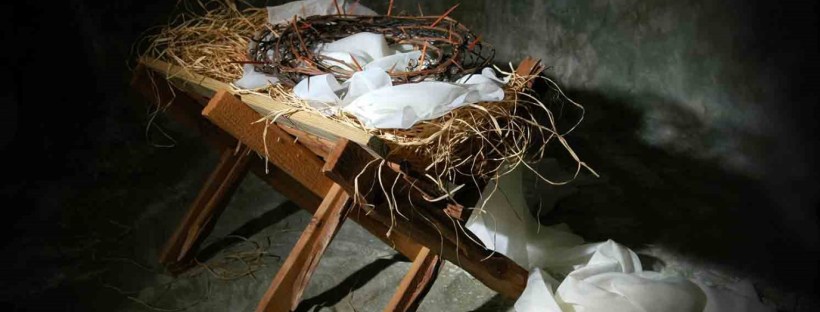
Yuletide Certitudes: A Truth From Charlie Brown & The Crown of Christmas

Well, folks. Ready or not…Christmas is here.

Time to deck the halls, throw cares away, and shake up the hap…ahhh…who I am kidding. After a year like 2020, after the two years in one the past nine month have been, Christmas just doesn’t feel right. Not to suggest there’s anything wrong being excited about annual traditions happening virtually in more subdued fashion. It’s just that…outside of Elvis, Bono, and Frank Loesser, this December has been hard to appreciate. Call it the fear of being blue with or without you ’cause baby it’s covid outside.

Yeah, yeah…I know that was bad. But in all seriously, it’s true. If it’s the most wonderful time of the year, why does the wonder feel so far off? Is it the fatigue factor, the mountain of forgetful memories in the back of our minds? Maybe the hesitancy to hope for holy nights to invade?

Whatever, wherever, however, the struggle, truth is there’s still plenty of reason to believe in this season. And while one post can only go so far, my hope is these three advent insights will encourage you in your anticipation for Christmas and the new year to come.

As always, let’s dive in…

  1. After rewatching ‘Charlie Brown Christmas’ with my kids a few days ago, I find it interesting how Lucy, Charlie Brown’s nemesis, is the one who invites him to direct the school’s Christmas play. For most, the climax of the episode is Linus’s telling of the Christmas story (released blanket and all); however, it’s his sister, one of the most iconic animated bullies of all-time, who allows Charlie Brown to set the stage for this happen. Because Charlie Brown said ‘yes’ to Lucy’s invitation (and ‘no’ to fear by default), not only did he position himself to wrestle through weakness but aligned himself to ask one of the most important questions this side of heaven: “Can anyone tell me what Christmas is all about?

As the story goes, Charlie Brown ends up discovering the true meaning of Christmas thanks to the tag-teaming efforts of Linus and Lucy; however, it still took a community of friends to help him arrive.

Accordingly, if you’re feeling alone, perhaps intimidated by a specific person/situation or overwhelmed by a bombardment of anxieties, consider God’s invitation for growth and discovery this season may very well come from someone you least expect. You don’t have to understand the timeline or the characters involved. You don’t have to make sense of your surroundings. Just lean into Jesus as you love unconditionally and give additionally. After all, to piggy-back off Linus, that’s what Christmas is all about.

But when the fullness of time had come, God sent forth his Son, born of woman, born under the law, to redeem those who were under the law, so that we might receive adoption as sons. And because you are sons, God has sent the Spirit of his Son into our hearts, crying, “Abba! Father! So you are no longer a slave, but a son, and if a son, then an heir through God.” ~ Galatians 4:4-7

2. As Galatians 4 states, Jesus was born under the law to establish the freedom we were to enter into. The essence of Immanuel is rooted in this reality. Through the Incarnation, Jesus matured in holiness under the law so we could mature in His likeness within our new creation identity. Had Jesus not been born under the law, the ministry of reconciliation (2 Corinthians 5) would have been compromised given Christ had to model the same identity through the fullness of time required for salvation, justification, and sanctification. Additionally, Jesus could not have paid our price, set the captives free on Holy Saturday, and secured our sonship if His entry point was above the law.

Think of this way: Jesus being born under the law laid a foundation for our salvation, freedom, and accordingly our ability to delight in suffering. Because Jesus faithfully endured AND delighted in suffering from ministry to Cross, we can likewise embrace the thorns in our own lives as we lean on Him. As we will discuss in future posts, there’s powerful symbolism and symmetry to how this relates to our new creation identity (i.e. being daily raised with Christ) and how it applies to the marketplace. For now, consider this a teaser for future January/February content.

3. Jesus being born under the law not only helps us grasp its necessity but reminds us to humbly honor appointed authorities, even ones we don’t agree with. Like today, political chaos and social unrest were backdrop realities Christ entered into; still God’s hand was steady and ever moving. This brings the idea of delighting in suffering full circle as we trust God through the temptation of fear into postures of holy expectation. Especially in this season, if we’re to celebrate our redemption as children of God, we must first acknowledge our helplessness in light of Christ’s sacrifice and desire to be forever Immanuel to us. Only then we can fathom the manger through the crown and cross He bore.

Think of this way: While some would say Bethlehem didn’t make sense as a landing spot for a Lord, it made perfect sense for a Savior surrendered to His Father’s will…born under the law. Through weakness Christ entered the world but this was not detached from yieldedness and surrender.

For instance, one can only imagine the pain Mary felt as she labored through greater discomfort and uncertainty. Trudging along in desperation, she likely expressed frustration, perhaps vented her doubts. Still, her soul kept magnifying the Lord. Even when the habitation of our mediator (1 Timothy 2:5) was unknown, Mary kept it simple:

Count it all joy as the hope of glory is made known…Christ IN me.

Bottom line: Just as the stars aligned for salvation’s conception, so too can you align to Christ this Christmas through fearless intimacy knowing ‘Abba Father’ is on your side.

Selah.

‘Til next time, may you know the hope that is yours and the breakthrough that will be yours this Christmas season.

Blessings,

~ Cameron & Lyssah Fry

Photo creds: iDiscipleship

3 Ways to Be In Christ at Work (Part 2)

After discussing two ways we can vocationally abide in Christ in my last post, I want to conclude with one final thought…

…because we are in Christ, we have the mind of Christ and with it, we can see the Cross as an opportunity to go weak into Jesus.

As mentioned in ‘part 1‘, the Cross not only captures total weakness but is a way of life we approach God and minister to others. By daily recognizing our helplessness in light of Christ’s sufficiency, we engage our ‘new creation’ identity (2 Corinthians 5:17) and salvation through surrender (i.e. going weak into Jesus with delight and humility).

Unfortunately, remembering our ‘new creation’ identity in the heat of hustle isn’t always easy. While some may struggle to understand daily dying and rising with Christ, for most of us, the crux comes down to self-effort and independent thinking.

For instance, when we make a mistake at work, the temptation is to fix the problem before we invite God into the situation. Granted, reconciling errors is an important part of any job; however, as marketplace ministers, we must understand there’s a divine order for our faith and reliance to follow.

If our heart is to serve the Lord, then we can know the way to best serve our colleagues and clients is to focus on Jesus as we embrace our weakness. In doing this, we accept the fact we are loved by God as new creations with a purpose beyond perfection. Again, conflicts and miscues come and go but the source of faith is eternal.

As nuanced as certain situations can be, far greater the glory when we discover freedom in embracing weakness – when ‘I can’t do it on my own’ becomes a battle-cry of worship.

Think of it this way: The Cross, as a picture of total weakness, was the plan from the beginning. Accordingly, we can find peace knowing God designed dependence to be a lifeline in our relational pursuit of Him. To the secular world, dependence is weakness, the sign of our frailty, but in God’s eyes, dependence is a highway of intimacy and discovery. 

Practically, this can manifest several ways at work. A classic example involves our response to fear and anxiety. When we encounter gossip, false accusation and/or neglect, our default is often centered in retaliation or withdrawal as opposed to yielding in surrender with praise and petition. Yet, as our faith compels us, anytime we feel overwhelmed, we can see the pain and discomfort as opportunities to press into Jesus.

When we feel angry about subordinates or teammates not committing their all, we commit the frustration to Jesus and the need for immediate resolution. Remember peace is not simply an overflow of wisdom but the way we trust God when we’re struggling to connect, relate, or understand. 

If it helps, consider how Paul relished the thorn. In the same way the thorn became his icon of dependence, so too it can be our symbol of savor for Jesus as we yield and surrender. As for how we do this at work, I submit we follow a similar pathway:

As we depend on God by yielding to the Spirit and acknowledging our helplessness, we can…

  1. Surrender our struggle by receiving grace in place of fear and our entitlement to make sense of our surroundings.
  2. Remember the battles we fight are not against flesh and blood but of principalities of darkness (Ephesians 6:12).
  3. Approach suffering not only as a way we engage God’s Kingdom but as the core to our vocational identity (Hebrews 5:8).
  4. Enter into His courts with praise/gratitude knowing we’re called as faithful stewards and partakers of God’s divine nature (2 Peter 1:4).
  5. Respond to Jesus in weakness through prayer, petition, obedience. 
  6. Walk in humility knowing Christ lives His dependence to the Spirit through us (Isaiah 11:1-5).
  7. Rest in knowing goodness and godliness will mark our work because we have been given the mind of Christ (Psalm 145:7, 2 Peter 1:3, 1 Corinthians 2:16).
  8. Tackle conflicts with confidence knowing it’s not on us to overcome. 
  9. Abide in intimacy through daily dying/rising with Christ (i.e. calibrating to the Cross).
  10. View dependence as a way we trust God for healthy working relationships and perpetuate peace even when we don’t feel it.
  11. Perceive the future with expectancy knowing God will transform our hearts through the renewing of our minds.
  12. Obey with joy knowing as we worship through weakness, our attitudes are shaped in peace by the same power that renews/transforms the minds of Christ we already have.

As Paul declared in Galatians 2:20, we don’t rely in our strength but yield to Christ who lives in us. Therefore, when the work gets tough, when the times get rough, dare to see your inward groans as worship unto Jesus. If suffering is the catalyst to embracing weakness and embracing weakness the key to pressing into God, then it makes sense why we can boast in God’s sufficiency. To live as Kingdom influencers at work, we must remember our success is not about what we accomplish each week but what we gain going weak into Jesus. 

Bottom line: Since we have the mind of Christ, we can experience breakthrough at work by the way we depend on Him. In times of strength, we honor God by acknowledging the good we contribute is because of Him; in times of weakness, we honor God by delighting in what we can’t do apart from Him. After all, when we work with the mind of Christ applied, not only can we taste communion with Jesus in challenging circumstances but embrace weakness as both the way we surrender to the Cross and the way we relate and endure as new creations. 

Selah.

As we approach Thanksgiving, I encourage you, friends, to let your thorn be a boost to Jesus. Don’t just press through at work but press in. Don’t just surrender on the go, but draw near and be still. After all, teachable hearts make preachable moments and you, brothers, are testaments to this truth.

Cover photo creds: Kirkland Baptist Church; videos courtesy of Steve Fry‘s Reset series @ The Gate

Can You Dig It: A SOAP Study on James 1:19-21

Scripture: “Post this at all the intersections, dear friends: Lead with your ears, follow up with your tongue, and let anger straggle along in the rear. God’s righteousness doesn’t grow from human anger. So throw all spoiled virtue and cancerous evil in the garbage. In simple humility, let our gardener, God, landscape you with the Word, making a salvation-garden of your life.” ~ James 1:19-21 (MSG)

 “Know this, my beloved brothers: let every person be quick to hear, slow to speak, slow to anger; for the anger of man does not produce the righteousness of God. Therefore put away all filthiness and rampant wickedness and receive with meekness the implanted word, which is able to save your souls.” ~ James 1:19-21 (ESV)

Observations/Applications: Before we analyze these verses, we must first note the context of James 1. In this letter, Peter is discussing two things:

  1. How believers should persevere during trials.
  2. How to receive wisdom from God.

After converging these points in the intro, Peter provides a powerful series: Lead by listening, be slow to speak to ensure discernment, and be slower to anger so peace may abound.

Essentially, Peter pulls inspiration from the Proverbs and converts it into an endurance tutorial.  

Are you weary and weak? Be still and know He is God.

Are you experiencing pain? Let God bridge your hurt and emotion.

Do you find your faith tested? Again, be still, listen, and know God is for you.

After all, faith comes by hearing and hearing the Word of God (Romans 10:17). 

As for our listening, Peter isn’t saying we automatically replace speaking with hearing. Rather, He is channeling a similar vibe from Ephesians 4:29-30

Let no corrupting talk come out of your mouth, but only such as is good for building up, as fits the occasion, that it may give grace to those who hear.” 

Often times, we perceive this passage through the lens of St. Francis of Assisi: “Preach the gospel use words if necessary.” However, we must remember while the man meant well, his words aren’t Scripture. We don’t determine what’s necessary through free will but through what is good and true as God defines; hence, why engagement in God’s Word is critical for growth and the life that results.

‘Cause truth is: There are many times at work or in house when we must communicate. Especially in certain professionals, we can’t always afford to be silent or plow behind the comfort of a screen. As such, it’s important we as Kingdom influencers speak life when we speak up or out. Again, it’s not about what we have to say but rather what needs to be said. If our aim is to make God’s love known through truth, we must remember timely stillness, not perpetual quietude, is the road to this reality. 

Now, before I continue, let me be clear. I’m not saying St. Francis of Assisi was wrong; I’m not saying those who advocate the phrase are wrong. Rather I am cautioning us to consider what ‘if necessary’ means as we reference God in the moment, on the clock, etc. Obviously, don’t be silent when you’re supposed to speak and call it ‘wisdom’. Instead know the purpose of your perseverance, in silence or in speech, comes down to aligning to God’s love in faith and His will in prayer.  Remember the ‘how’ bows to the who; not the other way around. As great as our execution can be when given the green light, God’s light is all the greater.

I love how the ESV and MSG translations dance in v. 21:

Therefore put away all filthiness and rampant wickedness and receive with meekness the implanted word, which is able to save your souls.”

In simple humility, let our gardener, God, landscape you with the Word, making a salvation-garden of your life.”

Like the implied soil, the imagery here is rich. As Lord of all creation, God by proxy is the master gardener of our hearts given His Word is designed to root and yield fruit. Yet, while we know the way we live should reflect what we belief, in the minutiae of work, it’s not always easy. Crazy clients, detached supervisors, secondary natter…the challenge of our character’s consistency never stops.

Thankfully, Peter gives us a straight-forward example of how we can engage space for faith to mature. As we turn from pride and abandon fear, we can receive God’s Word with meekness knowing it’s already been planted in our hearts. This doesn’t mean God is one-and-done with what He sows; contrarily, it means when we come to faith in Christ, God never stops pursuing more room in our hearts to hide His Word. From there, God by His Spirit stirs us closer to His heart by encouraging us to His Word.

Now, here’s where it gets fun. First off, why would Peter conclude his point with an earthy metaphor? Or better put, how can we receive something from God that’s already been buried?

To answer this, let’s review Philippians 4:8 (AMP):

Finally, believers, whatever is true, whatever is honorable and worthy of respect, whatever is right and confirmed by God’s word, whatever is pure and wholesome, whatever is lovely and brings peace, whatever is admirable and of good repute; if there is any excellence, if there is anything worthy of praise, think continually on these things [center your mind on them, and implant them in your heart.

This leads me to a key point:

Just as God is faithful to plant His Word, we likewise must be faithful to implant it.

For many who believe Jesus is Lord and Savior can the accept the idea God sows truth by His Spirit. The question is when push comes to shove in our darkest days, when the chaos of enterprise is sapping our strength, are we focusing on what is perfect, pure, and honorable? Or are we setting before us the way of surviving and striving? 

Think of this way: If God entrusts us with His trust, then we can implant what He plants. What He sows, He renews, and what He renews we can reap in confidence. My encouragement to you, my friends, is to not separate your daily work from your daily walk. Let gratitude pave the way for humility and let humility mark the efforts of your heart and mind. Care for each other with sincerity knowing what you do is secondary to who and how God has made you. And as you reference God, know you approach Him as more than a conqueror. As you resist fear and anxiety, as you cast your cares on the Lord, understand you’re giving Him room to landscape your heart with inspired truth and perspective straight from His Word. Don’t just think about things that are good, but let God cultivate His good into a harvest shared with those around you. Whatever you do, whatever you say…let your work be a testimony of God’s Word continually renewed in you. By committing to these soul goals, these divine purposes, not only will you ‘fertile’ your heart but discover the seeds you’re meant to sow back as a co-gardener unto the Lord.

Selah.

Prayer: Lord, in times like these, what can we do but thank you? To stand in awe of your goodness and faithfulness despite our frailties and fragilities? As we digest this Word, we’re reminded of your master plan as created by master hands. Of anything that made new, we know it comes for you. As such, help us to treasure your Word as daily bread, as branches clinging to the vine. Plant new words, ideas, and visions into our hearts today. Teach us how to be faithful stewards of the rich seed you give us. May they take root for your glory so we, as humble, fearless workers, can tell your story. Landscape our ‘now’  so we may calibrate to your ‘wow’. We ask this in Jesus’ mighty, precious name. 

Cover photo creds: experteasy.com

In The Name of [G]love

I love to play fantasy football.

Really all fantasy sports: Football, baseball, basketball, even hockey. With all major sports currently coinciding due to COVID-19, no question it’s been a busy month on the hobby-front. Yet, of all the ups and downs (mostly ups), perhaps my favorite moment came last week for one of my baseball teams.

Here’s the stage: After starting the season 7-12-1, my team goes on a heater finishing up the regular season with a league-best 30-16-4 to finish at 37-28-5. Heading into the last week of the regular season, my team’s playoff probability was <5% as I needed two teams ahead of me to go 3-6-1 or worse while I had to go 8-1-1 or better just to qualify for a tiebreaker. Well wouldn’t you know it, that’s exactly what I happened: My team goes 8-1-1, the other teams go 3-6-1, and against all odds, all three teams finish tied at 37-28-5.

Now, for most leagues, tiebreakers are decided by head-to-head matchups during the regular season; to me, this makes sense given the practice considers past performance and is adopted by most major league sports. However, for this league, the Commissioner had set it up in a unique way: Rather than award head-to-head record, the team who finished the final week with the best record would win the tiebreaker and the seeding advantage. A moot point in most circumstances, but a critical one in this case since the tiebreaker decided the last playoff berth.

All things considered, you can image my elation to have clinched a playoff berth having been left for dead at 7.5 games back with two weeks ago.

There was only one problem: I forgot to pay my league entry fee.

This probably deserves an unwind. For custom leagues, a payment deadline is generally enforced by the fantasy network provider. If even one of the managers forgets to pay on time, the league is stripped of its cash status and becomes a free league with no payout.

Initially, I had paid on time; however, that was before another manager missed the deadline costing our league its cash league status. After receiving a refund, I carried about my business assuming this league would be re-classified with no cash prizes. But as I learned following my playoff berth, the managers had decided to handle payments ‘off-grid’ six weeks prior, a memo I missed based on my fantasy app’s messaging settings. Why no one contacted me is beyond me. Perhaps they thought my team was weak and wasn’t a threat. Whatever the reason, my team overachieving into the playoffs was suddenly a legit problem for the managers who had paid and lost the tiebreaker.

As I continued discerning the dilemma, the choice became clear: I needed to own my mistake (even though I knew it wasn’t the only mistake in this situation) and inquire next steps in our next live chat. So that’s what I did. At soonest convenience, I logged in, acknowledged the error, and told the managers I’d happily pay the fee after-the-fact. Unfortunately, this pitch (pun intended) was not unanimously received given the cheap convenience involved. As one manager said, of course I would pay now; after all, I had new skin in the game.

But that’s when I made an easy call: Instead of defending my position, I surrendered my playoff spot to the runner-up manager.

Upon announcing this, the live chat blew up. Apparently, the other managers were prepping for a vote on whether or not I should remain qualified as a playoff team. For some managers, they understood the loop holes involved; for others, they were more concerned about league rules being followed to the bitter end. Yet, once I laid down my team, the other managers were floored. They couldn’t believe after all my hard work, I’d just casually offer my playoff bid to another manager. In response, I explained how it didn’t make sense for me to win a cash prize in a league I didn’t pay an entry fee for. Granted, it would have been nice if someone said something so I could have paid a second time…on time. Alas, that’s not what happened.

What did happen is while I lost a chance to earn $120, I won souls in how I handled the disappointment. For as the chat session continued, the encouraging comments poured in – most applauding my integrity, some even asking me if I would return to the league again. At first, I was like, ‘Calm down. It’s not that big a deal’, but upon second thought, I saw where they were coming from.

‘Cause truth is: Integrity isn’t only realized when a decision is hard, but also when a decision is obvious. Applying Proverbs 11:30 (ESV), while a challenging circumstance can impact integrity, or lack thereof, ultimately how it’s handled is what wins soul. For instance, a basic ethical response can diffuse conflict when it advances corporate virtue ahead of an individual goal. Additionally, it can inspire others to do likewise when selflessly expressed in sincerity. Put another way…

…doing the right thing doesn’t have to be complicated. It’s not contingent on the extraordinary but is often maximized in the ordinary.

Sometimes, we undermine the value of humility when its exercise is plain. Even when there’s a cost, when the path to goodness is clear-cut, we can shrug it off as we walk it in fear of being self-centered.

But that’s why I’m sharing this story – to remind us to embrace the power of practical integrity and cherish the simple ways character can influence. Who knows? By buying that meal, being transparent, or extending grace, you may just win an opportunity to lead someone to Jesus because you were willing to be like him in the first place.

Selah.

Photo creds: ArtsyCanvas.com

Eyes on the Shore: The Secret to Surviving Life’s Riptides

Written 5/12/2017; revised 8/7/2020

Bible verse: Psalm 118-5-16 (MSG)

Pushed to the wall, I called to God; from the wide open spaces, he answered. God’s now at my side and I’m not afraid; who would dare lay a hand on me? God’s my strong champion; I flick off my enemies like flies. Far better to take refuge in God than trust in people; Far better to take refuge in God than trust in celebrities. Hemmed in by barbarians, in God’s name I rubbed their faces in the dirt; Hemmed in and with no way out, in God’s name I rubbed their faces in the dirt; Like swarming bees, like wild prairie fire, they hemmed me in; in God’s name I rubbed their faces in the dirt. I was right on the cliff-edge, ready to fall, when God grabbed and held me. God’s my strength, he’s also my song, and now he’s my salvation. Hear the shouts, hear the triumph songs in the camp of the saved? “The hand of God has turned the tide! The hand of God is raised in victory! The hand of God has turned the tide!”

Favorite sayings. We all have them.

Epic battlecries, movie references, whispered words of wisdom…there are many phrases we hold dear when chaos is near.

For instance, whenever I’m struggling and need a spark, one of my go-to sayings is “turn the tide”. I don’t know where it comes from, who said it first or its historical origin; all I know is I’m an avid fan of what it represents, the idea you can alter course and be the change you crave even when you feel you can’t stand.

Knowing this, perhaps it’s not too surprising this idiom would resurface during last night’s workout during which I felt the Lord tell me there are many people currently caught in riptides. Riptides of pride. Riptides of anxiety. Riptides of ungodly belief. Riptides of soul/spirit hurt. Riptides of shame. Riptides of discouragement.

You get the picture.

He then said, ‘Cameron, how do you get out of a riptide?

I answered, ‘You just wait it out, right?

That’s one way. What’s the other?

I paused.

Then it hit me: The best way to survive a riptide is to swim parallel to the shore.

So I pressed in some more: ‘Lord, what’s your point?

He then said my point is…

…I’ve given you a way out when the waves of strife seek to wipe out my waves of life. For my shore is the truth…my shore is the Word…my shore is my unchanging, constant will.

All you got to do is let my shore be your anchor and your horizon. My shore is always your perspective. Why not swim alongside it? No need to overreact. No need to panic. No need to about-face.  Just adjust to the shoreline, keep track of it, and eventually, you will swim out of the tide. For tides constantly come and go, but my shore will always be there.

Now, for some of you, this may sound like a glorified remix of another spiritual colloquialism – “If you’re walking through hell, don’t stop“. But to be fair, there’s more under the hood here. For in this word is a secondary reality – the fact there is not only a time for everything but also a tide for anything under the sun (Ecclesiastes 3:1-8).  While many understand the value of trusting God to supply needs and/or making a moment count, not nearly as many have a gameplan when undertows strike.

My advice? If life’s a beach, have a guide to survive before you arrive. For what we can’t control is eventual, but what we can is effectual as long as we commit our ways to God James 5:8/2 Corinthians 13:5-style.

You too, be patient; strengthen your hearts [keep them energized and firmly committed to God], because the coming of the Lord is near. Test and evaluate yourselves to see whether you are in the faith and living your lives as [committed] believers. Examine yourselves…and recognize this about yourselves [by an ongoing experience] that Jesus Christ is in you.

Selah.

As for today, if you feel weary, broken, unable to stand, remember while storms come and go, God’s heart is to strengthen your character so His love can be known. Even when you feel discouraged by undertows of stress and fear pulling you down, remember the way out is where He is, the way to the shore! As our ultimate direction, as one who is mighty to save and strong to deliver, He will never abandon or forsake us since His nature is constant. Accordingly, we can navigate the choppy waters of life knowing we have what we need to sail and swim to Jesus.

Whoever you are…you got this!

Surfs up,

~ Cameron

giphy

Photo creds: https://adminologybay.com