

Written 5/12/2017; revised 8/7/2020
Bible verse: Psalm 118-5-16 (MSG)
Pushed to the wall, I called to God; from the wide open spaces, he answered. God’s now at my side and I’m not afraid; who would dare lay a hand on me? God’s my strong champion; I flick off my enemies like flies. Far better to take refuge in God than trust in people; Far better to take refuge in God than trust in celebrities. Hemmed in by barbarians, in God’s name I rubbed their faces in the dirt; Hemmed in and with no way out, in God’s name I rubbed their faces in the dirt; Like swarming bees, like wild prairie fire, they hemmed me in; in God’s name I rubbed their faces in the dirt. I was right on the cliff-edge, ready to fall, when God grabbed and held me. God’s my strength, he’s also my song, and now he’s my salvation. Hear the shouts, hear the triumph songs in the camp of the saved? “The hand of God has turned the tide! The hand of God is raised in victory! The hand of God has turned the tide!”
Favorite sayings. We all have them.
Epic battlecries, movie references, whispered words of wisdom…there are many phrases we hold dear when chaos is near.
For instance, whenever I’m struggling and need a spark, one of my go-to sayings is “turn the tide”. I don’t know where it comes from, who said it first or its historical origin; all I know is I’m an avid fan of what it represents, the idea you can alter course and be the change you crave even when you feel you can’t stand.
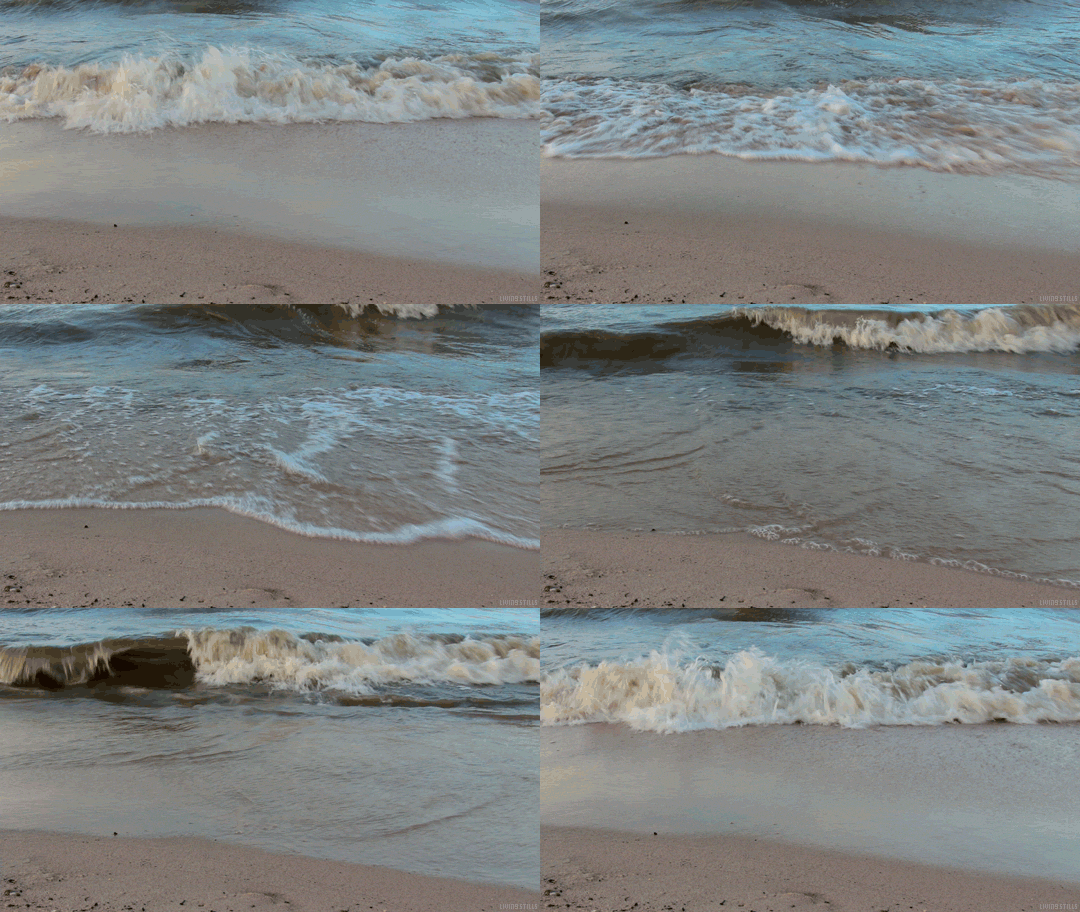
Knowing this, perhaps it’s not too surprising this idiom would resurface during last night’s workout during which I felt the Lord tell me there are many people currently caught in riptides. Riptides of pride. Riptides of anxiety. Riptides of ungodly belief. Riptides of soul/spirit hurt. Riptides of shame. Riptides of discouragement.
You get the picture.
He then said, ‘Cameron, how do you get out of a riptide?‘
I answered, ‘You just wait it out, right?‘
‘That’s one way. What’s the other?‘
I paused.
Then it hit me: The best way to survive a riptide is to swim parallel to the shore.
So I pressed in some more: ‘Lord, what’s your point?‘
He then said my point is…
…I’ve given you a way out when the waves of strife seek to wipe out my waves of life. For my shore is the truth…my shore is the Word…my shore is my unchanging, constant will.
All you got to do is let my shore be your anchor and your horizon. My shore is always your perspective. Why not swim alongside it? No need to overreact. No need to panic. No need to about-face. Just adjust to the shoreline, keep track of it, and eventually, you will swim out of the tide. For tides constantly come and go, but my shore will always be there.
Now, for some of you, this may sound like a glorified remix of another spiritual colloquialism – “If you’re walking through hell, don’t stop“. But to be fair, there’s more under the hood here. For in this word is a secondary reality – the fact there is not only a time for everything but also a tide for anything under the sun (Ecclesiastes 3:1-8). While many understand the value of trusting God to supply needs and/or making a moment count, not nearly as many have a gameplan when undertows strike.
My advice? If life’s a beach, have a guide to survive before you arrive. For what we can’t control is eventual, but what we can is effectual as long as we commit our ways to God James 5:8/2 Corinthians 13:5-style.
You too, be patient; strengthen your hearts [keep them energized and firmly committed to God], because the coming of the Lord is near. Test and evaluate yourselves to see whether you are in the faith and living your lives as [committed] believers. Examine yourselves…and recognize this about yourselves [by an ongoing experience] that Jesus Christ is in you.
Selah.
As for today, if you feel weary, broken, unable to stand, remember while storms come and go, God’s heart is to strengthen your character so His love can be known. Even when you feel discouraged by undertows of stress and fear pulling you down, remember the way out is where He is, the way to the shore! As our ultimate direction, as one who is mighty to save and strong to deliver, He will never abandon or forsake us since His nature is constant. Accordingly, we can navigate the choppy waters of life knowing we have what we need to sail and swim to Jesus.
Whoever you are…you got this!
Surfs up,
~ Cameron
















 hisgirlfryday.com