Power in the Mud (Part 2): The Healing Habits of Jesus

During ‘Part 1’ of our ‘Power in the Mud’ series, we examined why Jesus used saliva when performing miracles involving the senses. 

Linkhttps://hisgirlfryday.com/2022/01/29/power-in-the-mud-why-jesus-used-his-spit-to-heal-part-1/

While I hope to unpack similar habits later on, for today, I want to explore the spiritual rhythms of Jesus in situations when miracles manifested. 

‘Cause truth is: For many of us walking through the valley, waiting for healing and physical breakthrough, more hours involve spiritual warfare and the daily positioning of our hearts as opposed to tending miracle aftermath. 

Yet, while handling immediate calls to action are important, my hope with this post is two-fold:

  • To help us not only find the Incarnation in the ordinary but also in the anticipation of extraordinary.
  • To help us take heart as God establishes our steps and makes our paths straight…even before we’re called to walk on them.

Accordingly, here are three basic routines we can employ to calibrate our hearts during gradual recoveries and ahead of divine interventions. 

  1. Time Your Breakaways

As much as Jesus ministered in person, we note he also devoted daily time with God to reset connection. Luke 5 is a classic demonstration of this. After calling his first disciples at Gennesaret, miraculously filling the nets at Galilee, and healing a leper at a neighboring city, we find the punch line in v. 16 (AMP):

But Jesus Himself would often slip away to the wilderness and pray [in seclusion].” 

Now, I know what you’re thinking. Why would Jesus withdraw when many others were drawing near to him for healing as well? 

You see…Jesus, at any point, knew exactly who needed the expedite healing to further His name and power without attracting unnecessary attention. From a practical, even vocational standpoint, we can applaud this maneuvering from a time management and facilitative perspective. For Jesus not only wanted to heal the infirmity in the moment but plant seeds of testimony capable of encouraging communities of His presence after-the-fact; hence, why Jesus often told the ex-afflicted where to go, who to tell, and from there would move to his next location (see Luke 5:17-26). 

No matter the juncture…

Jesus had the ultimate end-game in mind: To inspire people to His love through an awareness of their original design and an alignment to their eternal design as co-heirs with Christ.

And while I’m sure Jesus had a master itinerary, partly secured through His quiet times, Jesus never lost touch with His Incarnation – the fact He couldn’t be everywhere and heal everyone at once despite His divine DNA. What mattered to Jesus was activating active faith within balanced boundaries (see Luke 4:38-44) and the strategies confirmed in His breakaways with the Father. 

Bottom line: From pre-service dial-ins to timely retreats, Jesus knew exactly when to engage (heal) and when to reposition/refresh with God – the Cross and ministry of reconciliation always before Him

  1. When in Doubt, Pray

When we explore Jesus’ quiet times, we find He essentially wrote the book on 1 Thessalonians 5:17-19 (ESV):

Pray without ceasing. In everything give thanks: for this is the will of God in Christ Jesus concerning you. Quench not the Spirit.”

Now, to be fair, Paul is the author here; however, such inspiration, no question, came from how Christ modeled His prayer routines. 

Check out these passages:

“…He went to the Mount of Olives, as He was accustomed, and His disciples also followed Him. When He came to the place, He said to them, “Pray that you may not enter into temptation.” (Luke 22:39-40).

“…it came to pass in those days that He went out to the mountain to pray, and continued all night in prayer to God. And when it was day, He called His disciples to Himself; and from them He chose twelve whom He also named apostles: ….And He came down with them and stood on a level place with a crowd of His disciples and a great multitude of people … and be healed of their diseases, as well as those who were tormented with unclean spirits. And they were healed. And the whole multitude sought to touch Him, for power went out from Him and healed them all.” (Luke 6:12-19).

Now, this isn’t to say you must deprive yourself of rest to fully press in. Conversely, as emphasized by the bold text, these cases are examples of how we should cope when desperate and/or discouraged.

Think of it this way: What is insanity in the midst of chaos and crisis? Frankly, it’s not praying! At the very least, acknowledge who God is into a given situation and watch as fear fades in the face of scaled perspective. Again, for prayer to be anchored as habit, the practice must be tethered in consistency and intentionality. Jesus literally gave himself outs during the busiest of ministry days to hear what His Father had to say. How much more should we embrace the call to do likewise? 

Bottom line: Jesus’ lifestyle defines solitude as praying with God and embracing the opportunity to vertically rely on Him.
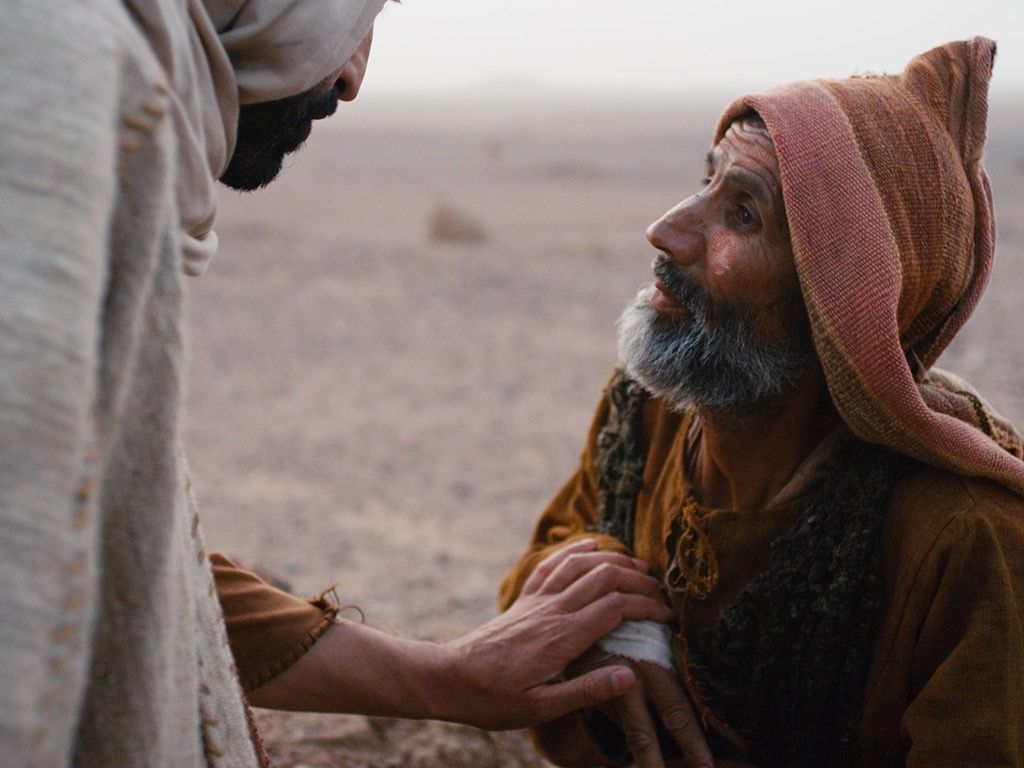
  1. Clothe Yourself in Compassion

If we’re to dissect Jesus’ habits in secret, then it’s only fair to consider His attitude in public. For while Jesus never resisted His lifeline, He also never used it as an excuse to conceal His nature. And the application is palpable:

As believers in today’s world, we may have hope-building acumen, we may know how to exercise our faith; however, if we’re not applying love to the equation, those behaviors are meaningless. 

The question is: How can one convey a relatable, contagious love when we’re struggling emotionally, physically, even vocationally? 

I know for me, when I start to spiral, ideas of going beyond myself, outside myself come to mind. But even those sentiments can go so far. 

The key, I submit, is clothing yourself with compassion as backed by Colossians 3:12 (ESV):

Put on then, as God’s chosen ones, holy and beloved, compassion, kindness, humility, meekness, and patience.”

Now, I don’t know about you, but I find it fascinating how the first word in this series is ‘compassion’, almost as if there’s purpose behind the sequence. Perhaps the author was suggesting love at the heart should be layered most intimately with compassion? Kinda like it’s the inner garment relative to the inner organ of love with meekness/patience acting like the outer garment. Who knows.

What I do know is Jesus frequented the virtue. 

Consider the exhibits:

“When Jesus heard what had happened, he withdrew by boat privately to a solitary place. Hearing of this, the crowds followed him on foot from the towns. When Jesus landed and saw a large crowd, he had compassion on them and healed their sick.” ~ Matthew 14:13-14 (ESV)

“Two blind men were sitting by the roadside, and when they heard that Jesus was going by, they shouted, ‘Lord, Son of David, have mercy on us!’ The crowd rebuked them and told them to be quiet, but they shouted all the louder, ‘Lord, Son of David, have mercy on us!’ Jesus stopped and called them. “What do you want me to do for you?” he asked. ‘Lord,’ they answered, ‘we want our sight.’ Jesus had compassion on them and touched their eyes. Immediately they received their sight and followed him.” ~ Matthew 20:30-34 (ESV)

“When Jesus landed and saw a large crowd, he had compassion on them, because they were like sheep without a shepherd. So, he began teaching them many things.” ~ Mark 6:34 (ESV)

Upon further review, note the contrasts between Matthew 14 and Mark 5. In both instances, Jesus withdrew. Yet, in Matthew 14 (and Matthew 20 for that matter), Jesus pivoted His action on the heels of compassion. While the transitions in Mark are more pronounced, in the end, Jesus stayed consistent as one who could never deny Himself. After all, to answer a cry for mercy is who He is. And though many of us are seldom on the receiving end, the reality is we can follow a similar roadmap is addressing unspoken needs through yielded sensitivity to the Spirit’s leading (More on this from an occupational perspective in our next segment).

Bottom line: Jesus took compassion as one already clothed in it and rode empathy into opportunities to heal and reveal.

Selah.

Cover photo creds: Berean Baptist Church

Message in a Bottle: Why God Collects our Tears

Recently, I received a letter from a dear friend who encouraged Lys & I to consider Psalm 56:8.

You have kept count of my tossings; put my tears in your bottle. Are they not in your book?” (ESV)

At first, I was confused. For starters, what are tossings apart from 3:00 am body shifts…and what exactly is the tie between “bottle” and “book”? Is there something specific I’m to glean from this in present application?

So, I did some digging, following my curiosity into the Word (which may or may not be my default entrance these days). And upon further review, I couldn’t help but notice some powerful reminders…

1. Per Psalm 56‘s header, this passage was written after the Philistines seized David in Gath. As such, the oft quoted, “When I am afraid, I put my trust in you” (v. 3) a few verses prior would become a critical heartcry allowing his hope to rise above the flesh. While simple in statement, the declaration established immediate divide between eternal safety and present concern for David. In turn, this solidified his endgame as “[walking] before God In the light of life” (v. 13).

2. The word, “tossings”, stands out as a word worth underlining. Although bedside maneuvers can be involved, on a larger scale, tossings refer to wanderings and challenging seasons we walk through. Accordingly, the fact God is quantitatively cognizant of our sufferings should assure us of His sovereignty and omnipresence in times of strife. One could say this makes perfect sense given God is continually directing our steps (Proverbs 16:9) and knows everything from the number of our days (Psalm 139) to the hairs on our heads (Luke 12:7)…

3. Despite the verse’s urgent tone, the concept of bottled tears stabilizes the tenor. To David, tears were deposits of desperate trust into a bottle of remembrance. Given he had already surrendered his fear (of what men could do to him), he had, by proxy, opened his heart to receive comfort and his posture to look up. Poetic license applied, the metaphor is a beautiful reminder how even in great pain and distress, we can acknowledge the God who rejoices over us with gladness (Zephaniah 3:17) is the same God who weeps alongside us when troubles mount.

4. Just as God is omnipresence, so is He omniscient. Since nothing takes God by surprise (Psalm 95), the idea of God tallying a ledger of our trials and tribulations should hearten us to take heart. After all, God not only wipes what we weep but is forever on standby to offer joy as featured within the unveiling of His purposes/promises.

How sweet it is knowing we can delight in suffering in remembrance of Christ knowing He does the same thing with us each and every day!

Bottom line: In seasons of grief, in times of challenge…don’t be afraid to cry out and leak a little along the way. As David expressed literally and figuratively, our tears are never in vain as they…

All the more reason to trust God through the struggle and know He’s for us through the sorrow (v. 9).

Selah.

Stay tuned next time when I’ll return to our Power in the Mud series to discuss why Jesus was so passionate about healing on the Sabbath. For now, I’d like to thank all our supporters and prayer partners as we share this 200th post! We greatly appreciate your words of encouragement and engagement the past five years especially as we’ve turned the corner from youth ministry into marketplace ministry. Although there’s much going on behind the scenes, we look forward to continuing our aim to resource the church and empower vocationals everywhere to live as Christ within their arenas of influence.

Footnotes

  1. Hence, why God tracks what He allows to stretch us and what He appoints to transform us into His likeness.

Cover photo creds: Marilyn Gardner

And So It Begins: Another Year, New Hopes & Fears

Written 1/16/22

It’s another late night as I tread this lonesome road…

…one dark in shadow and glistening in twilight

…a fair reminder of the fine line on which I walk.

In all honesty, I should be ecstatic: The year ends in ‘2’ again, my family is healthy, new ministerial endeavors are in discussion, and I work for a company with ‘Foundation‘ in its name. Not to mention my location has doubled its seasonal snow average in just one week.

But given how last year transpired, not even a blanket of white can hide my anxieties of late.

On one hand, I’m hopeful and relish the light at the end of the tunnel. Juby is now at Vanderbilt; remodeling on our house has begun, and we’re on the doorstep of starting Caeden, Evy, and Milo at a new school a mile down the street.

On the other, I’m hesitant to be so optimistic. I look in the mirror every morning and note the scars wondering when the internal bleeding will stop. Lord knows Lys and I will need counseling to account for retroactive trauma. How easy it is to wonder how long we must juggle above our means…and if we’ll ever be able to find ourselves after this stretch.

Still, I stand firm, thankful as I count the blessings along with the cost. Even with the bittersweet coating, my trust in God’s faithfulness to provide what we need and expand our capacity to handle more is intact. Regardless of narrative, of scene or setting…this season is on a timer.

It will end, the dust will settle, and the celebration, when all is said and done, will be unlike any I’ve ever experienced.

Until then, we wait, not waste, in eager expectancy awaiting fresh outpourings of patience and perseverance.

So, what next then?

Do I continue to hold onto hope…the end of my rope? For things to turn from current scope?

No question. After all, I’ve learned to be content not having all the answers.

If anything, I desire to know how to better contend in 2022 – to not only be still in God’s strength but present in every moment…always on call to call out.

God, I invite you into this calm. Even though it seems carved out, even though I’m completely overwhelmed, you’re welcome here. Extend these silenced waters so I may walk on them. And if and when I sink, remind me what ultimately matters. No matter what, you’re here with me. Depth be darned.

As for you, my friends, there’s a next step with your name on it. I may not know what it involves or how many are required; however, the more I think about where we’ve been and where we’re going in this decade of disorientation, the more I believe these seasons are on purpose for purpose. Although we pine for breakthrough, take heart amidst these temporary strains and consider them as what He ordains…

…for good, for better, and ultimately best; cherish the ride, embrace the rest.

For together, we’ll get there; from point A to elsewhere.

Until then, keep burning; love well; stay in prayer.

Selah.

Graphic creds: Wallpaper Flare

Power in the Mud (Part 1): Why Jesus Used His Spit to Heal

So recently, I’ve been investigating some of the more creative and intense miracles of Jesus during His ministry.

Among my questions: What is the full significance of the garment at Gennesaret? Why were those at Gadarenes intimidated by Jesus? And whenever a specific number is mentioned, is there a reason for it? Or is it just arbitrary in some cases?

But perhaps the most pressing of late is the most random:

Why did Jesus use saliva in some of his healings?

While my research is ongoing, what I can say for now is while the Spirit of God as demonstrated through the spittle of His Son seems like a bizarre theme, the concept is not so far-fetched.

You see, back in the day, the medical community, particularly in Judea, believed strongly in the curing power of saliva. While practicing with spittle seems disgusting by our standards, as BC became AD, a patient would want a physician’s spit to be part of the prescription. Pretty crazy, right?

Accordingly, Jesus healing a deaf man by a wet touch to the tongue (Mark 7:33) and two blind men with a similar approach to the eyes (Mark 8:23, John 9:6), should not surprise us. Granted, Jesus could have gone against conventional wisdom and treatments in ‘out of leftfield’ fashion.

But that’s not who Jesus is or what He came to do. Rather than discredit welcomed practices (by Jewish and Roman cultures, no doubt), Jesus operated within an expected vein so He could communicate His intention to heal before actually doing so.

And while there’s plenty of symbolism involving the mud and washing of eyes, as I revisit these stories with one in the NICU, I’m encouraged by the Prince of Peace channeling a relatable ‘big picture’ into these miraculous moments.

For instance, while Jesus knew there was power in His Word, He also knew there was healing power in His saliva intended to impart life and restoration. With divine DNA flowing with His humanity, we can better understand such an operational dichotomy:

Just as there was future power in His blood, so was there present power in the mud…

…revealing His power to heal the afflicted and open their eyes in more ways than one.

Put another way, Christ’s lifeblood was His lifesource. To the extent He yielded and relied on God, to that extent His wonder-working power manifested through grace, understanding, even medical empathy. This makes sense especially when we take a birds-eye view of Christ’s creative healings.

For Jesus so loved whom He took compassion on, not only did He seek to model love by His power but also care by His intent.

While I will aim to unpack this further in my next post, for now, I live this in real-life in real-time. Given the number of preemies I pass in the halls these days, I’m stirred by the fact Jesus never repeated the same healing miracle twice. And as Lys & I enter these dog days at Vandy, I’m reminded how, like Jesus, we can be dependent upon a higher power pulsating through us…reviving our hearts again.

How sweet it is to know our Savior is an expert at making something out of nothing and meeting our spiritual need with a physical manifestation? After all, to heal is to not only restore what once was lost but to reclaim by faith God’s original design for our life.

Selah.

Jubilee (“Juby”) Fry after her laser eye surgery on 1/27/22.

3 [More] Ways To Sharpen Your Sword

After a four year hiatus, a former January staple finds its ‘Part 2‘; for more context, check out the pod above and ‘Part 1’ below…

Part 1: https://hisgirlfryday.com/2018/01/26/3-ways-to-sharpen-your-sword/

Otherwise, get ready, get set…it’s the first post of 2022…

1. Don’t force the reset.

Often, when we start a new year, we’re quick to go into ‘reset’ mode. Without hesitation, we launch into the dream of a ‘better us’ laced with new habits and self-improvements…all in the spirit of grabbing time and hope by the horns. 

However, when it comes to discerning God through His Word, we must remember there’s no rush on God’s end for us to reach the ceiling of our understanding. While Bible reading plans are beneficial to any spiritual walk, to jumpstart your quiet time, always start with humility, gratitude, and prayerful intentionality. Rather than assume a strategy, ask the Lord how He desires to guide you in Spirit and Truth through His Word. Once confirmed, determine a game-plan to not only keep you anchored to the Spirit’s leading, but also on guard against the attacks and schemes of the enemy.

Consider this: As I’ve applied these practices in recent weeks, I’ve sensed the Lord stir ‘encounter’ in my heart…in the context of embracing Him through the Gospels. Inquiring further, I’ve realized how God doesn’t want me to map out my entire Scriptural journey upfront but take a staggered, ‘wait and see’ approach. I know last year, prior to the Juby saga, I hit a decent stride engaging my Bible app for 100 straight days. Yet, for this year, God has made it clear He wants my attention on encountering Him as opposed to targeting numerical affirmation. For now, I will read through the Gospels capturing revelations on Jesus’ restorative power and creative miracles. From there, I will reassess the journey and proceed at His prompting.

Bible verse: “God proves to be good to the man who passionately waits, to the woman who diligently seeks. It’s a good thing to quietly hope, quietly hope for help from God.” ~ Lamentations 3:25-26 (MSG)

Bottom line: Don’t perceive God’s discovery package for you in 2022 arbitrarily. Before diving in, seek and be still. Take inventory of pressure points and though you have an invitation into His courts, dare to knock on the door of God’s heart before entering.

2. Integrate community and conversation.

Once you have a divinely inspired plan of action, your next challenge, should you choose to accept, is to de-silo your insights. Although intimacy may start in the closest spaces of our hearts, ultimately, we were intended to share the unique angles of God’s outpouring within community. While this doesn’t mean we convey every download, for starters, it doesn’t hurt to ask yourself…

How does God want me to take our conversations to my neighbors, local church, the towns in which I do business, even the nations?’

Once you have direction, by all means, journal your thoughts and record the vision ala Habakkuk 2:2; just don’t limit the manifestations of your devotions to the notepad. After all, there’s way more in store with how God wants to illuminate your heart in 2022.

Consider this: Apart from corporate fellowship, make it a point to meet with friends and mentors in 2022. During your gatherings, be transparent about what God is teaching you without an agenda to trumpet your voice or force awakenings. If the dialogue lends itself, unveil the fruit of your quiet times organically; if not, remember you can still be a valued support system as you selflessly offer encouragement to the situation. Regardless of the circumstances, take heart:

To the extent you engage God through prayer and the Scriptures, to that extent you’ll be able to assess potential needs through love. The more you commit to this spiritual discipline through quiet time, the more you’ll see the impacts in real-time.

Bible verse: “Get along among yourselves, each of you doing your part…gently encourage the stragglers, and reach out for the exhausted, pulling them.” ~ 1 Thessalonians 5:13-14 (MSG)

Bottom line: While much Bible reading is done solo-style, this doesn’t imply silo-style.

Accordingly, instead of isolating your intimacy with God, consider how He’s grooming you to be a mouthpiece for His power and presence. For as you know, where two or more are gathered in His name, there He is (Matthew 18:20)…and where He is is the ultimate edge on any spiritual battlefield.

Bonus thought: While quiet times allow God to train us in secret, for the point and purpose of those trainings to be realized, we must accept their place in the context of unity in community.

3. Pray and declare the Word.

So far, we’ve established how quiet time is not confined to individual study but is maximized in Spirit and Truth. While there’s not a one-size fit-all solution to channeling truth by the Spirit, one of the best ways to know the Word is to pray and declare it.

As Colossians 4:2 reminds us, if we’re to continue with anything, let it be prayer fused with thanksgiving. Even though we may suffer and enter in with fear and trembling, as Jesus did during his ministry, we can proclaim the goodness of God in reverence (Hebrews 5:7). Despite the adversity we may be dealing with, we can fire up faith and ignite our hope by testifying who God is constantly. In this way, we can use God’s Word as lamp unto our feet to center our perspective on what is everlasting and scale our perception of present trouble.

Consider this: As you read and examine the Word, be prepared to stop. Set your expectations on God’s faithfulness to convict and respond. Per your pauses, affirm God’s truth through praise and profess the reality of His love into your midst.

Bible verse: But you are a chosen race, a royal priesthood, a holy nation, a people for his own possession, that you may proclaim the excellencies of him who called you out of darkness into his marvelous light.” ~ 1 Peter 2:9 (ESV)

Bottom line: One of the best ways to declare God’s sovereignty into any situation is through prayer and exhortation. The more you cultivate this strength into your quiet time, the more you will be able to prophetically encourage the people God has placed in your life for such a time as this.

Take it from my friend, Schmidt…

Selah.

Cover photo creds: Cathy McIntosh