Thursday, August 24, 2023
I’m taking in a familiar scene, a road once trudged 1,934 times over 7 years, give or take a few. By all means, I should be feeling nauseous, frail like the cracks on the sidewalk below.

But not this day. Not on this quest back to the desert where once upon a time, I punched in a rare card. Oh, to be a youth pastor with a full-time governmental job on the side. Those were the days, the former, I miss fondly.
In the air is the smell of victory as I trek this iconic incline disguised as an inverted hourglass. An interview? With the State? No way you could have convinced me a year ago I would be in that situation. Then again, as they say, expect the unexpected and you’ll never be surprised or disappointed. Tell that to a desperate hunter living on a prayer wondering how the heck it came to this.
Indeed, to tell the tale of 2023, you must go back to the beginning, a point when red flags were yellow and the hope for a better year was still alive. A promotion to a new department at work. Check. A fresh slate post-Jubilee. Check. Hot off a fruitful Christmas NICU outreach. Check. Certainly, some anticipations were well founded.
Yet, despite those hopeful prospects, there were apprehensions as the new year rang, the biggest one being our final small Fry in the oven with no one aware except Lys’ parents. In a vacuum, there was excitement, a recognition of God’s restoration at work. Still, we knew despite my promotion at work, it wasn’t going to be enough to make ends meet based on a poorly reshuffled financial deck and a lack of quality benefits. TennCare, the system is helpful but doesn’t cover everything. Somehow, some way, God was going to have to do what only He could.
Freshly commissioned by my former team of three years, early expectations were high the year ahead could be both a collective step up. Unfortunately, the writing on the wall would start to show in light of questionable corporate decisions, enough to know what was now becoming clear: 2023 was going to be my last year at Foundation Group, shades of four years prior when God guided me out of TDOT. I didn’t know how the transition would occur. All I knew is like the ending scene from Mary Poppins, the weather vane within had completed turned. Slowly but surely, a piece of me was starting to fade.

With the kids in school to start the year (shout out to Greater Things), Lys and I had to pull out all the stops to make ends meet. We started with one freelancing side hustle (lost to AI in May) and a few ministerial endeavors on the board; however, they were not enough to offset the support cutoff that took place following Jubilee’s passing. For the first time in our married life, we had to find creative means from the bottom of the barrel to stitch paychecks together. This included eight BioLife Plasma appointments between December 8, 2022 and January 19, 2023, the latter of which prompted my donation retirement having almost passed out due to blood loss. Freak plasma accidents, they can be a bear in a [matter] of speaking. 😉
The following week, I started an eBay store to offload sports cards, memorabilia, and apparel I didn’t need. While gross sales were much higher than expected the first 4-5 months, the operation only served to connect weekly financial dots and did little to help us pull equity out of our home. On the verge of bankruptcy only months before Aili’s arrival, Lys and I had no choice but to pray and pray often for open doors. In our hearts, we knew provision would come. We just didn’t know how the details and timelines would shape out.
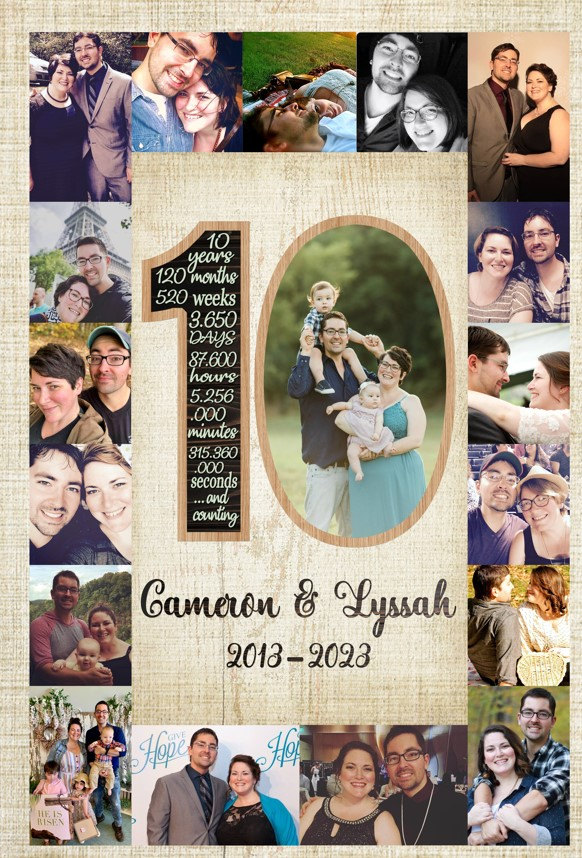
As winter gave way to spring, our family received a generous offer to visit Port Saint Joe, Florida for our first full family vacation. During our time away, Lys and I were able to celebrate our 10-year wedding anniversary while the kids enjoyed their inaugural beach debut.
In terms of broader stretches, the late March to early May time frame was notable for two occurrences:
1) On March 27, The Gate Church hosted my dad’s 50 Years of Ministry Celebration in what was truly a special night for our family.
2) From March 21 – May 9, Lys and I participated in a grief support group at Vanderbilt Children’s Hospital in what would become a defining sequence for the rest of the year. Despite the proximity to where Jubilee died, we felt at home with our new friends, some of whom we still keep in contact with. As only the second bereaved parent support group in Vanderbilt’s history, our cohort proved to be an enlightening experience for several nurses on staff. From what we understand, more support groups are expected to launch in 2024 for those who endured Jubilee journeys of their own.
Like April, June was a meaningful month, albeit for different reasons. In a top three memory of the year, Lys and I took a weekend away to Moscow, Tennessee, to participate in a While We’re Waiting Retreat for bereaved parents. Like the Vanderbilt support group, the event would feature a balanced blend of community, healing, and direct support, essentials we desperately needed and weren’t finding anywhere else at the time. The empowerment and activation from the weekend would not only result in more friends but a guest appearance on the While We’re Waiting podcast in October and eventual board approval to start the first middle Tennessee chapter for the 2024 calendar year.
Apart from support groups, the dominant storylines heading into July were Lyssah’s pregnancy (by far the smoothest of all five kids), leading more Zoom calls with the Circuit Riders, and the job hunt reaching a fever pitch. Among the 200 applications sent on Indeed and LinkedIn between July-October 2023, roughly 8-10 resulted in fruitful networking including a pipeline for Foundation Group that specialized in not-for-profits.
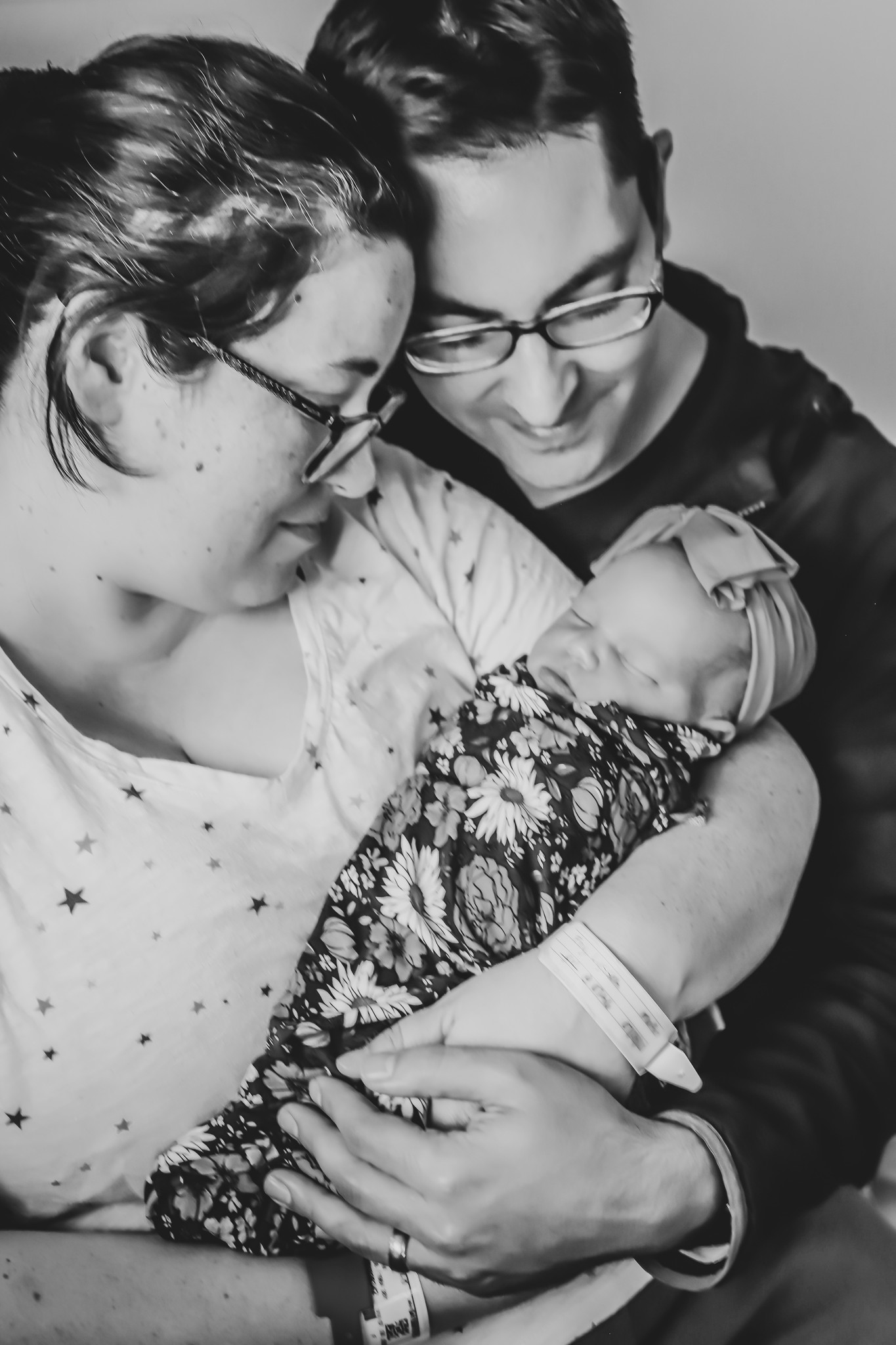
Of course, the ultimate Fry-light would occur Friday, July 28, the day on which Aili was born. Although her earthly entrance doesn’t offset the incompleteness Lys and I feel, the wonder of God’s faithfulness as evident through the moment struck a victorious nerve in the context of God’s sovereignty and our testimony unfolding. Literal beauty from ashes (Isaiah 61:3), Aili’s arrival was more than cathartic but a sweet reminder to praise God for the way He ministers encouragement and comfort to the brokenhearted. Like a gift that keeps on giving, Aili continues to warm our hearts through smiles and reflections of divine providence. Even in the wake of last year’s tragedy, the surrealness of her presence has, no question, bonded our family together in greater measure.



Fast-forward to November 7 and the job search finally concluded after five months of persistent effort. Honestly, I will never forget the call I received from Mercy Multiplied during which they confirmed an offer for me to become their Accounting Manager, instantly justifying God’s call from January and the many closed doors that preceded in the months following. To think my application came in one day before the position was pulled from online job boards blows my mind – just another example of how God is faithful to guide and provide especially in the clutch. Since then, I’ve been able to find footing in a healthier environment working for Nancy Alcorn and her Finance team. No doubt, the experience, highlighted by the Merry Mercy 40th Anniversary Celebration earlier this month, has been a breath of fresh air.
And so, as the sun sets on 2023, I bid it adieu and relish the opportunity to start afresh and anew. Occasionally, I think back to that day in January, the one BioLife missed the vein, and how it triggered a resonating desire for the look of life to change in every facet outside immediate family and friends; however, I also remember praying, ‘Lord, even if these changes don’t happen, even if I feel like I’m sinking at the end of the year, give me healthy wife/healthy baby and I will gladly take it‘. Safe to say that request accrued dividend and interest as Aili, and her older sibling trio continue to mature in stature with Lys making progress towards 2020 levels of health.
Still, even with the advances of late, the hurts linger. Moving on is hard; adjusting to life post-Juby (while we’re gettin’ there) is hard; learning your youngest son is auti..ahem…neurodivergent…is hard; employing financial wisdom is hard; not feeling seeded in crucial areas…you guessed it…is hard. Then again, life was never meant to be easy and I’m quickly reminded how we can do all things through Christ who strengthens us even when we feel alone, disappointed, unheard, misunderstood, even neglected. Hence, why Lys and I are not discouraged to the point of wavering despite 2023 going down as the roughest year since 2011. For as 2021 and 2022 taught us…
…clinging to hope at the end of your rope is not just a hell to pass through but a hotspot to discover God’s love amidst the endurance.
Tweet
Thus, while 2023 felt like navigating a pothole-laden highway, we can give testament to God as a solid foundation amidst the voids. Despite the adversities, I give Him all the praise for how he’s helped me put the family on my back and carry them through streams of troubled water this year.
To new faces and friendly spaces, we thank you for being valued connections in life and as part of our support network. To those on the other side, we thank you as well for your part in making us stronger. Just as without suffering and chaos, there cannot be compassion and peace, so too we cannot grow stronger without deficits and prompts to overcome. Accordingly, we can be grateful for the situations that awaken us to draw closer to Jesus regardless of the specifics involved. Granted, we understand many of you reading this have sowed refreshment and have extended goodwill to many during the past few years. For that, we share our warmest regards and wish you nothing but God’s best this holiday season.
May you all be blessed and enriched with the grandeur of His highest,
~ Cameron (and Lyssah) Fry

Prayer Points (in no particular order)
- Favor with Cameron’s new job at Mercy Multiplied
- Favor with the launch of the While We’re Waiting Nashville small group
- Ministerial direction (i.e. knowing where God wants to plant us in 2024)
- Mentoring/networking opportunities (i.e. knowing who we’re to team with/invest relationally)
- New work opportunities for Lyssah (remote or hybrid)
- Family health/Milo’s occupational therapy
- Progress with Cameron’s Jubilee Journey book and a jumpstart of the His Girl Fryday podcast
- Continued healing and recovery post-Jubilee
Cover graphic creds: Vecteezy










 hisgirlfryday.com